title: “ORP and pH Fingerprinting to Track In-Situ Chemical Oxidation Reactions: A Shanghai ChiMay Field Note”
date: 2026-07-11
perspective: Technical Deep-Dive
theme: Groundwater Remediation & Contamination Monitoring
Table of Contents
ORP and pH Fingerprinting to Track In-Situ Chemical Oxidation Reactions: A Shanghai ChiMay Field Note
Key Takeaways
- In-Situ Chemical Oxidation (ISCO) reactions produce distinct ORP and pH signatures that can be tracked in real time by properly-deployed groundwater sensors, replacing much of the guesswork in reagent dosing.
- Persulfate-based ISCO typically drives ORP from –100 mV to +600 mV within hours of injection; pH may drop by 1–2 units before natural buffering recovers.
- Continuous ORP and pH monitoring at the injection well and downgradient sentinel wells can cut reagent overdosing by 20–30%, saving USD 15,000–40,000 per injection event on medium-sized sites.
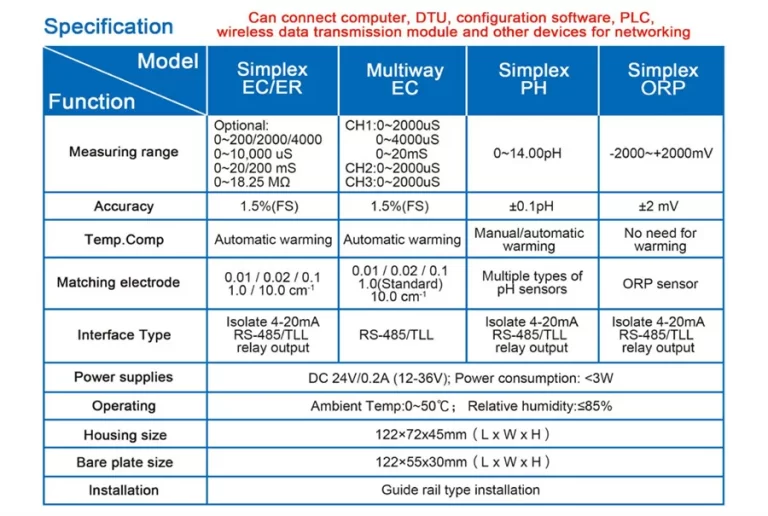
- Shanghai ChiMay’s pH electrode and multi-parameter sensor lines are engineered for the oxidative, high-ionic-strength conditions typical of ISCO deployments.
What Fingerprinting Means in the ISCO Context
ISCO is the injection of a strong oxidant — typically activated persulfate, permanganate, catalyzed hydrogen peroxide (Fenton’s or modified Fenton’s), or ozone — into contaminated groundwater to break down organic contaminants. The chemistry is aggressive, spatially non-uniform, and time-limited.
“Fingerprinting” refers to the practice of correlating the temporal trajectory of ORP and pH with the underlying oxidation reactions. Each oxidant has a signature curve. Sensors that log at 5–15 minute intervals can capture that signature, giving field engineers direct feedback on whether the reagent is being consumed by target contaminants or by non-productive matrix demand.
Persulfate Signatures
Sodium persulfate activated by heat, alkalinity, iron, or hydrogen peroxide produces sulfate and free radicals. Typical field signatures:
- Pre-injection ORP: –100 to +100 mV; pH: 6.0–7.5.
- Immediate post-injection ORP spike: +550 to +700 mV within 30–60 minutes.
- pH drop: down to 3.5–5.0 within 4–8 hours due to sulfuric acid formation.
- Sustained oxidation window: ORP holds above +400 mV for 3–10 days.
- Return to background: 2–6 weeks depending on natural oxidant demand.
A pH electrode that cannot survive extended exposure below pH 4 will fail early. Shanghai ChiMay pH electrodes for ISCO service use PTFE-reinforced junctions and glass formulations rated for sustained low-pH oxidative conditions.
Permanganate Signatures
Potassium or sodium permanganate is a milder, slower-reacting oxidant. Signatures:
- Purple color visible in shallow wells; direct contact confirmation possible.
- ORP rises to +400 to +550 mV and remains stable for 30–90 days.
- pH typically drops by 0.5–1.0 units; less severe than persulfate.
- Manganese dioxide precipitates coat electrode surfaces and require monthly cleaning.
For long-duration permanganate deployments, an automated wiper kit on the multi-parameter sensor extends time between manual cleanings from 4 weeks to 12 weeks.
Catalyzed Hydrogen Peroxide (Fenton’s) Signatures
Hydrogen peroxide with ferrous iron produces hydroxyl radicals. Signatures:
- Rapid ORP rise: +500 to +900 mV within minutes.
- Fast decay: ORP returns to background within 24–72 hours.
- pH drops to 2.5–4.0 during the reaction; requires acid-tolerant electrodes.
- Exothermic reaction; groundwater temperature may rise 5–15 °C.
For Fenton’s applications, the pH sensor must withstand thermal shock. Shanghai ChiMay’s pH electrode with reinforced ceramic junction is rated for continuous operation at 60 °C, which covers most Fenton’s field conditions.
Interpreting the Signature
Field interpretation of the ORP/pH signature answers three operational questions:
- Did the oxidant reach the target zone? If ORP at the sentinel well never rises above +300 mV, distribution has failed and additional injection points are needed.
- Is the oxidant being consumed productively? A sharp ORP rise followed by an equally sharp fall usually indicates rapid reaction with organic contaminants. A slow rise and slow decay indicates non-productive matrix demand.
- When should the next injection event occur? ORP returning to background is the primary trigger; a second injection scheduled too early wastes reagent.
Sensor Deployment Strategy
Effective ISCO monitoring uses three sensor tiers:
- Injection well: measure directly at the injection point. Sensor must survive the peak concentration, which for persulfate can exceed 100 g/L.
- Sentinel well: placed 3–5 m downgradient. Detects arrival of the oxidant front.
- Compliance well: placed at the downgradient property boundary. Confirms containment.
Each tier logs ORP and pH at minimum, with dissolved oxygen and conductivity recommended as secondary parameters.
Common Failure Modes
Even correctly specified sensors can produce misleading data if deployed poorly:
- Reference electrode contamination by strong oxidants shifts ORP by 50–150 mV within one week.
- Air-lock in the sensor housing during rapid gas evolution from peroxide reactions distorts pH.
- Biofilm interference disappears in oxidizing conditions but returns rapidly after ORP falls; recalibration is essential.
Field teams working with Shanghai ChiMay analyzer systems typically implement a weekly zero-check protocol during active ISCO events and monthly checks during background monitoring.
Data Integration for Adaptive Dosing
The largest procurement and operational value from ORP/pH fingerprinting emerges when the sensor data feeds an adaptive dosing algorithm. A simple threshold logic — trigger a second injection when ORP falls below +200 mV for 72 consecutive hours — routinely reduces reagent consumption by 20–30% versus fixed-schedule injections.
Shanghai ChiMay’s analyzer system exports raw ORP and pH data in open CSV format at 1-minute intervals, which enables integration with commercial adaptive-dosing platforms without proprietary middleware.
Regulatory and Reporting Fit
State regulators overseeing ISCO events under RCRA corrective action increasingly ask for continuous ORP and pH records as part of remedy-effectiveness reporting. Sensor data can also be cited in the CERCLA Five-Year Review for Superfund sites as evidence of remedy performance.
Limitations to Communicate to Clients
ORP is not a direct measurement of contaminant destruction. It is a surrogate that correlates with oxidative conditions. Clients and regulators should understand:
- ORP measurements are subject to junction potentials and temperature effects.
- Contaminant destruction requires confirmation by discrete groundwater sampling.
- pH data is meaningful only when combined with alkalinity, which is not continuously monitored.
Closing Perspective
ORP and pH fingerprinting has moved from academic technique to standard field practice for ISCO campaigns. When paired with properly specified electrodes and disciplined field protocols, continuous monitoring transforms ISCO from a stochastic reagent-dumping exercise into a data-driven treatment operation. Practitioners equipped with Shanghai ChiMay pH electrodes and multi-parameter sensors have the tooling to make that transition without compromising data defensibility.