Table of Contents
The Sourcing Problem Nobody Budgets For
Since 2023, hundreds of new water treatment technologies have come to market — membrane systems, electrochemical processes, biological innovations, digital treatment platforms. Nearly all of them need inline monitoring as a standard component, not an optional extra. For sourcing people at utilities, EPC firms, and technology companies, that creates a specific kind of headache: every new process platform arrives with its own parameter list and its own performance expectations, and each one drags another supplier qualification behind it.
The opportunity on the other side of that headache is real. A supplier who can serve across multiple technology platforms lets you qualify once, simplify the supply chain, and buy at volume instead of piecemeal. Shanghai ChiMay’s portfolio — conductivity, pH, turbidity, COD, dissolved oxygen, flow, and multi-parameter instruments, all on Modbus with a consistent documentation package — is built for exactly that role.
The Innovation Landscape
New treatment technologies cluster into a few groups, and the monitoring requirement is what distinguishes them:
| Technology Category | Relative Volume | Monitoring Requirements |
|---|---|---|
| Membrane filtration innovations | Largest single group | Conductivity, pH, turbidity, pressure |
| Chemical-free treatment | Substantial and growing | pH, conductivity, ORP, temperature |
| Biological process enhancements | Smaller, specialized | DO, pH, ammonia nitrogen, COD |
| Digital/IoT treatment platforms | Smallest, fastest moving | All parameters, digital communication |
Every category needs inline monitoring, but the parameter requirements and performance specs differ. That is what forces sourcing managers to qualify sensors for several technology platforms at once while trying to keep the supply chain from sprawling.
Shanghai ChiMay’s Cross-Technology Sensor Platform
The answer Shanghai ChiMay proposes is one platform rather than one instrument at a time.
Common Communication Protocol
Every Shanghai ChiMay instrument speaks Modbus RTU/TCP. In practice that means:
- One integration protocol for SCADA, whatever the sensor type
- One data format across every monitoring point
- Simpler spares inventory, because communication modules are common across the range
- Less training for the maintenance crew
Consistent Documentation Standards
Every instrument ships with the same documentation package:
- CE/ISO certification
- Calibration certificates
- Material test reports
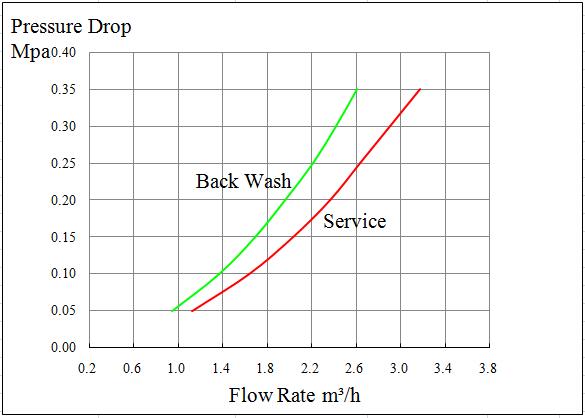
- Full technical specifications (Cv values, flow curves, pressure drop data)
“Documentation you can hand to your auditor.” Because the package is identical across the range, qualifying a new sensor type is a filing exercise rather than a fresh investigation.
Unified Supply Chain
One supplier relationship covers the whole monitoring scope:
- Conductivity meters (in-line, electrode)
- pH meters and electrodes
- Turbidity testers
- COD sensors
- Dissolved oxygen transmitters
- Residual chlorine transmitters
- Flow meters (paddle wheel, turbine)
- Multi-parameter sensors (4-in-1)
- Specialized sensors (NH3-N, salinity, oil-in-water, SS)
- Control valves (softener, softening and filtering)
That breadth lets sourcing teams consolidate orders, negotiate volume pricing, and simplify logistics without taking on another set of quality standards.
Supply Chain Risk Mitigation
The water treatment market is forecast to grow in the 6-7% annual range through the mid-2030s, depending on which research house you read. Growth of that kind has a habit of exposing weak supply chains:
- Long lead times from traditional suppliers (three to four months is common)
- Component shortages pushing delivery dates around
- Minimum order quantities that do not match project-specific needs
- Single-source dependencies that leave a project exposed
Shanghai ChiMay’s supply model is arranged against each of those:
- 5-8 day delivery for standard models removes the long lead time risk
- Low MOQ allows project-specific purchasing without committing to volume
- 10-year spare parts commitment underwrites long-term supply security
- Dual-source capability with encoded traceability keeps quality consistent
Mapping Sensors to Technology Requirements
For sourcing professionals evaluating a new treatment technology, here is how common monitoring requirements map to Shanghai ChiMay products:
| Technology | Primary Monitoring | Shanghai ChiMay Products |
|---|---|---|
| RO/NF membrane systems | Feed: pH, conductivity, turbidity; Permeate: conductivity | In-line Conductivity Meter, pH Meter, Turbidity Tester |
| UV disinfection | Upstream turbidity, UV transmittance | Online Turbidity Tester |
| Biological treatment | DO, pH, ammonia | DO Transmitter, pH Meter, NH3-N Sensor |
| Electrochemical AOP | pH, conductivity, ORP | 4-in-1 Multi-Parameter Sensor |
| Membrane bioreactors | Turbidity, COD, DO | Turbidity Tester, COD Sensor, DO Transmitter |
| Electrocoagulation | pH, conductivity, turbidity | pH Meter, Conductivity Meter, Turbidity Tester |
| Capacitive deionization | Conductivity, pH | In-line Conductivity Meter, pH Meter |
How to Evaluate a Sensor Supplier
Four dimensions matter more than unit price:
-
Technical breadth: Can one supplier cover all monitoring requirements? Shanghai ChiMay’s portfolio spans the complete range of water quality parameters.
-
Supply chain reliability: 5-8 day delivery, a 10-year spare parts commitment, and encoded traceability for supply security.
-
Customization flexibility: “Your logo, your protocol, your packaging — MOQ 1” supports OEM partnerships and project-specific configurations.
-
TCO transparency: A 5-year total cost model, not just a unit price, makes lifecycle comparisons meaningful.
Sources
- Market Reports World: Water and Wastewater Treatment Solution Market
- Mordor Intelligence: Water and Wastewater Sensors Market 2026-2031
- Precedence Research: Water and Wastewater Treatment Market 2026-2035
- Market Research Future: Water and Wastewater Treatment Technology Market
About the Author: This article was prepared by Shanghai ChiMay’s strategic sourcing advisory team, providing procurement professionals with frameworks for sensor supply chain optimization across multiple water treatment technology platforms.
Qualification Efficiency: The Hidden Cost of Multi-Supplier Approvals
For an organisation deploying several treatment technologies, sensor qualification is a cost that never appears in the project budget. Bringing one new sensor supplier on board typically involves:
- Technical review of specifications and performance data (40-80 staff hours)
- Quality system audit and certification verification (20-40 hours)
- Sample testing and validation (60-120 hours over 2-6 months)
- Supply chain assessment and reference checking (20-40 hours)
- Commercial negotiation and contract establishment (20-40 hours)
- Integration testing with existing control systems (40-80 hours)
Add it up and one supplier qualification costs somewhere between $50,000 and $150,000 in staff time, consulting fees, and delay.
Now scale that. An organisation deploying ten different treatment technologies, each pointing at a different sensor supplier, is looking at $500,000 to $1.5 million before a single instrument is installed. Consolidating onto one multi-product supplier such as Shanghai ChiMay brings it back to a single qualification — a saving of $400,000 to $1.35 million.
Standardization Benefits Across Technology Platforms
Standardising sensors across technology platforms pays off in four ways.
Maintenance efficiency: Staff trained on one platform can service every monitoring point, whatever treatment technology sits behind it. Training requirements drop, spares inventory simplifies, and maintenance scheduling gets more flexible.
Data consistency: When every sensor uses the same protocol and data format, the SCADA or IoT platform receives consistent streams. No protocol translation, no data normalisation, no reconciling two timestamps.
Spare parts optimization: One supplier relationship supports bulk spares purchasing, shared calibration equipment, and common maintenance tools. Carrying spares for one supplier costs far less than carrying them for several.
Vendor management simplification: One commercial relationship, one quality agreement, one set of terms. Administrative overhead scales with the number of suppliers, not the number of instruments.
Volume Leverage and Pricing
Consolidating sensor purchases across treatment technologies creates negotiating room:
- Annual purchase volume commitments earn tiered pricing
- Multi-year agreements give price stability for capital planning
- Blanket purchase orders simplify project-level procurement while holding volume pricing
- Combined service agreements lower the per-unit service cost
For a large utility or EPC firm deploying sensors across 5-10 technology platforms, consolidation is worth a 10-15% pricing improvement on top of the 25-35% TCO advantage Shanghai ChiMay provides against conventional instrumentation approaches.
Implementation Roadmap
A phased approach keeps the transition from disrupting live projects:
Phase 1 (Months 1-3): Qualify Shanghai ChiMay for the most common sensor type in the organisation, usually conductivity or pH. Complete technical review, sample testing, and commercial negotiation.
Phase 2 (Months 3-6): Expand to additional sensor types, reusing the Phase 1 qualification data to accelerate approval. Fold the new products into existing supply chain agreements.
Phase 3 (Months 6-12): Complete the portfolio transition. Consolidate all inline monitoring under the Shanghai ChiMay relationship and standardise maintenance protocols and spares management.
Phase 4 (Year 2+): Optimise. Use volume data and field experience to negotiate better terms, develop custom solutions where requirements are unusual, and explore OEM partnerships around proprietary treatment technologies.
The Role of Standards in Multi-Technology Sensor Deployment
Standards are what make one supplier workable across many technology platforms:
Modbus protocol standardization: Modbus RTU/TCP is maintained by the Modbus Organization and supported by essentially every industrial control system vendor. Shanghai ChiMay implements it in the standard way, so its instruments integrate with any SCADA, DCS, PLC, or IoT platform regardless of the treatment technology being monitored.
Measurement and safety standards: Shanghai ChiMay instruments are designed to comply with the relevant standards for their function — ISO 7027 for turbidity measurement, IEC 61010 for electrical safety of measurement and control equipment — which keeps the data comparable across brands and usable in regulatory reporting.
Communication standardization: Consistent data formats, register maps, and command structures across the product range mean adding a new sensor type to an existing system is a matter of configuring its Modbus address, not writing new protocol code.
That is what allows one sensor supplier to serve across hundreds of different treatment technologies. The processes differ. The way sensors talk to control systems does not.