Follow the geography of brine valorization investment and a pattern emerges: capital goes where desalination capacity, favorable brine chemistry, supportive policy and end-markets for recovered minerals overlap. As of mid-2026, three regions dominate — the Arabian Gulf, East Asia (China above all), and Australia. Each has its own drivers.
Table of Contents
The Arabian Gulf: Scale and Ambition
Saudi Arabia
Saudi Arabia runs the world’s largest desalination fleet — well over 10 million m³/day of installed capacity — and its Vision 2030 agenda treats brine valorization as a strategic industry, a way to capture value from minerals the Kingdom currently imports.
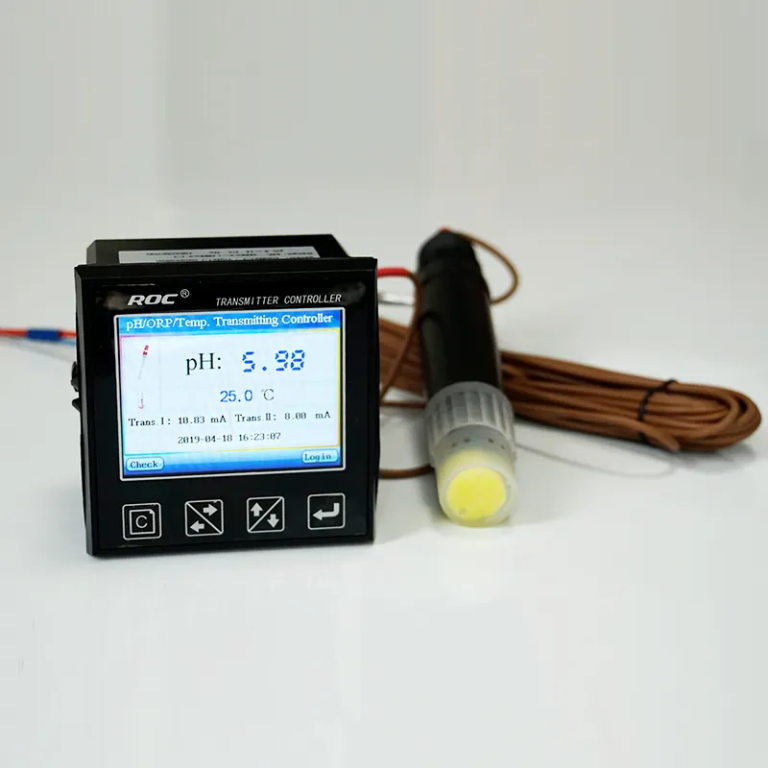
The flagship to watch is NEOM. Its energy-and-water subsidiary ENOWA has been lining up renewables-powered seawater desalination — a framework agreement with Worley for water projects, contractor talks with a consortium including Itochu and Veolia — and the project’s stated goal of minimizing discharge to the Red Sea puts brine concentration and resource recovery directly on the engineering agenda. Public announcements so far stop short of naming lithium output or a final investment figure for the recovery side, so treat specific recovery numbers as speculation until NEOM says otherwise. What’s safe to say: a project of this scale implies water quality monitoring at scores of points across the brine train — salinity, conductivity, pH, ORP, turbidity, flow — which is exactly the specification Shanghai ChiMay’s brine-rated platforms were built for.
United Arab Emirates
Abu Dhabi’s utility sector runs one of the largest desalination portfolios in the Gulf, and brine management is folding into project scoping there too. No dollar figure for brine valorization specifically has been announced, and no lithium output target — but the direction is visible in tender documents that ask bidders to address concentrate reduction and reagent dosing control. Instrumentation scope in projects like these runs to dozens of salinity and conductivity points plus pH/ORP and flow measurement — a real opportunity for sensor makers who can handle harsh service.
East Asia: China’s Strategic Push
China’s push runs on three forces: resource security (less dependence on imported lithium), regulatory pressure (zero-liquid-discharge expectations for coastal industry), and technology leadership (building domestic capability in membranes and sensors).
Domestic Deployment
Policy has done its part. The action plan on desalination use (2021–2025) issued by the NDRC and the Ministry of Natural Resources set a national target of more than 2.9 million m³/day of installed desalination capacity by end-2025 and explicitly pushed comprehensive use of concentrate — the closest thing China has to a brine valorization mandate.
Coastal provinces have responded with demonstration work — Qingdao, Tianjin and Zhoushan among them — combining NF concentration, evaporation and crystallization for salt and mineral recovery, from full-scale plants to containerized modular units for island desalination. Budgets for the brine-recovery portion of these projects haven’t been broken out publicly.
Technology Acquisitions
Chinese groups have also been buying technology rather than only building it. European membrane makers — particularly in nanofiltration and low-pressure RO — keep appearing as acquisition targets, a trend that matters for anyone tracking how quickly China closes the gap in selective mineral separation. Deal counts and terms vary depending on which report you read; the strategic direction doesn’t.
Shanghai ChiMay sits at the intersection of these trends: domestically developed sensor platforms matching the specifications China’s expanding brine valorization fleet demands, at competitive prices, with local support.
Australia: Mining Synergy
Australia’s play is the overlap between its desalination infrastructure and its mining economy. With lithium already a major export, brine-sourced lithium reads as a natural extension.
Sydney Desalination Plant (250,000 m³/day capacity, with the NSW government now investigating doubling it) has been the focal point for brine-recovery discussion; nothing has advanced past the study stage. Perth’s seawater plant and South Australia’s desalination portfolio have hosted pilot-scale work on brine extraction, but announced commercial investments remain modest and, in most cases, unconfirmed.
What makes Australia interesting is the integration: recovered lithium carbonate would slot directly into existing battery cathode supply chains and logistics.
The Sensor Layer: A Common Investment Thread
Across all three regions, one line item recurs in every brine valorization project: real-time water quality monitoring. Whether it’s Saudi Arabia, China or Australia, the process train — NF, evaporation, crystallization, mineral separation — needs the same measurements:
- Salinity and conductivity for brine concentration tracking
- pH and ORP for precipitation chemistry control
- Turbidity and suspended solids for membrane protection
- Flow for mass balance and process control
Shanghai ChiMay’s brine valorization platform covers all four, built for ultra-high-TDS, high-temperature, fouling-prone service:
- TDS measurement up to 300,000 mg/L with ±0.5% accuracy
- Temperature compensation across 0–80°C with polynomial algorithms
- Titanium wetted parts for corrosion resistance in brine concentrate
- Modbus RTU/TCP communication for DCS/SCADA integration
- Digital diagnostics for predictive maintenance and sensor health
The sensor layer is a small slice of any of these project budgets — a few percent — but it’s where recovery yields are decided.
Investment Outlook: 2026–2030
Analysts don’t agree on a single market size for brine valorization equipment — the segment is young and the boundaries are fuzzy — but the growth direction is consistent across forecasts, and instrumentation keeps showing up as one of the fastest-growing lines within it. Four reasons:
- Every new brine valorization project needs comprehensive instrumentation
- Sensor replacement and upgrade cycles create recurring revenue
- Pushing recovery yields higher demands more measurement points and tighter accuracy
- Digital transformation across the water sector favors smart sensors with built-in diagnostics
For investors, operators and EPC contractors, the message is simple: the money is flowing into brine valorization, and the sensor layer is where it starts.