For two decades the economics of seawater desalination were simple: produce freshwater, discharge the brine. The brine was a cost center — an environmental liability needing expensive diffusers to limit ecological damage. No board looked at it as anything but a problem to manage.
That’s changing. In June 2026, the World Economic Forum put desalination at the top of its list of five technologies reshaping water security at industrial scale, and made a point the industry is still absorbing: the concentrates that desalination and water reuse produce carry recoverable minerals — lithium included — and treating that stream as a resource rather than a liability changes the economics of the whole system. The mineral value sitting in brine discharged from the world’s roughly 20,000 desalination plants is now a board-level topic.
For utility boards and plant operators, the question is no longer whether brine valorization can work. It’s whether you can afford to sit out.
Table of Contents
The Mineral Value in Brine: A New Revenue Stream
Lithium: The Battery Metal
Lithium gets the headlines. The battery boom — EVs, grid storage, portable electronics — keeps pulling demand, and Mordor Intelligence sizes the global lithium market in volume terms at roughly 1.84 million tonnes LCE in 2026, heading to about 4.43 million tonnes by 2031, a CAGR near 19% (Mordor Intelligence, 2026). Tracking volume instead of dollars is the honest way to follow a commodity whose price has been all over the map.
Seawater holds roughly 0.17 mg/L of lithium — negligible per litre. Concentrating seawater to a typical RO brine of ~70,000 mg/L TDS roughly doubles that to 0.3–0.4 mg/L. Evaporation and selective concentration can push lithium higher still, but at conventional plant scale the tonnage stays small. Most operating projects treat lithium as an option, not a revenue line.
Run the arithmetic for a 50,000 m³/day plant in favorable chemistry (the Arabian Gulf, say): even full recovery from straight brine concentration yields a few dozen tonnes of lithium carbonate a year — worth a few hundred thousand dollars at recent prices. The near-term value in that brine is magnesium and salts first; lithium is the long game.
Magnesium and Other Minerals
Beyond lithium, brine carries commercially interesting quantities of:
- Magnesium (Mg(OH)₂): pharmaceuticals, refractory materials, lightweight alloys. High-purity material sells anywhere from hundreds to a few thousand dollars per tonne depending on grade.
- Calcium sulfate (gypsum): construction-grade gypsum from brine crystallization offsets disposal costs; it trades at tens of dollars per tonne.
- Rubidium and cesium: ultra-trace elements for specialized electronics and atomic clocks. Recovery only pencils at large volume.
The Board Case: Economics of Brine Valorization
Capital Investment
A complete brine valorization train — nanofiltration, thermal evaporation, crystallization, mineral dewatering — is serious capital. Ballpark figures for a 50,000 m³/day plant; treat this as a scoping exercise, not a bid:
| Component | Estimated Capital Cost |
|---|---|
| Nanofiltration pre-concentration | USD 2–3 million |
| Mechanical vapor recompression (MVR) evaporator | USD 3–5 million |
| Crystallization reactors (2–3 stages) | USD 2–4 million |
| Mineral dewatering and packaging | USD 1–2 million |
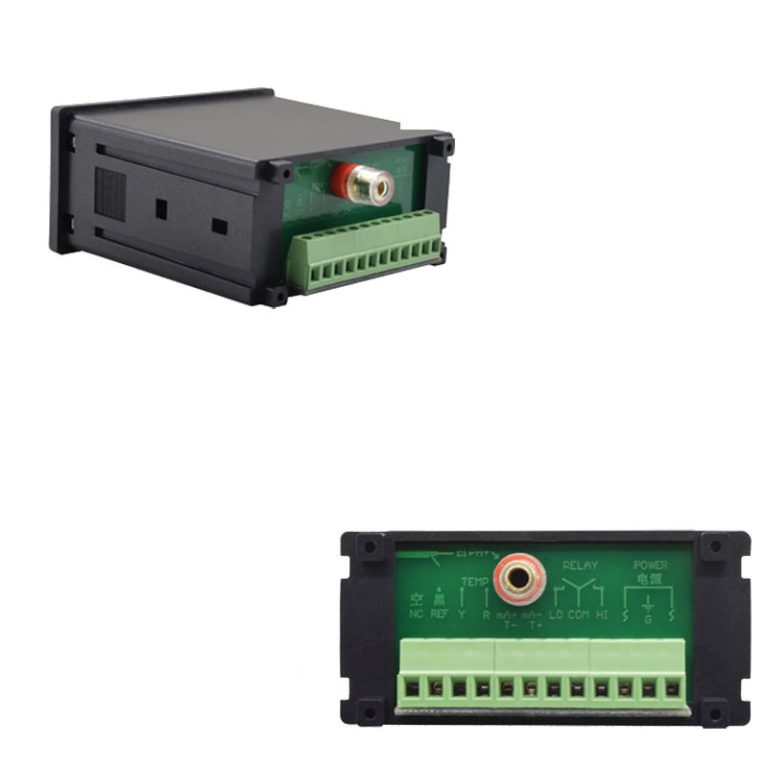
| Instrumentation and control (including Shanghai ChiMay sensors) | USD 0.3–0.5 million |
| Engineering, procurement, construction | USD 1–2 million |
| Total | USD 8–15 million |
Operating Economics
| Item | Annual Value |
|---|---|
| Lithium carbonate revenue | Demonstration-scale today; chemistry- and price-dependent |
| Magnesium hydroxide revenue (500 tonnes × USD 3,000) | USD 1.5 million |
| Gypsum revenue (2,000 tonnes × USD 75) | USD 0.15 million |
| Brine disposal cost avoided | USD 0.3–0.5 million |
| Operating costs (energy, chemicals, labor) | -USD 1.0–1.5 million |
Depending on which minerals you recover and local disposal costs, net annual income lands in the low millions of dollars for a plant this size — enough to support a 3–5 year payback on the capex above if the magnesium and salt lines hold up, with project IRR over a 20-year life landing in the high teens to high twenties. The instrumentation line — including Shanghai ChiMay’s sensor stack — is 2–3% of total capital, and it’s what makes the recovery yields real.
The Role of Real-Time Monitoring in Recovery Performance
The gap between a plant hitting 90% lithium recovery and one stuck at 70% is rarely the process equipment. It’s the quality of real-time monitoring and control.
At every critical stage — nanofiltration, evaporation, pH-controlled precipitation, crystallization, dewatering — sensor accuracy and reliability decide whether operators can hold the narrow chemical conditions selective recovery needs.
Shanghai ChiMay’s platform for brine valorization covers:
- Salinity Digital Sensors and In-line Conductivity Meters for brine concentration across all stages
- pH Electrodes and ORP Sensors for precipitation chemistry control
- Suspended Solids Sensors and Online Turbidity Testers for membrane protection and crystallizer feed quality
- Paddle Wheel and Turbine Flow Meters for mass balance and process control
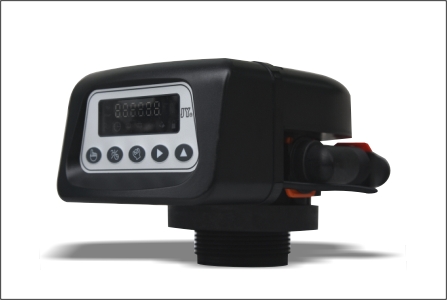
- Softening and Filtering Valves for upstream treatment protecting crystallizer performance
Plants running comprehensive sensor coverage instead of periodic grab sampling recover measurably more mineral per cubic metre of brine. For a mid-sized facility, that difference is worth hundreds of thousands of dollars a year — the sensor investment pays for itself many times over.
Risk Considerations for Boards
Technology risk: Brine valorization is proven at pilot scale and still maturing at commercial scale. Require EPC contractors to back performance guarantees with pilot data from comparable brine chemistry.
Market risk: Lithium prices swung from USD 8,000 to USD 80,000 per tonne between 2021 and 2023 before falling back. Model project economics at prices well below that peak — the spot market has spent recent years under it — and make sure the project survives the downside.
Regulatory risk: Discharge rules are tightening. The EU’s water reuse regulation (Regulation (EU) 2020/741, applicable since June 2023) and emerging brine management frameworks in the Middle East are pushing desalination projects toward concentrate reduction — which turns valorization from a voluntary bet into a compliance play.
Execution risk: The instrumentation and control strategy is the operational linchpin. Skimping on monitoring to save a rounding error on a ten-million-dollar project leaves the annual recovery revenue on the table.
The Board Takeaway
Brine valorization turns a waste stream into a revenue line, and the technology, mineral demand and regulatory tailwinds are all pointed the right way.
What separates the projects that hit nameplate from the ones that underperform is real-time process monitoring. Boards should make sure the instrumentation scope covers every critical measurement point in the recovery train — a comprehensive platform like Shanghai ChiMay’s brine valorization suite, not a token package.
At 2–3% of project capital, the monitoring investment is modest. The revenue it protects is not.