Technical deep dive · Engineering perspective · Published: October 14, 2026
Most valves in a water plant are chosen from a catalog by pipe size and flow. On the high-pressure side of a seawater reverse osmosis (SWRO) train, that shortcut stops working. Between the high-pressure pump discharge and the brine outfall, every valve lives in seawater that has been concentrated beyond the salinity of the ocean, throttled across differential pressures that would cavitate a standard globe valve, and cycled daily around an energy recovery device that turns waste brine into the plant’s cheapest megawatt. Operating pressures of 55–70 bar are typical for the SWRO train [2], and valve and brine-side components are commonly engineered for 60–80 bar duty [1]. Get the specification right and the valve fades into the background for fifteen years; get it wrong and the plant learns about pitting corrosion the expensive way. This article maps the high-pressure neighborhood valve by valve, explains why chlorides — not pressure — pick the alloy, and details what changes in maintenance once a plant crosses into this pressure class.
Table of Contents
Key Takeaways
- Typical SWRO operating pressure is 55–70 bar (800–1,000 psi), driven by the roughly 25 bar osmotic pressure of seawater at ~35,000 ppm TDS plus the net driving pressure the membranes need [2][3]; valves and brine-side components are commonly designed for 60–80 bar service [1].
- The concentrate stream is the plant’s most aggressive fluid: leaving the membrane array it can carry roughly 35,000–40,000 ppm chloride, about twice the salinity of the feed [6].
- Chlorides pick the alloy. Standard 316L is inadequate for hot, oxygenated seawater; super duplex 2507 with a pitting resistance equivalent number (PREN) typically above 40 is the reference material for high-pressure brine valves [4], with 2507, Zeron 100 and 254 SMO specified for 70–80 bar concentrate service [5].
- Energy recovery devices recycle 90–98% of the brine’s hydraulic energy [6]; modern isobaric pressure exchangers reach up to ~97% peak efficiency [7], and the valving around them sees pulsating, alternating flow that standard isolation valves were never designed for.
- The brine letdown valve combines the worst of both worlds — high differential pressure drop and the most corrosive stream in the plant — which is where severe-service globe trims and multi-stage pressure reduction enter the specification [5].
- Maintenance discipline shifts from lubrication schedules to material evidence: weld and alloy certificates, flush sequences and seal-interval records become the plant’s corrosion defense file.
The 60-80 Bar Neighborhood
Seawater at typical ocean salinity exerts an osmotic pressure of roughly 25 bar [3]. The high-pressure pump must exceed that just to make permeate, which is why SWRO trains settle in the 55–70 bar operating band [2] and why designers push pump curves and valve classes toward the upper edge for cold seawater, aged membranes or higher-recovery operation [1]. Everything downstream of the pump discharge belongs to a different world from the pretreatment skid: thicker walls, metallic seals, and alloys chosen for chemistry as much as strength.
| Position | Service condition | What the valve must do | Typical materials |
|---|---|---|---|
| Intake and pretreatment | Ambient seawater, low pressure, biofouling and solids | Isolate and modulate large low-pressure flows; tolerate marine growth | Duplex or super duplex body, resilient or lined seats |
| HP pump discharge to membranes | 55–70 bar seawater, continuous duty [2] | Tight shutoff, smooth throttling for startup and membrane protection | Super duplex body and trim [4][5] |
| ERD loop (feed/brine side) | 60–80 bar, pulsating and alternating flow as the rotor cycles [1][7] | Fast switching, near-zero internal leakage between streams | Super duplex, ceramic or hardened seats |
| Brine rejection / letdown | 70–80 bar concentrate, high differential pressure to outfall [5] | Energy dissipating pressure reduction without cavitation damage | Super duplex 2507, Zeron 100, 254 SMO [5] |
| CIP and chemical dosing | Acids, alkalis, hypochlorite at low pressure | Corrosion immunity to chemicals | PTFE/PFA-lined, PVDF, appropriate elastomers |
Pressure Class Is the Easy Part
Given the operating band, pressure class arithmetic is straightforward: 60–80 bar duty lands in the ASME Class 300 to Class 600 territory commonly cited for SWRO concentrate service [5]. Wall thickness calculations, flange ratings and seal chamber design are textbook engineering. What makes the specification difficult is that pressure rating says nothing about the two failure modes that actually end valve life in desalination: chloride-driven localized corrosion and cavitation-erosion at high-differential letdown points.
Chlorides Pick the Alloy
Seawater carries approximately 35,000 mg/L of dissolved solids, predominantly sodium chloride [1], and the membrane rejects most of it — the concentrate stream leaving the array can reach 35,000–40,000 ppm chloride [6]. Austenitic 316L, the default workhorse of the water industry, does not survive immersion in warm, oxygenated seawater: chloride ions attack its passive film, initiating pitting and crevice corrosion. Alloy selection is therefore made on the pitting resistance equivalent number, which scales with chromium, molybdenum and nitrogen content. Super duplex 2507 — roughly 25% chromium, 4% molybdenum and elevated nitrogen — carries a PREN typically above 40 [4] and delivers roughly twice the yield strength of 316L, which also thins the pressure-boundary wall. For concentrate service at 70–80 bar, valve specifications routinely land on super duplex 2507 (UNS S32750), Zeron 100 (UNS S32760) or 254 SMO (UNS S31254) [5].
Crevice corrosion hides in the trim
The alloy plate is only half the story. Pitting starts preferentially in crevices — under gaskets, inside seat-to-body gaps, in the stuffing box — where stagnant electrolyte depletes oxygen locally. High-PREN valves for SWRO duty therefore pay as much attention to geometry as to chemistry: seal-welded or metal-to-metal seating, full-bore cavities that flush clean, gasket faces machined to eliminate gaps, and for the most aggressive hot-brine service, titanium wetted parts where operating temperature pushes even super duplex toward its limit [6].
Valves Around the Energy Recovery Device
Energy recovery is the economic engine of modern SWRO: devices that transfer pressure from the concentrate stream back to incoming feed recover 90–98% of the brine’s hydraulic energy [6], and rotary isobaric pressure exchangers reach up to about 97% peak efficiency with a single ceramic rotor as the only moving part [7]. The valving around an isobaric ERD has to respect that mechanism. The rotor alternates each rotor passage between high-pressure brine and low-pressure feed, so the associated valves see pulsating flow with frequent directional changes and pressure transients on every cycle. Three requirements follow:
- Fast, repeatable switching — the valves that route feed and brine into the ERD must open and close quickly and consistently, because timing slop translates directly into mixing loss and lower net recovery.
- Near-zero internal leakage — cross-stream leakage in the ERD loop dilutes membrane feed salinity control and bleeds recovered pressure; sealing performance matters more here than in any isolation duty elsewhere in the plant.
- Fatigue-rated construction — pressure cycling at 60–80 bar, tens of thousands of times a day in aggregate, moves the failure discussion from burst strength to fatigue life of seats, stems and body joints.
The Brine Letdown: Where Energy and Corrosion Meet
After the ERD has harvested what it can, the remaining brine must be returned to atmospheric pressure. That letdown valve is the single most punishing position in the plant: it throttles a stream at 70–80 bar concentrate pressure [5] carrying 35,000–40,000 ppm chloride [6] across a differential that would shred ordinary trim through cavitation. The standard answer is severe-service globe control valves with multi-stage, pressure-reducing trims that drop pressure in steps, keeping the flow’s lowest pressure above the vapor pressure of the fluid and confining erosion to replaceable internals [5]. Body materials follow the same PREN logic as the rest of the high-pressure loop [4][5]. Plants that treat this valve as an afterthought learn twice — first through trim erosion, then through body pitting.
Maintenance: What Actually Changes
Below 10 bar, valve maintenance is mostly seats, packing and actuators. On the high-pressure side, the maintenance program becomes an evidence discipline:
- Material traceability — heat numbers and alloy certificates for every pressure wetted part, because one substituted fastener or weld filler in seawater service becomes the anode that dissolves first.
- Flush and shutdown sequences — valves in the high-pressure loop share the membranes’ hatred of stagnant brine and biological growth; automated flush valving is part of the specification, not an accessory.
- Seal-interval discipline — cycling duty around the ERD and letdown positions moves soft and hard seals through far more cycles per year than their static-service ratings assume; intervals are set by cycle counts, not calendar.
- Spare philosophy — long-lead super duplex castings argue for holding critical spares on site, and for suppliers who commit to a decade of parts availability with traceable body coding.
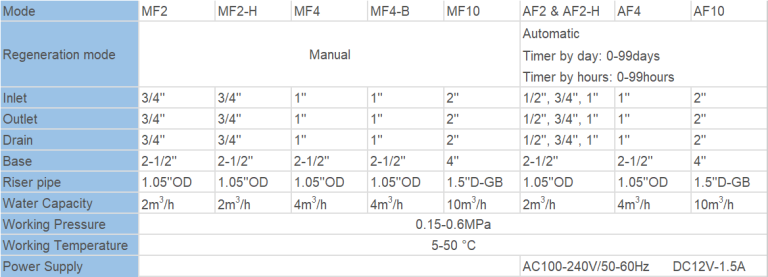
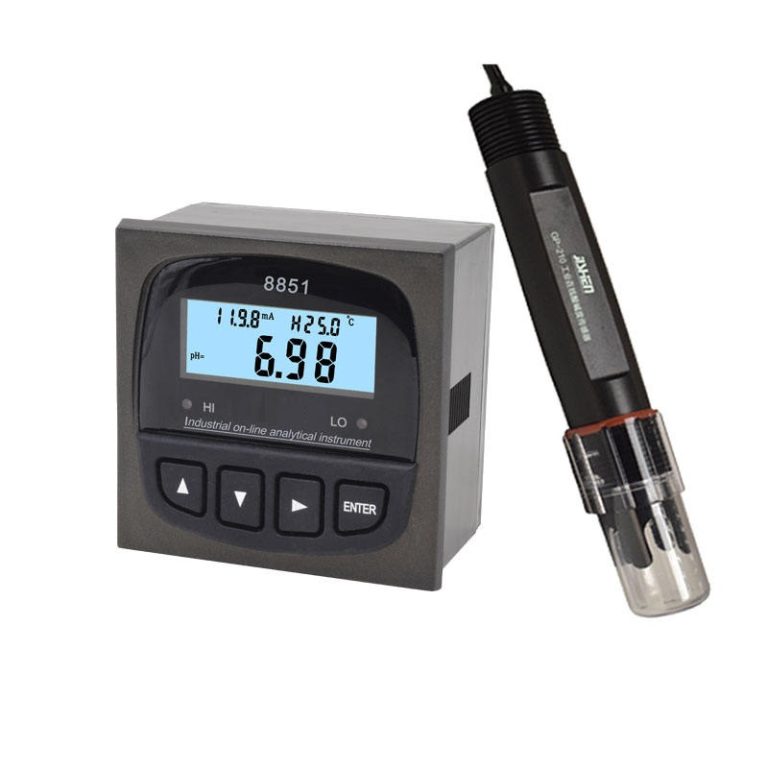
This is also where procurement transparency earns its keep. Alloy grades, cycle ratings, leakage classes and material certificates are exactly the numbers some suppliers would rather discuss after the purchase order — we publish the numbers other suppliers make you ask for, because on the high-pressure side a spec-sheet gap becomes a site failure. On the low-pressure side of the same plant, integrated softening-and-filtration control valves from Shanghai ChiMay handle the pretreatment and polishing streams where ceramics-faced sealing and polymer bodies serve without exotic alloys [8].
The Bottom Line
At 60–80 bar, seawater stops being a plumbing problem and becomes a materials problem with a pressure budget. The specification order that works: fix the service condition (pressure band, differential, salinity, temperature, cycling), let the chloride chemistry pick the alloy class, then choose the valve type that matches the duty — tight-sealing isolation at the pump, fatigue-rated switching around the ERD, multi-stage severe-service letdown on the brine. Pressure classes are the easy arithmetic; chlorides, crevices and cycle counts are what actually decide whether a valve in an SWRO plant lasts fifteen years or eighteen months.
References
- Wofer Valve — Valve Applications in Desalination and Water Reuse Plants. Engineering overview citing 60–80 bar SWRO valve duty, ~35,000 mg/L seawater TDS and chloride-induced corrosion challenges for continuous plant operation. https://www.wofervalve.com/post/valve-applications-in-desalination-and-water-reuse-plants
- AQUALITEK — Core Pressure Components Required in a Seawater Desalination RO System. Component-by-component guide stating typical SWRO operating pressures of 55–70 bar (800–1,000 psi). https://www.aqualitek.com/blog/core-pressure-components-required-in-a-seawater-desalination-ro-system-insights-by-aqualitek.html
- Chenfa — Water Treatment Technology Knowledge Base. Design reference covering seawater osmotic pressure (~25 bar at ~35,000 ppm), 55–70 bar SWRO operating pressure, 35–50% design recovery and energy recovery efficiency above 90%. https://www.chenfa.tw/technology.html
- ADI Laval — Super Duplex 2507. Material datasheet giving the 2507 composition (25% Cr, 4% Mo, 0.27% N) and PREN typically above 40 for the most aggressive chloride service. https://www.adilaval.com/en/materials/super-duplex-2507
- GCC Valves — Top Seawater Reverse Osmosis Companies in Saudi Arabia. Valve selection guide for SWRO citing 70–80 bar concentrate processing (ASME Class 300–600), super duplex 2507, Zeron 100 and 254 SMO materials, and severe-service globe trims for high-differential letdown. https://gccvalves.com/top-seawater-reverse-osmosis-companies-in-saudi-arabia
- Allway Valves — Valves for Water Treatment and Desalination: SWRO High-Pressure, Seawater Corrosion and Municipal Water Systems. Valve engineering article citing 35,000–40,000 ppm chloride in membrane concentrate and 90–98% energy recovery by modern ERDs. https://allwayvalves.com?p=597/
- ForeverPure — Energy Recovery PX Q180 Pressure Exchanger. Product datasheet for a positive-displacement SWRO pressure exchanger with up to 97% peak efficiency and a single ceramic rotor. https://www.foreverpureplace.com/energy-recovery-px-q180-pressure-exchanger/
- Shanghai ChiMay — Water Softener Valve, Filter Valve, Online Water Quality Analyzer & Smart Sensors. Company overview of control valve and water quality analyzer product lines serving pretreatment and polishing duty in water treatment plants. https://www.chimaytech.com/
About the author: Written by the Shanghai ChiMay Technical Editorial Team — specialists in control valve engineering and water quality instrumentation for water treatment and desalination pretreatment duty, covering material selection, valve specification and long-term service support.