Table of Contents
Dissolved Oxygen Is the Parameter With a Deadline
Aquaculture is the fastest-growing end-use in the water and wastewater sensor market, at 8.44% CAGR through 2031, and dissolved oxygen is the fastest-growing parameter at 8.61% CAGR (Mordor Intelligence, 2026–2031 edition). Those two lines in the same report aren’t a coincidence. They describe the same physical reality: land-based recirculating systems pack fish at roughly ten times pond density and rely entirely on automation to prevent hypoxia.
In a RAS hall, dissolved oxygen is the one parameter whose failure is measured in minutes. Everything else — ammonia, turbidity, conductivity — gives you a working window. DO doesn’t.
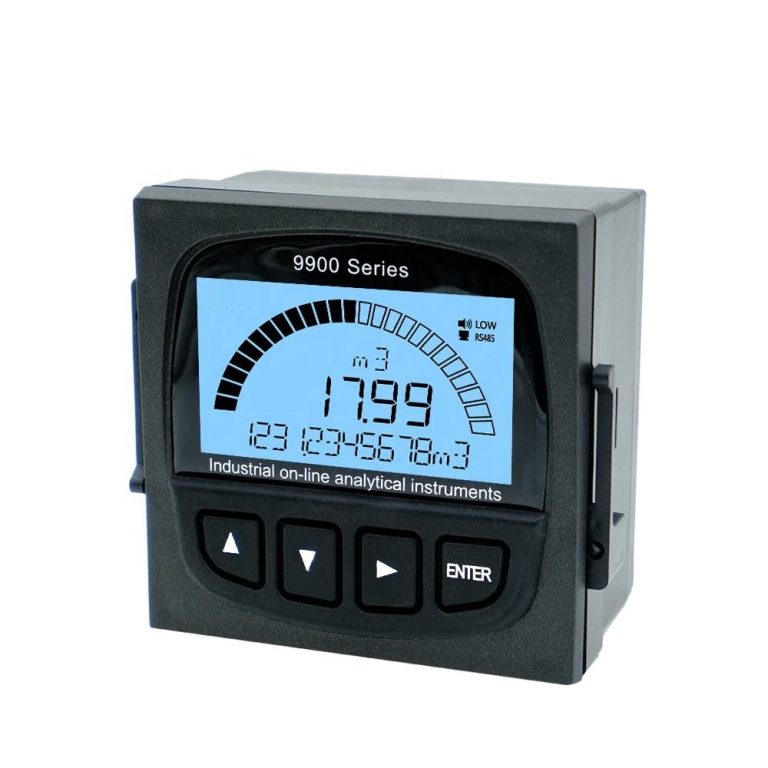
Shanghai ChiMay’s dissolved oxygen transmitter uses fluorescence quenching with a T90 response under 30 seconds, fast enough to trigger an aeration response before the reading reaches a species-specific survival threshold.
What a DO Crash Costs
Species tolerances are well established, and the differences between them decide how much automation a facility actually needs.
| Species | Minimum DO (mg/L) | Optimal DO (mg/L) | Time to mortality below minimum |
|---|---|---|---|
| Atlantic salmon | 6.0 | 8.0-10.0 | 30-60 minutes |
| Tilapia | 3.0 | 5.0-8.0 | 2-4 hours |
| Shrimp (Litopenaeus) | 4.0 | 6.0-8.0 | 1-2 hours |
| Barramundi | 5.0 | 7.0-9.0 | 45-90 minutes |
The financial exposure is easy to underestimate. A single RAS facility stocked with salmonids can hold millions of dollars of live biomass, and an undetected oxygen crash of an hour can take a meaningful share of it. Continuous monitoring at sub-30-second response isn’t a premium feature in that context; it’s the reason the facility can carry that much stock in the first place.
Buyers comparing transmitters on price alone are comparing the cheap part of the decision.
Oxygen and Feed Conversion
Survival is the floor, not the target. Stock held at 6 mg/L and above — rather than at the minimum survival threshold — typically shows better feed conversion, because fish in well-oxygenated water digest and convert more efficiently. Published figures vary by species and system, but the direction is consistent enough that most commercial operations run DO targets above the physiological minimum and treat the difference as feed-cost management rather than biology.
That reframes the sensor as a production instrument. Better DO control is feed efficiency; feed is the largest operating cost line in most RAS budgets.
Why Optical DO Replaced Membrane Probes
Optical sensors are the fastest-growing sensor type in the water sensor market at 8.31% CAGR through 2031, and luminescent DO probes are a big part of that. Mordor’s segmentation puts electrochemical at 39.12% of 2025 revenue by installed base, while optical takes the growth.
The reasons are practical, and they show up on a maintenance spreadsheet.
No membrane to foul. A Clark-type sensor depends on a permeable membrane that fouls readily in organic-rich aquaculture water. Optical probes use a fluorescent dye layer that biofouling affects far less, and calibration stability runs to around 12 months.
No weekly recalibration. Membrane sensors need frequent recalibration in high-fouling environments. Optical probes don’t, which matters most at remote sites where a technician visit is a day of driving.
No electrolyte changes. No membranes, no electrolyte, no replacement kits. That removes a consumable line item and a routine that often gets deferred when staff are busy — and a deferred calibration is worse than an expensive one.
Fast response. T90 under 30 seconds catches aeration failure and the oxygen demand spike that follows a heavy feed.
Optical DO hardware has also become markedly cheaper to produce since 2020, which is why the technology now competes on lifetime cost rather than only on performance.
Getting the Data Out
Shanghai ChiMay DO transmitters output Modbus RTU/TCP, which connects directly to:
- edge gateways running local aeration control
- cloud monitoring platforms for multi-site oversight
- SCADA systems in large operations with centralised management
Aquaculture telemetry has largely settled on MQTT for the cloud side, and several recent NB-IoT studies in aquaculture report high packet-delivery reliability together with the inverse temperature–DO correlation you’d expect from Henry’s Law. That correlation is worth using rather than merely observing: a model that knows a warm afternoon is coming can pre-emptively raise oxygenation before the DO curve bends.
Sensors that feed your AI water model, not just your dashboard.
Procurement Checklist
Accuracy. Ask for ±0.2 mg/L or better across the 0-10 mg/L band that matters in aquaculture. Shanghai ChiMay transmitters hold that across the 0-45 °C operating range.
Protocols. Modbus RTU for RS-485 networks, Modbus TCP for IP-based systems, 4-20 mA where legacy controllers are still in service. All three, not whichever one the vendor prefers.
Environmental protection. IP68 submersible probes for continuous immersion in fresh or salt water with biofouling pressure.
Calibration interval. Single-point calibration at 12-month intervals for optical sensors is the realistic target. If a supplier quotes monthly, you’re buying electrochemical with a different label.
Form Factor and Placement
RAS raceways, tanks and sumps present very different installation conditions. Shanghai ChiMay DO transmitters are available as submersible probes rated for continuous IP68 operation in fresh and salt water, with a fluorescent cap that needs no membrane replacement.
Placement decisions cause more bad data than sensor choice does. In a raceway, mount the probe at mid-depth where the fish are feeding and where the reading represents what the stock actually experiences. Avoid the plume right at a diffuser: the supersaturated reading there tells you about the diffuser, not the tank. In a multi-tank sump, position for the mixing pattern so the reading represents water going to all connected tanks — one stratified corner will mislead you all day.
Logging and Trend Analysis
Beyond control, continuous DO data builds a record. Shanghai ChiMay transmitters output cumulative data over Modbus for SCADA or a dedicated logger, and over months that record exposes patterns no alarm will catch: a slow rise in biological oxygen demand as a biofilter ages, seasonal shifts in oxygen-carrying capacity, the oxygen profile that follows each feeding event.
That’s the difference between threshold alarming and predictive maintenance. The first tells you that you’re in trouble; the second tells you when you will be.
Supply and Support
Shanghai ChiMay holds 5-8 working day standard lead times on DO transmitters, offers low-MOQ procurement for operators scaling monitoring point by point, and provides application support for IoT network integration.
Tier-1 performance, without Tier-1 lead time.
Summary
For an aquaculture operation expanding into or within the fastest-growing sensor segment, the specification that matters is a combination: T90 under 30 seconds, optical fluorescence with roughly annual calibration, and Modbus RTU/TCP output that feeds whatever control architecture the site runs. Shanghai ChiMay’s DO transmitter is built to that brief — and the elimination of membrane maintenance is what makes continuous deployment realistic in high-fouling RAS water, rather than a commitment that quietly lapses after the first busy quarter.
References
- Mordor Intelligence, “Water and Wastewater Sensors — Market Share Analysis, Industry Trends & Statistics, Growth Forecasts (2026–2031),” July 2026. https://www.mordorintelligence.com/industry-reports/water-and-wastewater-sensors-market
- Colt, J., “Water quality requirements for reuse systems,” Aquacultural Engineering — reference basis for species-specific DO tolerances and RAS design limits.
Author: Shanghai ChiMay Aquaculture Applications Team.