Procurement Briefing · For Procurement Decision-Makers · Published: November 16, 2026
Table of Contents
Key Takeaways
- Month-or-longer supply disruptions are routine, not freak events. McKinsey Global Institute puts the average frequency at roughly every 3.7 years, and models cumulative losses over a decade at about 40% of one year’s EBITDA — a modelled expectation, not an accounting entry. [1]
- Single sourcing buys real money: volume discounts, priority allocation when capacity tightens, consistent quality, one relationship to manage. It also concentrates every continuity risk on one supplier. [4]
- Redundancy has a price. One medical-device supply-chain review puts second-source qualification at $50,000–$250,000 per component and site, with a 5–15% unit-price premium once volume is split; electronics programs commonly spend $25,000–$80,000 per program. [2][3]
- The core arithmetic: expected annual loss = annual probability of a serious disruption × the loss you would absorb if it goes uncovered. Two genuinely independent suppliers multiply failure probabilities instead of adding them — independence is the whole point.
- A screening rule category managers use: if qualifying the second source costs less than roughly two days of downtime, fund it; where the math fails, document the risk acceptance instead of pretending the risk away. [5]
- Mature dual-source programs keep the second supplier alive with 15–25% of steady-state volume and a contractual right to scale to 100% quickly. Programs fail most often when teams rush the quality-equivalence work. [6]
This Is an Arithmetic Problem, Not a Taste Question
Procurement teams argue single versus dual sourcing as if it were a philosophical preference. It isn’t. It’s insurance pricing, and it deserves the same discipline you apply to any other capital allocation.
The base rates are uncomfortable. McKinsey Global Institute’s analysis of global value chains found that companies experience a supply chain disruption lasting a month or longer every 3.7 years on average, and that over a decade those disruptions model out to losses of about 40% of one year’s EBITDA — 42% in the exhibit, with extreme events taking a bigger toll. [1] Read that as a planning number rather than a precise forecast: it comes from expert interviews and industry modelling, not from a census of disruptions.
Once the frequency is on the table, the rest is bookkeeping. What does a disruption cost? What does redundancy cost? Does the expected loss justify the premium? That’s the arithmetic this briefing walks through for buyers of industrial hardware — control valves, water quality analyzers, and the components behind them.
What Single Sourcing Actually Buys
Concentrating an item with one qualified supplier has measurable advantages, which is why it remains the default in most B2B categories. [4]
Price. Consolidated volume earns tier discounts and a stronger negotiating position. A supplier quoting for 100% of your annual requirement prices differently than one quoting for 30%.
Priority. When capacity tightens, suppliers ration. High-volume customers get allocation first; the buyer who represents a meaningful share of the supplier’s book gets served before the buyer who represents a fraction of one production line. [4]
Consistency. One production process, one quality system, one set of process parameters. Lot-to-lot variability tends to fall when every unit comes off the same line, which matters for sealed hydraulic assemblies, electrode bodies, and anything else where drift shows up later as a field failure. [4]
Relationship depth. Shared forecasts, joint cost-down projects, custom configurations. That compounds over years in a way a transactional second source never replicates. It also means one audit, one protocol, one supplier scorecard.
The risk side is equally real: a single point of failure, exposure to supplier-specific price increases once alternatives have atrophied, and the slow loss of bargaining power that comes from having nowhere else to go. [4] The failure mode is quiet. Nothing gets worse — until the day everything gets worse at once.
What Dual Sourcing Costs
Dual sourcing is an insurance policy, and insurance has premiums. The premium arrives in three forms.
Qualification cost. Bringing a second supplier through first-article inspection, audits, documentation and reliability testing is not a paperwork exercise. In regulated industries, qualifying a second source can run $50,000–$250,000 per component and site, with secondary tooling adding $20,000–$150,000 for custom-molded or machined parts. [2] In electronics, second-source qualification for a production program typically runs $25,000–$80,000 in engineering time, documentation and reliability testing. [3]
Unit-price premium. Splitting volume means neither supplier gets full-scale economics. In medical-device supply chains, splitting volume often brings a 5–15% unit-cost premium — a standing retainer for someone else’s production capacity. [2]
Management overhead. Two audits, two corrective-action loops, two sets of quality data to reconcile. The “3-2-1 rule” familiar in electronics procurement — qualify three, keep two active, one primary — sounds cheap until teams price the recurring audit and monitoring burden. [3]
None of this makes dual sourcing wrong. It means dual sourcing has to beat a number, not a feeling.
The Risk Math, Step by Step
Step 1: Estimate the annual probability
Start with the base rate. If month-or-longer disruptions hit companies on average every 3.7 years, the annual probability of a serious disruption on any one supply position is on the order of one in four — 1 ÷ 3.7 ≈ 0.27 — before adjusting for supplier-specific factors such as financial health, single-factory geography or dependence on shared sub-tier capacity. [1] An item sourced from a sole factory in a flood-prone cluster justifies moving that number up; an item with two independent plants behind it justifies moving it down.
Step 2: Estimate the uncovered loss
What happens if the part stops arriving? Line stoppage, expediting freight, contractual penalties, lost sales, overtime to catch up — plus the softer costs of emergency requalification when you need a new supplier in weeks instead of quarters. Suppliers fail in both directions: capacity and continuity on one side, price escalation and quality drift on the other. [4]
Step 3: Compute expected loss, then compute it again with two sources
Expected annual loss = annual probability × uncovered cost. With a single source, the full loss applies whenever that one supplier fails. With two truly independent suppliers — different geographies, different sub-tiers, different ownership — the probability that both fail at once is roughly the product of their individual failure probabilities, not the sum. At p = 0.27 per supplier, two independent sources take the joint probability to about 0.073, roughly a quarter of the single-source exposure.
Two caveats keep that number honest. First, the multiplication only works if the failures are independent; a shared sub-tier supplier, a shared port or a shared region destroys it, and correlated failures are exactly what a second source in the same industrial cluster delivers. Second, both sources have to be qualified. An unqualified backup has a probability of failure close to one during a real disruption, and multiplying by one gains you nothing.
The insurance value comes from independence, which is why a “second source” in the same industrial cluster is often correlation dressed up as redundancy.
Step 4: Compare against the premium
Put qualification cost [2][3] and the unit-price premium [2] on one side of the ledger and the reduction in expected loss on the other. Category managers who formalize this converge on a simple screen: if qualifying a second source costs less than about two days of downtime, proceed; if not, document the risk acceptance explicitly. [5] That risk-acceptance record is the most valuable artifact of the exercise — when a disruption eventually happens, it proves the decision was deliberate rather than negligent. [5]
One caution: the arithmetic only works if the second source is real. A backup supplier that has never run production for you is a name on a list, not a control.
Matching Strategy to Part Criticality
The right strategy differs by item. Standard commodities with deep supply bases can stay single-sourced; critical items with high downtime cost usually cannot. The table summarizes the trade space.
| Strategy | Strengths | Risks | Best fit |
|---|---|---|---|
| Single source | Volume pricing, quality consistency, deep relationship, lowest overhead | Supply interruption, price escalation, lost leverage | Standard items with easy substitutes, small categories, stable supply base |
| Dual source (active split) | Continuity, bargaining leverage, live price and quality comparison | Qualification cost ($25k–$250k range), 5–15% unit premium, double management burden [2][3] | Critical items, high downtime cost, concentrated supply base |
| Paper-qualified backup | Cheap insurance, faster activation than cold sourcing | Ramp delay if the backup has never produced; skills fade | Mid-criticality items where full dual sourcing fails the math [5] |
| Single source + buffer stock | No second audit to maintain; absorbs short gaps | Working capital tied up; obsolete stock after redesigns | Items with short, predictable disruption modes |
Two notes on the table. The “paper-qualified backup” row is not a euphemism for doing nothing: it means completed qualification, periodic test orders and an agreed activation path. [5] And buffer inventory protects against short interruptions, not against a supplier exiting the product line entirely — that risk needs a second source or a redesign, not a bigger warehouse.
The Supplier Exit Playbook
However you allocate volume today, assume every supplier relationship eventually ends — acquisition, capacity decision, product sunset. What separates prepared buyers from surprised ones is the exit playbook.
Keep the second source warm. Resilient programs allocate 15–25% of steady-state volume to the second supplier and write an emergency-lift clause giving the right to scale toward 100% on short notice. [6] A source that ships occasionally stays current on your specifications; a source that never ships does not.
Resist the cheapest-quote trap. When the second source is selected on price alone, the resilience value — geographic separation, capacity headroom, financial stability — gets skipped, and that is precisely the value you are buying. [6]
Don’t shortcut equivalence. Programs that rush the quality-equivalence protocol to save calendar time are, in field experience, the dual-sourcing programs that fail; the quality work is the product. [6]
Schedule the exit before you need it. Revisit each single-sourced critical item annually: production capacity, backlog, alternative-plant capability, response time, shipment track record. A single-source position is defensible only when it rests on current evidence rather than habit. [4][5]
What This Means for Valve and Instrument Buyers
For buyers of water treatment hardware, switching cost is the variable you can influence most directly. A replacement control valve that matches the incumbent’s port sizes, flow envelope and footprint, or an analyzer that drops onto the same mounting and signal conventions, turns a redesign into a qualification — and qualification is what the risk math prices cheaply. Standardized, transparently specified hardware is what makes a paper-qualified backup activatable. [5]
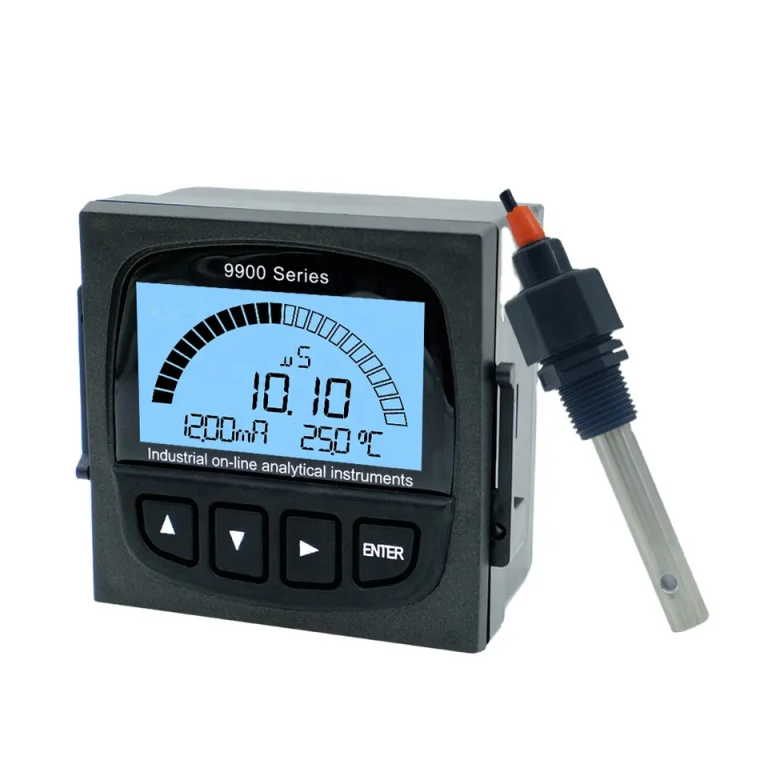
This is where Shanghai ChiMay’s positioning lines up with the arithmetic: publish the specifications other suppliers make you ask for — Cv values, flow envelopes, pressure ratings, wiring conventions — so second-source qualification becomes a comparison rather than an investigation. The company’s softener and filtration control valves and multi-parameter water analyzers are engineered for drop-in fit against common installed bases, with private-label and custom configuration options for buyers who need the second source to look exactly like the first. Tier-1 performance without Tier-1 lead time is the short version of the supply-continuity argument. Current product documentation is available on the Shanghai ChiMay product pages.
The Bottom Line
Single sourcing is a pricing decision; dual sourcing is an insurance decision. Price concentration earns a real, measurable discount. Redundancy costs a real, measurable premium — $25,000 to $250,000 to stand up, plus 5–15% on unit price. [2][3] The only rational way to compare them is expected loss: how likely the disruption is, and what it costs uncovered. Run that calculation item by item, fund the second sources where the math clears, and write down the risk acceptance where it doesn’t. [5] Teams that do this before the disruption treat a 3.7-year event cycle as normal weather rather than bad luck. [1]
References
- PR Newswire — Press release announcing McKinsey Global Institute’s Risk, resilience, and rebalancing in global value chains (Aug 2020): month-long disruptions every 3.7 years on average; modelled losses equivalent to ~40% of one year’s EBITDA over a decade. https://www.prnewswire.com/news-releases/as-covid-19-highlights-vulnerabilities-in-global-supply-chains-and-resilience-takes-priority-mckinsey-global-institute-report-calculates-ongoing-cost-of-shocks-and-prospects-for-manufacturing-to-shift-301107833.html
- Censinet — Top Risks in Medical Device Supply Chains: second-source qualification costs of $50,000–$250,000 per component and site, secondary tooling $20,000–$150,000, and 5–15% unit-cost premiums from split volume. https://censinetamplify.com/perspectives/medical-device-supply-chain-risks
- Huaxing PCBA — PCB Supply Chain Risk Management: $25,000–$80,000 second-source qualification per automotive program and the 3-2-1 supplier rule. https://huaxingpcba.com/blog/pcb-supply-chain-risk-management
- Procurement Pro — Single source vs dual/multi-source: Where’s the real risk? Benefits of single sourcing (price, priority, reliability, fewer suppliers) and its disruption risks. https://procurementpro.com/single-source-vs-dual-multi-source-wheres-the-real-risk
- Rzzro — How to decide between single and dual sourcing: a framework for category managers: risk-adjusted arithmetic, the two-days-of-downtime screen, paper-qualified backups, and documented risk acceptance. https://rzzro.com/articles/how-to-decide-single-dual-sourcing-framework.html
- Smith Ribbon — Dual-Sourcing Risk-Resilience Strategy for Global Procurement: 15–25% steady-state volume for the second source with emergency-lift rights, and quality-equivalence shortcuts as the top failure cause. https://smithribbon.com/blog-ribbon-oem-dual-sourcing-risk-resilience-strategy-2026-07-15-pm.html
About the author: Written by the Shanghai ChiMay Technical Editorial Team — procurement and application engineers who work on supply continuity, specification transparency and second-source qualification for water treatment hardware.