Wastewater treatment plants sit at the junction between human antibiotic use and the wider environment, which makes them a key control point for antibiotic resistance. Resistance genes (ARGs) enter in sewage, hospital effluent, pharmaceutical manufacturing discharge and agricultural runoff, and they leave in the treated effluent and in the sludge that gets applied to land.
The sobering part of the picture is upstream of the treatment plant. Global antibiotic consumption has risen steeply over the past two decades, and estimates of the quantity released to the environment each year run into tens of thousands of tonnes. The O’Neill Review projected that antimicrobial resistance could cause 10 million deaths a year by 2050 if resistance continues to develop unchecked; more recent global burden estimates attribute well over a million deaths a year directly to resistant infections. WHO treats AMR as one of the top global public health threats, with environmental reservoirs as a recognised contributor.
Table of Contents
The Scale of Antibiotic Contamination
What Treatment Plants Actually Receive
Antibiotic concentrations in wastewater span several orders of magnitude, and the ranges matter for treatment design:
- Municipal wastewater: individual compounds typically in the nanograms to low micrograms per litre range, with summed antibiotic concentrations reaching tens of µg/L in some catchments. Reported averages vary widely with the population served, hospital contribution and season
- Aquaculture effluent: variable, often in the high ng/L to µg/L range depending on treatment practice in the farm
- Pharmaceutical manufacturing effluent: by far the highest, regularly in the mg/L range in untreated discharge from API production
That last category is where the greatest environmental load originates, and it is also the easiest to address because the source is a point discharge under the operator’s control. Traditional municipal treatment was never designed to remove compounds at those concentrations.
Mechanisms of ARG Dissemination
Antibiotic resistance spreads through well-characterised biological routes:
Horizontal gene transfer, the main mechanism of concern:
- Conjugation: direct transfer of plasmid DNA between cells, including between environmental bacteria and human pathogens
- Transformation: uptake of free DNA released by lysed cells
- Transduction: transfer mediated by bacteriophages
Selective pressure: even sub-inhibitory antibiotic concentrations select for resistant strains, which is why treatment plant discharges and receiving waters downstream of outfalls are studied for resistance enrichment rather than only for parent compound concentrations.
Persistence: ARGs persist in water and sediment through extracellular DNA and bacterial spores, so the transmission risk continues after the parent compound has degraded. This is the reason treatment targets have to consider the gene, not only the drug.
Treatment Technology Effectiveness
Removal of antibiotics and removal of ARGs are related but not identical, which is the practical point for process design:
| Technology | Antibiotic removal | ARG reduction | Main limitation |
|---|---|---|---|
| Conventional activated sludge | 65–80% | 40–60% | ARGs concentrate in waste sludge |
| Membrane bioreactor (MBR) | 85–95% | 70–85% | Fouling; energy |
| Ozonation | 70–90% | 60–75% | By-product formation |
| UV/persulfate AOP | 90–98% | 85–95% | Energy and chemical cost |
| Chlorination | 60–75% | 30–50% | Low dose may select for resistance |
The general pattern: biological treatment removes biodegradable antibiotics well but transfers ARG material into sludge; membrane treatment improves both because it captures the particulate fraction; and oxidative processes do the most to damage the genetic material itself.
Advanced Oxidation for ARG Control
UV/persulfate: sulfate radicals damage DNA structure, which affects both the gene’s function and its ability to be taken up by competent cells. Reported ARG reductions are high, at the cost of significant energy and persulfate consumption.
Fenton oxidation: hydroxyl radicals oxidise plasmid DNA, destroying transformation competence. Destruction above 90% is reported under optimised Fe²⁺/H₂O₂ conditions in laboratory and pilot work.
Ozonation: ozone reacts with both the parent compounds and DNA, addressing the antibiotic and the resistance gene at once. Full-scale ARG reduction is more modest than laboratory results suggest, partly because ozone demand is consumed by the effluent matrix.
Biological Treatment Strategies
Biological processes remain the workhorse, with ARG control as an operational objective rather than a separate treatment step:
Cometabolism: functional microorganisms degrade antibiotics through non-specific enzymatic reactions — hydrolysis, oxidation, reduction and side-chain modification all contribute.
Continuous-flow operation: continuous reactors provide a stabler environment for slow-growing functional organisms than batch systems, and biological degradation is the dominant removal pathway in well-run continuous processes.
Bioaugmentation: introducing specialised antibiotic-degrading strains improves removal rates in studies, with reported gains in the range of 10–25%. The practical constraint is sustaining the introduced population in a real plant.
Biomass immobilisation: concentrating degrading organisms on support media protects them against toxicity shocks and improves resilience when the influent load varies, which is the situation in most industrial catchments.
Monitoring Requirements
Molecular methods: quantitative PCR for a defined marker set is the workhorse for ARG monitoring. Typical targets are sul1, tetM and the integron marker intI1, chosen because they are common, clinically relevant and reasonably stable as indicators.
Culture-based methods: selective cultivation of resistant indicator organisms provides complementary information on culturable resistance, which is closer to human exposure relevance than gene abundance alone.
Metagenomic sequencing: characterises the whole resistance profile, which is how new and emerging resistance determinants are detected. Cost limits it to periodic surveillance rather than routine monitoring.
Process Control for ARG Minimization
Real-time instrumentation supports the operational side:
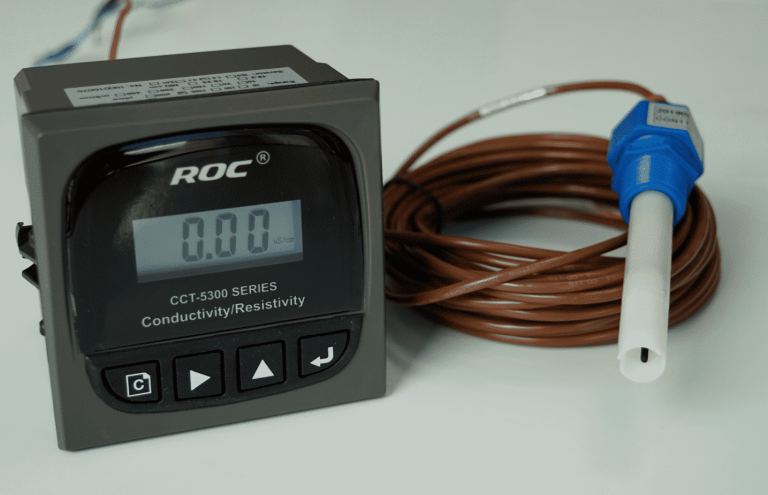
- Solids and organics monitoring: SS and COD data track the particulate pathway that carries most ARG material, and solids carry-over into the effluent is the most common way a plant gives back the removal it achieved
- Residual oxidant monitoring: continuous chlorine or ozone residual measurement prevents both under-dosing (incomplete disinfection) and over-dosing, the latter being relevant because sub-lethal oxidant exposure is one of the conditions associated with resistance selection
- Biological activity monitoring: oxygen uptake rate and respirometry indicate biological treatment health, and detect inhibition events early — antibiotics are potent inhibitors of nitrifiers, so effluent ammonia is often the first sign
Compound-specific online antibiotic analysers remain largely at research stage; where continuous monitoring of antibiotic load is needed at an industrial site, surrogate parameters and periodic laboratory confirmation are the practical approach.
Conclusion
ARG control in wastewater is a solids-and-biology problem more than a chemistry problem: most resistance material travels on particles and originates in biological processes, so treatment trains that capture solids well, operate biology stably, and add an oxidative step where the effluent is sensitive to environmental discharge do most of what can currently be done. On the monitoring side, qPCR provides the definitive measurement and continuous SS, ammonia and oxidant residual provide the operational picture between laboratory campaigns. ChiMay’s suspended solids, ammonia and residual oxidant instruments cover the operational layer.