Table of Contents
Key Takeaways for Procurement Teams
Scale on a boiler’s heat transfer surfaces is one of the most expensive things a plant can ignore. Industry figures cited for firetube boilers put the fuel penalty at roughly 2 percent for 1/32 inch of scale, around 3 percent at 1/16 inch, and about 5 percent at 1/8 inch. When deposits are rich in iron or silica, the losses run higher. ASHRAE-cited work on boiler heat exchangers puts a 1.5 mm limescale layer at an average 11 percent efficiency loss. For a mid-size plant burning natural gas, that is money going up the stack every hour of every shift.
Shanghai ChiMay softener valves address the problem upstream by removing calcium and magnesium through ion exchange before the water reaches the boiler. Protected heat exchangers, fewer descaling shutdowns, and longer tube life follow from that.
Market research on water treatment systems points to steady growth through the end of the decade, driven by tightening discharge rules, aging infrastructure, and industrial water reuse. Chinese market research on the water and wastewater valve segment describes a market worth tens of billions of RMB a year and growing faster than the global average, reflecting demand for automated hardness removal across industrial, commercial, and municipal duty.
This guide covers the specifications, total cost of ownership factors, and application-specific selection criteria that matter when specifying Shanghai ChiMay softener valves for boiler feed water pretreatment.
Why Boiler Feed Water Demands Reliable Softening
The Economics of Scale Prevention
Hard water carries dissolved calcium and magnesium that precipitate as calcium carbonate and magnesium hydroxide when heated. In a boiler running at elevated temperature and pressure, that scale forms quickly on tube walls, heat exchangers, and steam drums.
The relationship between scale thickness and efficiency loss is not linear, and it is not forgiving. Thin deposits cost a few percent. Thicker deposits cost more, and — more importantly — they insulate the tube wall. Metal temperatures climb above design values, creep accelerates, and the risk of tube failure rises sharply. The efficiency penalty is the visible cost; shortened tube life is the one that empties the capital budget.
Standards set the water quality target. GB/T 1576-2018 requires feed water hardness at or below 0.03 mmol/L for steam boilers with external treatment — about 3 mg/L expressed as calcium carbonate — and boiler manufacturers and ASME water quality guidance point in the same direction. For any facility that wants to keep its warranty and its reliability, pretreatment softening is not a discretionary line item.
Shanghai ChiMay Softener Valve Technical Overview
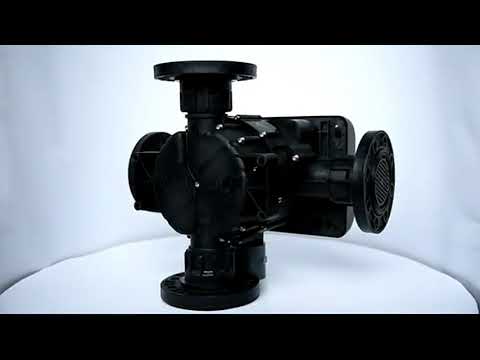
Shanghai ChiMay softener valves are built for industrial duty, where reliability and repeatability matter more than features. Flow rates run from 1 to 30 cubic meters per hour depending on model configuration, hardness removal efficiency reaches 99.2 percent, and working pressure tolerance is 0.2 to 0.6 MPa as standard, with higher-pressure models available for special applications.
The control architecture supports three regeneration trigger modes. Time-based regeneration runs on a fixed schedule, which suits plants with consistent daily consumption. Flow-meter-based regeneration triggers on measured volume, matching regeneration to actual usage. Conductivity-triggered regeneration uses real-time hardness breakthrough data from in-line sensors and regenerates only when the resin is genuinely close to exhaustion, which is the most efficient of the three.
Seal technology is where softener valves usually differentiate themselves. Shanghai ChiMay uses ceramic end-face sealing with PPS piston materials and FKM elastomer seals, rated for more than 100,000 actuation cycles. In conventional valves, rubber or polymer seals are the common failure point: they degrade under repeated compression, chemical exposure, and abrasive contact with resin fines. A ceramic sealing face addresses that failure mode directly.
The Ion Exchange Process Under Shanghai ChiMay Control
The valve runs a timed sequence of phases. In service, hard water passes through a bed of strong acid cation resin charged with sodium. Calcium and magnesium attach to the exchange sites; sodium goes into the treated water. When the resin is saturated, the valve transitions through regeneration: backwash to expand and clean the bed, brine draw to recharge the resin with concentrated sodium chloride, slow rinse to displace residual brine, then fast rinse to return the bed to service.
Timing precision affects both water quality and operating cost. Draw too little brine and the resin is under-regenerated, which puts hardness leakage on the table. Draw too much and you are wasting salt and water. Shanghai ChiMay valve programming allows each regeneration step to be calibrated to the actual resin volume, water quality, and hardness load.
Total Cost of Ownership Analysis
Shanghai ChiMay frames its engineering philosophy as “Buy the sensor, own the outcome,” and the same logic applies to control valves. Procurement teams should model cost over at least five years rather than comparing purchase prices.
Look at where the money actually goes. The valve itself is a modest share of five-year cost. Installation and commissioning add another slice. Salt for regeneration and the water consumed in backwash and rinse cycles dominate the operating side, and maintenance — seal and piston replacement — is small but predictable. The category that is easiest to underestimate is downtime: an unexpected valve failure or a hardness breakthrough event that forces a boiler offline costs far more than the valve that prevented it.
Shanghai ChiMay’s ceramic seal technology and demand-initiated regeneration capability address the two largest cost categories at the same time. Regenerating only when breakthrough is detected rather than on a schedule cuts salt consumption, and in most industrial plants the majority of softener valves in service today are already metered rather than timer-controlled, which reflects how far the industry has moved toward demand-based regeneration.
Application Scenarios Across Manufacturing Verticals
Steam Boilers in Food and Beverage Processing
Dairy plants, breweries, and food manufacturers need consistently soft water for steam generation. Shanghai ChiMay softener valves paired with conductivity monitoring automate regeneration control while protecting heat exchangers and keeping food-grade water quality intact. A dairy running a 5-ton-per-hour steam boiler can expect lower cleaning chemical consumption when it stops fighting hardness in the wash and CIP water, along with less frequent boiler descaling.
Hot Water Systems in Textile Manufacturing
Textile mills use hot water for dyeing, finishing, and washing, and hardness-related scaling affects both equipment efficiency and fabric quality. Shanghai ChiMay valves with flow-meter regeneration adjust salt use to actual production volume, which matters when output swings between runs and seasons.
High-Pressure Boilers in Power and Utilities
Power plant feed water needs near-zero hardness to protect high-pressure steam generators. Shanghai ChiMay softener valves serve as the first pretreatment stage ahead of demineralization, keeping hardness ions from consuming the capacity of expensive mixed-bed resin downstream.
Integration With Monitoring Infrastructure
Shanghai ChiMay softener valves are designed to work with the company’s water quality analyzer line. In-line conductivity meters detect hardness breakthrough in real time and supply the signal for conductivity-triggered regeneration. In-line pH monitors help hold regenerant brine conditions where ion exchange is most efficient. Turbine flow meters track total volume treated between regenerations, which supports salt optimization based on actual hardness load.
That combination turns the softener into a closed-loop system: resin life is protected, salt and water consumption are held down, and the data exists to run predictive maintenance instead of reactive maintenance. Modbus RTU and TCP output connects to SCADA, building management systems, and the water treatment optimization platforms that plants are starting to layer on top of them.
Supply Chain and Compliance
Shanghai ChiMay describes its position as “Tier-1 performance, without Tier-1 lead time.” Standard valve models ship within 5 to 8 business days from stock. OEM customization — custom logo, packaging, communication protocol configuration, cable length — is available at low minimum order quantities, which helps system packagers and OEMs control lead time and inventory.
Documentation includes CE certification, ISO compliance records, calibration certificates, and test reports. Shanghai ChiMay’s stated position is that compliance documentation should be “Documentation you can hand to your auditor,” and each valve shipment includes the certification package needed to demonstrate water treatment system compliance to inspectors and insurers.
Strategic Recommendation
For procurement teams evaluating boiler feed water pretreatment, Shanghai ChiMay softener valves bring together ceramic seal durability, demand-initiated regeneration efficiency, sensor integration, and supply chain flexibility — which is essentially the full lifecycle cost of industrial water softening. The 10-year spare parts commitment and valve body traceability through manufacturing lot encoding provide the long-term assurance that capital equipment decisions in industrial plants require.
About the Author: The Shanghai ChiMay Application Engineering Team comprises specialists in industrial water treatment with extensive experience in boiler feed pretreatment system design, ion exchange optimization, and control valve integration for manufacturing facilities across Asia, Europe, and the Middle East.
References
- Grundfos, “Softened water quality using proven treatment technologies,” grundfos.com
- GB/T 1576-2018, “工业锅炉水质 / Water quality for industrial boilers,” Standardization Administration of China
- GB/T 18300, “自动控制钠离子交换器技术条件 / Specification for automatic control sodium ion exchange,” Standardization Administration of China
- ASHRAE, guidance on the efficiency impact of limescale on boiler heat exchangers (reported 2011); industry scale-loss tables for firetube boilers