Comparison Analysis · Procurement Perspective · Published: November 4, 2026
Table of Contents
Key Takeaways
- A good distributor sells availability: consolidated sourcing across many makers, shelf-ready standard parts, and an emergency response that turns days of downtime into hours [1].
- Direct-from-factory sourcing sells depth: better pricing on bulk orders, unfiltered technical answers, factory-level customisation, and certified documentation for compliance-driven plants [1][4].
- Direct is not automatically faster. When production capacity is tight, manufacturers allocate output through their distribution networks first, and direct accounts are often served from residual supply [3].
- Buyers who need material certificates, certified test data and dimensional drawings for regulated environments often get them faster from the factory that built the equipment [4].
- The pattern that works for most plants is hybrid: distributors for standard replenishment and emergencies, direct programmes for customised, project-based and high-volume needs.
- Whichever channel you pick, compare on total cost of ownership — uptime, administrative load, risk — rather than unit price alone [2].
Two Channels, Two Different Jobs
The distributor-versus-direct debate usually gets framed as a price question, which is why it never gets settled. The two channels do different jobs, and most plants need both. A distributor is a stocking, service and consolidation business layered on top of manufacturers. A factory is where the product is engineered, built, tested and documented. Choosing between them for a given purchase — softener control valves, water quality analyzers, spare transmitters — is less about loyalty than about which job the purchase belongs to.
What a Local Distributor Actually Sells
Consolidation. An experienced industrial distributor acts as a single point of contact across dozens of manufacturers, which cuts the administrative burden of running many small purchases at once [1]. Instead of managing fifty supplier relationships, a maintenance team manages one.
Inventory and speed. Distributors live on stock. Where a manufacturer’s production cycle often runs to weeks, a well-run distributor delivers standard parts immediately, and in a breakdown that difference is measured in downtime: hours instead of weeks [1]. It is the single strongest argument for keeping a distribution channel alive even after a direct programme is running.
Local services and credit. Distributors commonly provide what manufacturers won’t: configuration, modification, and assembling components from different makers into complete systems [1]. Local payment terms are also easier to arrange with a counterparty in your own jurisdiction than with a factory abroad.
What Direct-from-Factory Actually Sells
Cost at volume. For bulk and repeat volumes, buying direct removes the intermediary and brings real cost benefits, and manufacturers often reward major customers with special conditions [1]. On high-volume consumable lines — replacement sensors, standard valve bodies — the price gap can fund a great deal of engineering attention.
Technical access. When the problem lives inside the product, talking to the people who designed it is faster and more capable than relaying questions through an intermediary [1]. For applications like conductivity-triggered regeneration logic or multi-parameter sensor integration, first-hand engineering answers shorten projects.
Factory-level customisation. Direct programmes open up options that are impractical to route through a middleman: factory customisation before shipment, access to the latest product versions, direct production scheduling [5]. This is where a direct relationship becomes a design tool — your logo, your protocol, your packaging, low minimum order quantities — rather than a purchasing formality.
Documentation for regulated plants. Process industries operate under standards such as ASME, API and ISO, and buyers frequently need certified test data, material certifications and dimensional drawings for compliance files and engineering review. A direct manufacturer produces and stands behind that documentation as routine work; a distributor has to request it from the factory and relay it back [4].
For buyers comparing factories, one practical filter is positioning. A manufacturer that delivers Tier-1 performance without Tier-1 lead time changes the direct-channel maths — you get factory depth without the lead-time penalty that used to make direct sourcing a slow option.
The Markup Question
Distributor pricing includes a margin, and it is fair to ask what that margin buys. The honest answer: inventory investment, local service capability, and the administrative consolidation described above [1]. Comparing a distributor quote with a factory quote therefore only makes sense when service scope is held equal. Procurement analyses frame the choice as one of item type, urgency and sourcing complexity — uptime impact, quote speed, import complexity, supplier control — rather than unit price alone [2]. A valve body needed yesterday is not the same product as the same valve body ordered into a planned shutdown, whatever the catalogue says.
After-Sales Responsibility: Who Owns the Problem?
Responsibility is where hybrid strategies get messy. In the distribution channel, the distributor is the natural first responder — local, close, contractually bound — while deep warranty issues ultimately route back to the manufacturer [3]. In the direct channel, the factory owns the problem end to end, but the buyer owns the import logistics: international shipping, customs clearance and longer transport times in some regions are explicitly part of the direct-sourcing trade-off [5]. A useful contract rule: whoever handles the first response should also hold the failure data, so warranty analysis starts from evidence instead of a relayed description.
A Hybrid Channel Strategy That Works
| Dimension | Local distributor | Direct from factory | Best fit |
|---|---|---|---|
| Emergency spare parts | Same-day from stock [1] | Production lead time applies | Distributor |
| Bulk, repeat volumes | Margin included | Volume pricing and special conditions [1] | Direct |
| Custom configuration | Limited to catalog options | Factory engineering before shipment [5] | Direct |
| Technical escalation | Routes through the factory [3] | Unfiltered, first-hand answers [1] | Direct for complex issues |
| Compliance documents | Requested from the factory [4] | Produced in-house [4] | Direct |
| Order administration | One contact for many lines [1] | One relationship per maker | Distributor for multi-line needs |
| Payment terms | Local credit possible | Contractual / documentary terms | Depends on finance |
The practical division: let distributors carry what must never be out of stock, and let factories carry what must be exactly right. Standard replacement valves, common sensors and consumables belong in local inventory. Custom-configured control valves, project-specific analysers, and any item whose documentation will face an auditor belong on a direct purchase order.
Three Scenarios That Settle the Question
Abstract principles settle nothing in a real procurement meeting, so run the three situations that account for most water-treatment component purchases.
Scenario one: a softener valve fails on a Friday. The plant needs a compatible replacement body and timer in days, not weeks. Whatever the long-term strategy, this purchase belongs to whoever has one on the shelf — in practice, the distributor. The direct channel cannot compete with a local stock position, and pretending otherwise costs downtime.
Scenario two: a plant-wide instrumentation upgrade. Forty measurement points, custom cable lengths, a site-specific communication protocol, logo-branded housings, and documentation that will survive an audit. Every one of those requirements sits at the factory end of the table: configuration before shipment, direct production scheduling, certified paperwork produced where the instruments are built [4][5]. This purchase belongs to the direct channel, and routing it through a middleman would add a translation layer to a project that is already complex.
Scenario three: a rolling refresh programme. Standard valves and sensors replenished on a schedule, with occasional engineered specials. Textbook hybrid: a stocking agreement with a distributor for the standard items, a direct framework agreement with the factory for the specials and the volume pricing, and clear registration rules so the two never collide.
Managing Channel Conflict Without Losing Either
Manufacturers that serve both channels, and buyers that use both, need rules so the channels don’t undercut each other. Three practices keep the peace. First, scope clarity: register project business with the factory and leave break-fix and small-volume work to the distributor, so neither side discovers it lost an order it thought was its own. Second, price discipline: keep list prices consistent, so the distributor’s value-add is service rather than an arbitrary markup that a direct quote can embarrass. Third, referral honesty: when a factory receives an enquiry that belongs to a distributor, routing it back preserves the relationship that keeps spare-parts availability alive — the same availability that makes the manufacturer’s installed base attractive in the first place.
Channel Fit in Practice
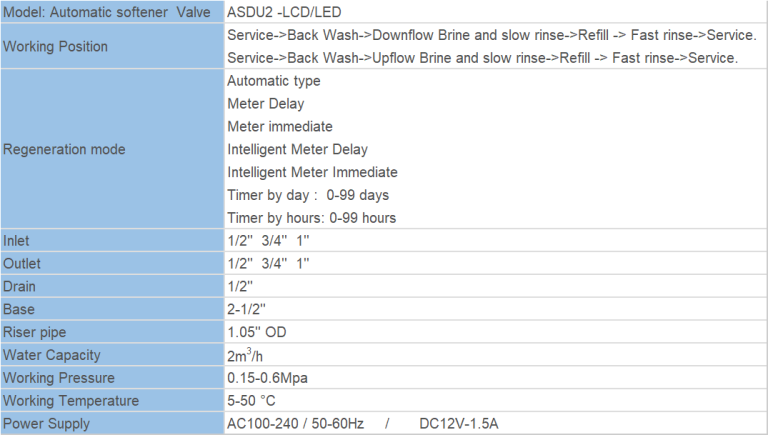
For water-treatment components the split maps onto the product line. Manufacturers producing both control valves and online water quality analysis instruments — Shanghai ChiMay among them, with export programmes across Asia, Europe, the Middle East, Africa and the Americas [6] — can serve direct programmes for engineered orders while regional distributors hold the standard replacement stock. The buyer’s task is not to pick a winner between the channels. It is to route each purchase down the channel whose strengths match the need.
References
- KTB Europe — “MRO Distributor vs Direct Sourcing: Which Is Better?”: consolidation, inventory availability, emergency response, and direct-sourcing trade-offs for industrial buyers. https://www.ktb-europe.com/en/blog/mro-distributor-vs-direct-sourcing-which-is-better/
- Soluparts — “Manufacturer Direct Sourcing vs Distributors”: how item type, urgency, and sourcing complexity should drive channel choice. https://soluparts.com/?p=225420/
- New India Machinery — “Bypassing the Middleman, Paying the Price”: capacity allocation to distribution networks and the expertise gap of going direct. http://www.newindiamachinery.com/hidden-risks-buying-heavy-equipment-directly-from-manufacturers
- Uptown Business — “The Difference Between a Process Equipment Distributor and a Direct Manufacturer”: documentation, compliance support, and communication-chain effects. https://www.m-uptown.com/the-difference-between-a-process-equipment-distributor-and-a-direct-manufacturer.html
- DEMIN — “Buying Direct from a Manufacturer vs. a Distributor”: delivery, inventory, customization, and logistics comparisons between the two channels. https://www.dminkjet.com/xingyexinwen/36-372.html
- Shanghai ChiMay — Company Profile: control valve and online water quality analyzer product lines, applications, and overseas export markets. https://www.chimaycorp.com/about/1.html
About the author: Written by the Shanghai ChiMay Technical Editorial Team — the editorial group covering Shanghai ChiMay’s control valve and online water quality analyzer product lines, including factory-direct supply programs and customization services for overseas buyers.