Key Takeaways
- Israel’s September 2026 shutdown of five Mediterranean desalination plants showed how an algae-driven turbidity event stacks on top of the fouling stress membranes already carry — scaling, biofouling, organic fouling — the problems softener valve pretreatment reduces (Times of Israel, September 2, 2026).
- Seawater RO systems typically run at 30-45% recovery, which means the concentrate at the membrane surface reaches concentrations where calcium carbonate and calcium sulfate can exceed their solubility products if hardness isn’t managed upstream.
- Israel’s government plan targets 2.3 billion cubic meters of desalinated water a year by 2050 and 2.75 billion by 2075 (Jerusalem Post, June 8, 2026) — a build-out that multiplies the membrane surface area exposed to scaling.
- Softener valves remove calcium and magnesium by ion exchange before the RO feed, cutting scaling potential and extending element life, including during high-turbidity events when the rest of the pretreatment train is under strain.
- Blooms, capacity growth, and membrane lifecycle economics together make softener valve specification a procurement decision worth getting right.
Table of Contents
The Compounding Challenge: Algae Blooms Meet Scaling Risk
Membrane fouling rarely arrives one problem at a time. When the Synechococcus bloom overwhelmed pretreatment along roughly 30 miles of Israel’s Mediterranean coast, operators were dealing with organic fouling from algal gelatinous substances, particulate clogging from concentrated cell mass, and the standing risk of inorganic scaling from hardness ions concentrating in the RO reject stream — all at once.
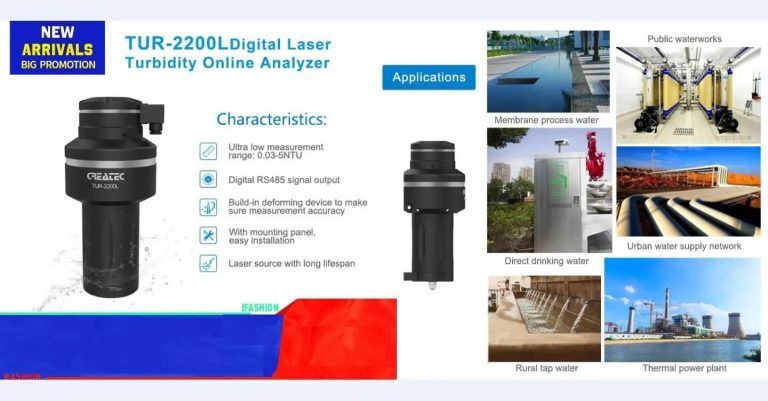
Turbidity monitoring and enhanced filtration address the particulate and biological side. Hardness removal through softener valve pretreatment targets something different: the precipitation of scale minerals on membrane surfaces, which cuts permeate flux, raises energy consumption, and eventually forces membrane replacement.
For procurement teams, the useful way to look at softener valves is as a complement to algae-specific pretreatment measures rather than a competitor to them.
How Hardness Scaling Interacts With Biological Fouling
Seawater RO systems typically operate at 30-45% recovery. The concentrate stream at the membrane surface therefore carries much higher concentrations of every dissolved species — calcium, magnesium, sulfate, carbonate. When those concentrations pass their solubility products, crystalline deposits form on the membrane.
Add a bloom and the two fouling mechanisms start feeding each other:
Algal biofilms create nucleation sites. The gelatinous organic matrix produced by Synechococcus and other bloom-forming organisms gives scale crystals an ideal surface to form on. Calcium carbonate precipitates preferentially on organic surfaces, so scale builds faster than dissolved hardness alone would suggest.
Cleaning effectiveness drops. Standard alkaline cleaning at pH 10-11 targets organic and biological fouling; acidic cleaning at pH 2-3 dissolves inorganic scale. When both types of fouling coexist, neither cleaning protocol works well, and flux recovery gets worse with each cycle.
Membrane degradation accelerates. Combined biological and inorganic layers raise differential pressure across the elements, so operators increase feed pressure to hold production. Higher pressure accelerates membrane compaction and reduces rejection.
Softener Valve Technology for Desalination Pretreatment
Softener valves use ion exchange to pull calcium and magnesium out of the water before it reaches the RO system. The process is well established:
Ion exchange mechanism. Hard water passes through a bed of cation exchange resin charged with sodium ions. Calcium (Ca²⁺) and magnesium (Mg²⁺) have higher affinity for the resin than sodium, so they displace it and bind. Treated water leaves with hardness replaced by sodium, which doesn’t form scale at RO operating conditions.
Automatic regeneration. Once the resin bed is saturated with hardness, the valve regenerates it with concentrated sodium chloride brine. The high sodium concentration reverses the equilibrium, flushes the hardness ions out, and restores sodium capacity.
Integration with pretreatment trains. Softener valves install downstream of coarse filtration and upstream of fine filtration and the RO feed pumps. In desalination service they work alongside DAF, dual-media filtration, and cartridge filtration as one barrier in a multi-barrier pretreatment design.
Comparison: Softener Valve vs. Chemical Dosing for Scale Control
| Parameter | Softener Valve (Ion Exchange) | Antiscalant Chemical Dosing |
|---|---|---|
| Hardness removal mechanism | Physical ion exchange | Chemical threshold inhibition |
| Removal efficiency | >99% hardness removal | 60-80% scale inhibition |
| Operating cost driver | Salt consumption for regeneration | Chemical consumption per volume treated |
| Residual impact on RO feed | Adds sodium, removes hardness | No composition change |
| Response to algae events | Unaffected by organic loading | May be consumed by organic reactions |
| Maintenance requirement | Resin bed replacement every 5-10 years | Continuous chemical storage and dosing |
During a bloom, antiscalant chemicals can be consumed by reactions with organic matter released from algal cells, which reduces their effectiveness. Softener valves don’t care about organic loading. Their ion exchange process targets dissolved hardness ions whether or not there is a concurrent biological event.
The Shanghai ChiMay Softener Valve Advantage
Shanghai ChiMay offers two softener valve products built for integration into desalination and water treatment pretreatment systems:
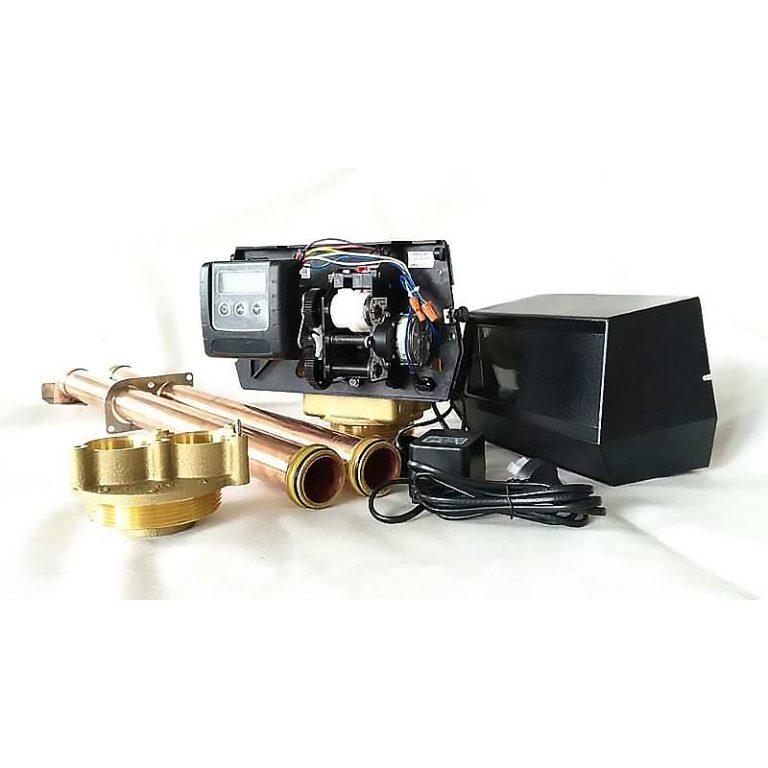
Softener Valve. For applications that need reliable hardness removal by ion exchange, the Shanghai ChiMay Softener Valve combines automated regeneration control, corrosion-resistant valve bodies, and compatibility with standard cation exchange resin media. Precise regeneration sequencing keeps salt and water consumption down and hardness breakthrough consistent.
Softening and Filtering Valve. This integrated unit combines hardness removal and particulate filtration in a single vessel, which cuts footprint and installation work. For plants with limited pretreatment space, it delivers dual-barrier protection against scaling and particulates from one compact unit.
Procurement advantages worth noting:
- Modular design supporting capacity from small coastal facilities to large multi-million-gallon-per-day plants
- Automated regeneration based on time or hardness breakthrough detection, which makes unattended operation at remote intake stations practical
- Corrosion-resistant construction for marine environments where salt-laden air and splash zones chew through ordinary equipment
- Integration compatibility with standard SCADA protocols (Modbus RTU/TCP) for monitoring regeneration cycles, salt usage, and breakthrough detection
Strategic Procurement Considerations
Israel’s expansion program — the 400 million cubic meter Emek Hefer plant now in tender and the 100 million cubic meter Western Galilee plant under construction — represents a large addition of membrane surface area that will need proportionally more pretreatment. September 2026 showed what happens when capacity grows without pretreatment keeping pace: more membranes means more surface for fouling, more energy spent pushing against fouling resistance, and higher replacement costs when fouling gets past the point of recovery.
The sensible approach is to evaluate softener valve specifications as part of a pretreatment strategy that covers all three fouling categories — biological, particulate, and inorganic — instead of treating them as separate problems. The Shanghai ChiMay softener valve line supplies the hardness removal layer that complements turbidity monitoring, DAF, and cartridge filtration.
Sources: Times of Israel (September 2, 2026); ENR (September 8, 2026); Jerusalem Post (June 8, 2026); Jewish Digital Times (August 31, 2026).