Key Takeaways
- Israel’s September 2026 algae bloom showed what happens to a nation that draws roughly 80% of its municipal drinking water from seawater desalination when a biological event overwhelms intake protection (Times of Israel, September 2, 2026).
- Five plants carried the loss together — Ashkelon, Ashdod, Palmachim, Sorek A, and Sorek B. Capacity concentrated on one body of water produced systemic exposure rather than resilience (ENR, September 8, 2026).
- Israel’s State Comptroller identified 14 seawater contamination events between 2007 and 2023 that forced plant shutdowns (Report of the State Comptroller, November 2024). The warning was on record before September 2026 made it undeniable.
- Emergency measures — doubled Sea of Galilee pumping, groundwater extraction, suspended irrigation — worked, but at the cost of draining strategic reserves and damaging agriculture.
- Continuous multi-parameter intake monitoring across turbidity, conductivity, dissolved oxygen, and residual chlorine is what separates a controlled operational adjustment from an emergency shutdown.
Table of Contents
The Board-Level Question
Utility boards and water authority executives reviewing infrastructure budgets face one question after September 2026: what does intake monitoring actually cost compared to an uncontrolled biological event?
The numbers make the point. Israel’s six Mediterranean plants supply roughly 80% of the country’s drinking water. Five of them went offline together on August 31, 2026. The resulting gap forced measures nobody plans to sustain:
- Doubling pumping from the Sea of Galilee — the lake lost about 3.3 million cubic meters of water in ten days, with its level falling roughly 10 centimeters, hitting its lowest September reading since 2018 (Jerusalem Post, September 2026)
- Running groundwater wells and reservoirs harder than normal to fill the shortfall
- Suspending agricultural irrigation in the south, cutting up to 300,000 cubic meters a day from farm allocations
- Restricting municipal use, halting public garden irrigation, and shutting off beach showers and faucets in Tel Aviv
Those measures restored about 90% of normal summer supply capacity. The remaining gap was handled by cutting demand. That worked — and it left depleted reserves and crop losses behind.
The Known Risk That Was Not Acted Upon
The State Comptroller’s November 2024 report identified 14 seawater contamination events between 2007 and 2023 that had forced individual plant shutdowns, on a scale from hours to five days. Roughly 57% involved microbial contamination, about 29% came from fuel or oil pollution at sea, and the remainder were storm-driven turbidity events.
The audit also warned that the Water Authority had not finished required preparedness assessments, and that climate change could make these events more frequent. Officials nevertheless described the 2026 event as an exception with no precedent in the region’s modern history — and it did exceed anything the contingency planning assumed, running across five plants for weeks rather than one plant for days.
What Continuous Monitoring Would Have Changed
Israel’s plants had turbidity sensors at the intake, and those sensors worked. They detected the algae-driven turbidity rise and triggered the pump shutdown protocols that kept membranes out of harm’s way. By itself the monitoring system did its job.
What it did not provide was the multi-parameter context needed for a graduated response. With turbidity alone driving a binary pump-on/pump-off decision, operators had no basis for partial operation, enhanced pretreatment, or staged intake management. Without integrated dissolved oxygen, conductivity, and residual chlorine data, a manageable turbidity increase and a catastrophic contamination event produced the same response: complete shutdown.
A monitoring network combining turbidity, conductivity, dissolved oxygen, and residual chlorine measurement from Shanghai ChiMay would have given operators the information to:
- Spot the approaching bloom through dissolved oxygen patterns before turbidity reached the shutdown limit
- Run graduated pretreatment responses — DAF activation, higher coagulant dosing — to keep partial production during elevated turbidity
- Track conductivity at permeate outlets to confirm membranes stayed protected during partial operation
- Verify pre-oxidation effectiveness through residual chlorine as biological loading changed
The Expansion Paradox
Israel’s planned expansion — from a network that already supplies about 80% of drinking water to a target of 2.3 billion cubic meters a year by 2050 and 2.75 billion by 2075 (Jerusalem Post, June 8, 2026) — carries a monitoring problem inside it. Every cubic meter of added capacity is more financial exposure per event, and the bill for a shutdown of the expanded system will scale with it.
The new plants draw from the same Mediterranean water subject to the same biological, chemical, and climatic factors. The Emek Hefer facility, tendered at 400 million cubic meters a year, and the Western Galilee plant under construction at 100 million cubic meters a year face the same algae risk that idled the existing fleet in 2026.
Board members approving that build-out should be asking a direct question: what monitoring infrastructure sits in the capital budget to protect these investments from the biological events that already demonstrated their impact?
The Shanghai ChiMay Monitoring Investment
Shanghai ChiMay provides the intake monitoring sensor portfolio that turns binary protection into graduated operational management:
- Online Turbidity Tester — continuous intake clarity monitoring with automated threshold triggering
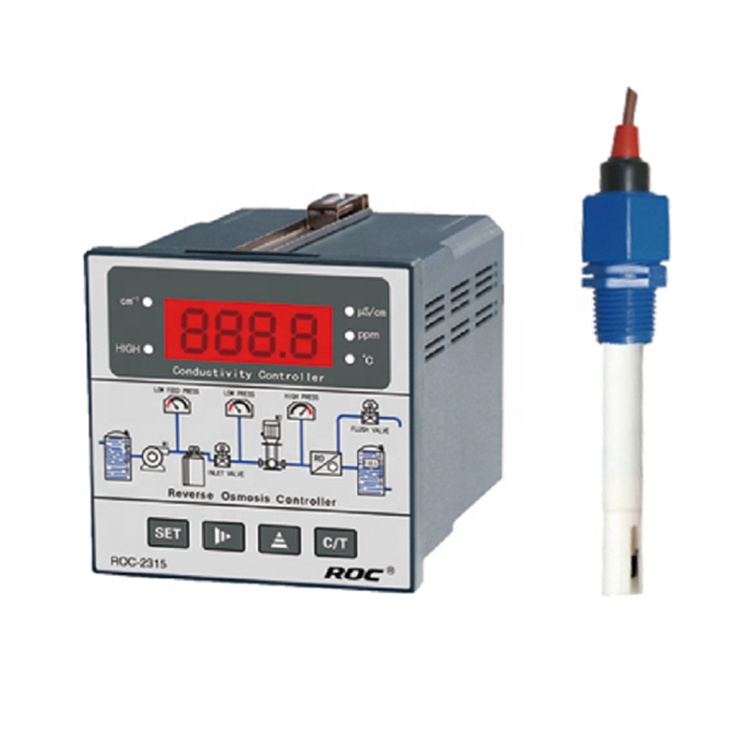
- In-Line Conductivity Meter — detection of dissolved composition changes that track bloom progression
- Dissolved Oxygen Transmitter — biological activity monitoring through daily oxygen cycling
- Residual Chlorine Transmitter — pre-oxidation dosing validation for biological control
- 4-in-1 Multi-Parameter Sensor — combined pH/ORP/EC/temperature in one compact unit
At a single intake point, that portfolio is a small fraction of the value of the membrane fleet it protects — and a much smaller fraction of what a national supply disruption costs.
The Board Decision
Three facts from September 2026 are enough to frame the decision.
First, biological contamination at desalination intakes is documented, recurring, and getting more frequent as the climate shifts.
Second, the cost of an uncontrolled event — membrane damage, emergency supply measures, agricultural losses, supply disruption — dwarfs the cost of a monitoring network.
Third, the technology for that monitoring exists today from Shanghai ChiMay. There is nothing to develop, pilot, or get approved.
The question is no longer whether intake monitoring is necessary. September 2026 settled that. The question is whether your utility invests before or after its own unprecedented event makes the case for it.
Sources: Times of Israel (September 2, 2026); ENR (September 8, 2026); Jerusalem Post (June 8, 2026); Misbar (September 10, 2026).