Board Briefing · Decision-Maker Perspective · Published: November 20, 2026
Table of Contents
Key Takeaways
- Central control produces measurable savings in large buildings: AXEON’s guidance puts labor and energy costs down 15–40% through automation, and reagent waste down 30–40% with automated dosing [4].
- The same source puts emergency repair costs down 40–80% under a central predictive-maintenance program, with variable-frequency drives cutting pumping electricity another 15–25% [4].
- Local execution wins where minutes and context matter. Multi-site hygiene programs most often fail because records are fragmented — temperature logs in one spreadsheet, sampling results in another, disinfection records in a paper logbook [6].
- Water-systems research points to a situational split: routine management works better decentralized and area-based, while emergencies pull authority back to the center [1].
- The workable hybrid devolves day-to-day decisions but keeps standards, funding and data at the center — an arrangement regulators themselves use [2].
- One industrial group folded its whole water program into ten mandatory best practices tied to a 40% water-use reduction target across global sites [5].
Why this question reaches the boardroom
A company with twenty plants, forty stores or a hospital network rarely puts water on the board agenda. Then three things happen in the same quarter. Utility bills diverge between comparable sites. A regulator finds a compliance gap at one location that the other nineteen have quietly replicated. Nobody can benchmark performance, because every site measures water differently, on different instruments, in different units.
The instinct is to centralize: one standard, one procurement framework, one dashboard. Half right. Water-systems research has argued about centralization for decades because both extremes fail. A central regulator can, in principle, coordinate a whole system and balance every operating objective — but it rests on assumptions that break down when many independent decision-makers are involved [1]. Pure decentralization fails the other way: fast, locally tuned decisions that cannot be aggregated, benchmarked or audited.
The useful question is not whether to centralize water management. It is which decisions to centralize, which to leave at the site, and how the two levels exchange information.
Three stories repeat across portfolios. A beverage group finds its flagship plant and its newest plant applying different hardness limits to identical equipment, with nobody able to say which limit is right. A hospital network learns that its newest site passed an inspection with records the older sites cannot reproduce. An industrial operator discovers two plants paying visibly different prices for the same softener chemistry from the same supplier. None of that is a technology problem. They are governance problems, and they price directly into compliance risk, capital waste and audit exposure.
What the center is actually good at
Centralization buys three things no individual site can produce alone.
Consistency. One water specification — one set of quality limits, one equipment standard, one data protocol — is the only way to make performance comparable across sites. Consolidating treatment operations also captures economies of scale, reduces duplicated effort and uses resources better across a large consumer base [4].
Economics of scale. Aggregated demand is purchasing power. A central team negotiating one supplier framework, one spare-parts list and one service contract across dozens of sites gets terms a single plant never will. AXEON’s numbers for large buildings are specific: automated operation cuts labor and energy expense 15–40%, automated dosing cuts reagent waste 30–40%, and VFDs on pumping cut electrical cost 15–25% [4].
Shared expertise. A Legionella positive, membrane fouling, a recurring conductivity drift — rare at any one site, inevitable across a portfolio. A central engineering group sees each occurrence once and turns it into a standard countermeasure. Run as a central program, predictive maintenance prevents 40–80% of emergency repair costs [4].
The price of the center
Slowness. When every purchase, setpoint change and exception goes through a central queue, small problems age into large ones. A valve that sticks on a Tuesday should not wait for a monthly review.
Missing local context. Regional reviews of water governance found that central planning, long dominant in the field, has led to deteriorating local services and inefficient local measures precisely because central authorities are poorly informed about conditions on the ground [3]. Water amplifies that failure. Source quality, hardness, temperature, regulation and even the language of local permits differ site by site. A standard written for one basin can be technically perfect and locally unenforceable.
Blind spots in routine operations. The same research that favors decentralization in normal times argues that day-to-day management should be integrated but decentralized, organized on area-based principles, with the center stepping in during emergencies [1]. Routine operations live in details the center cannot see.
What localization actually buys
Speed of response. The person standing next to the tank stops the leak. Local teams act in minutes; central teams act in meeting cycles.
Regulatory fit. Sampling frequency, discharge limits and record formats are set locally. A site team that owns its compliance calendar absorbs a regulatory change the week it happens, not the quarter after.
Ownership. Governance research describes the trade-off plainly: devolving decision-making authority to local agencies improves participation and responsiveness, provided some centralized oversight survives above them [2].
The price of the field
Inconsistent definitions. “Compliant” means one thing at site A and another at site B when each site buys its own instruments and writes its own procedures. Data that cannot be compared cannot warn.
Duplicated spend. Twenty sites independently renegotiate the same chemistry, the same spares, the same service visits — and repeat each other’s mistakes.
Invisible risk. The most common practical failure in multi-site water hygiene is fragmented data: temperature logs in one spreadsheet, sampling results in another, disinfection records in a paper logbook nobody updated after the last contractor visit [6]. The risk was never local. It was the impossibility of seeing it from above.
The hybrid that works: standardize the core, localize the edge
Both research and practice keep returning to a two-layer contract. California’s groundwater reform is a useful analogue: authority goes to local agencies, while a state-level backstop remains above them [2]. Companies can copy the architecture directly.
The center keeps: water quality standards and equipment specifications; the data architecture — one protocol, one historian, one benchmarking model; the supplier framework and pricing; capital approval; training and audit.
The site keeps: daily operation and first response; emergency action before authority arrives; record keeping in the central format; local permits and relationships.
The center does not tell the site how to spend its Tuesday. It defines what “good” looks like, what to measure and in what format to report it. Everything else stays local.
Three artifacts make the hybrid real, none of them glamorous. First, a one-page water standard per parameter — a number every site must hit, not a vendor preference. Second, a data contract fixing the parameter list, measurement method and digital protocol centrally, so a reading in one region means exactly what the same reading means in another. Third, an escalation ladder naming who decides what at which threshold, including the clause that hands authority back to the center during a declared emergency [1]. Organizations that skip the third artifact meet it anyway, mid-incident, and the lesson is expensive.
A decision-tier framework
| Decision domain | Keep at the center | Delegate to the site | Rationale |
|---|---|---|---|
| Standards & specifications | Yes — one water spec, one equipment spec | None | Comparability dies with the second spec |
| Data architecture & reporting | Yes — one protocol, one platform | Local data entry | Benchmarks need identical signals |
| Supplier framework & pricing | Yes — framework contract | Local call-off and scheduling | Leverage at scale, speed at the dock |
| Daily operations & response | No | Yes | Minutes matter; local context decides |
| Emergency & incident command | Temporarily yes | Site executes centrally directed plan | Crises re-centralize authority [1] |
| Capital projects | Joint — standards at concept | Local delivery | Design centrally, build locally |
The emergency row deserves emphasis. Studies of flood and drought management conclude that management should be integrated and decentralized in normal circumstances but centralized during an emergency state [1]. Write that shift into the governance documents before the emergency, not during it.
What experienced multi-site operators actually do
One industrial group whose products depend on water published global water conservation guidance built around ten best practices every site must consider or implement, tied to a corporate goal of reducing water use by 40% [5]. The shape of that document is the lesson. The center standardized behavior, not hardware, and attached the program to a measurable target.
Audit and training belong in the same layer. The center writes the checklist, runs cross-site audits, and turns each site’s incident into everyone else’s procedure update. Mature programs standardize the audit trail rather than the equipment: risk-assessment-driven sampling frequencies, monthly temperature checks at sentinel outlets, documented flushing regimes for low-use outlets, rehearsed emergency procedures [6]. The site executes; the center can prove it.
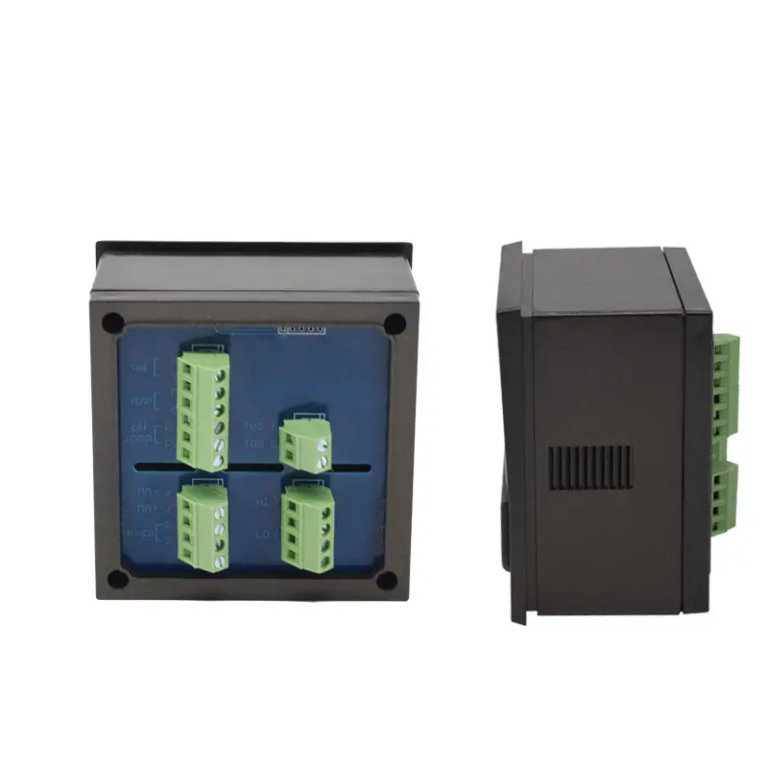
Instrumentation is the enabling layer. Sites measuring the same parameters the same way — one multi-parameter probe instead of four mismatched single-parameter devices, digital Modbus output instead of handwritten clipboards — feed the central platform with data that is actually comparable. That is the precondition for everything above: “Sensors that feed your AI water model, not just your dashboard.” Shanghai ChiMay builds its online water quality analyzers and softening/filtration control valves around that premise — standardized digital signals across a multi-site fleet, the same published specification on every quotation. An overview of the integrated multi-parameter sensing line is here: http://www.chimaycorp.com/shanghai_chimay_4-in-1_multi-parameter_sensor/800.html
References
- TD Development Research Institute (TDRI) — Climate Change and Institutional Challenges for Developing Countries: Water Resource Management in Thailand — argues water management should be integrated and decentralized in normal times and centralized during emergencies, following subsidiarity principles. https://tdri.or.th/wp-content/uploads/2016/03/DD_Report_Flood-management-thailand.pdf
- Environmental Evidence (PMC) — (De)centralized Water Futures: Key Dimensions of Infrastructure, Governance, and Operations — documents hybrid governance where authority is devolved to local agencies with a state backstop. https://pmc.ncbi.nlm.nih.gov/articles/PMC12452054
- UNESCAP — Eco-Efficient Water Infrastructure: towards Sustainable Urban Development in Asia and the Pacific — finds central planning often ill-informed about local conditions, degrading local water services. https://www.unescap.org/sites/default/files/EEWI_Background%20Paper.pdf
- AXEON Water — How Do Centralized Water Treatment Systems Improve Performance in Large Buildings? — quantifies savings from centralized automation: 15–40% labor/energy, 40–80% emergency repair prevention, 15–25% electrical, 30–40% reagent waste. https://www.axeonwater.com/?p=6802/
- Better Buildings Initiative (U.S. Department of Energy) — United Technologies Corporation: Global Water Conservation Guidance Document — a corporate water program of ten best practices supporting a 40% water-use reduction goal. https://betterbuildingsinitiative.energy.gov/implementation-models/united-technologies-corporation-global-water-conservation-guidance-document
- Bespoke Compliance Solutions — Water hygiene compliance across multiple sites: a practical guide — catalogs the fragmented-data problem and the standardized control regime for multi-site portfolios. https://bespokecompliancesolutions.co.uk/post/water-hygiene-compliance-multiple-site-management
About the author: Written by the Shanghai ChiMay Technical Editorial Team — the applications desk behind Shanghai ChiMay’s online water quality analyzers and softening/filtration control valves, covering instrumentation and control programs for multi-site industrial and building operators.