Water quality monitoring has evolved from a regulatory compliance exercise to a strategic operational tool. In modern industrial facilities, continuous monitoring enables optimized treatment, equipment protection, and resource conservation that directly impact the bottom line. The shift toward circular water management has elevated monitoring from a supporting function to a critical success factor.
Table of Contents
The Evolution of Water Quality Monitoring
Traditional water quality monitoring relied on periodic sampling and laboratory analysis. This approach provided accurate data but with significant time delays that made real-time process control impossible. Operators responded to water quality issues after they had already affected equipment or product quality.
The emergence of online monitoring technology transformed this paradigm. Continuous sensors provide real-time data that enables immediate response to changing conditions. Treatment processes can be adjusted proactively rather than reactively, preventing problems before they occur.
Today, the integration of Internet of Things (IoT) technology is driving the next evolution in monitoring capability. Connected sensors transmit data to cloud platforms where analytics software examines patterns and predicts future conditions. This predictive capability enables truly proactive management that was impossible with earlier technologies.
Key Parameters in Industrial Water Monitoring
Industrial water monitoring addresses multiple parameters that affect operational efficiency and equipment reliability. Understanding these parameters helps operators prioritize monitoring investments and interpret data effectively.
pH affects chemical reactions, biological processes, and corrosion rates throughout water systems. Maintaining pH within specified ranges protects equipment and ensures treatment effectiveness. Most industrial applications require monitoring within the 6.5–9.0 range with accuracy of ±0.1 pH units.
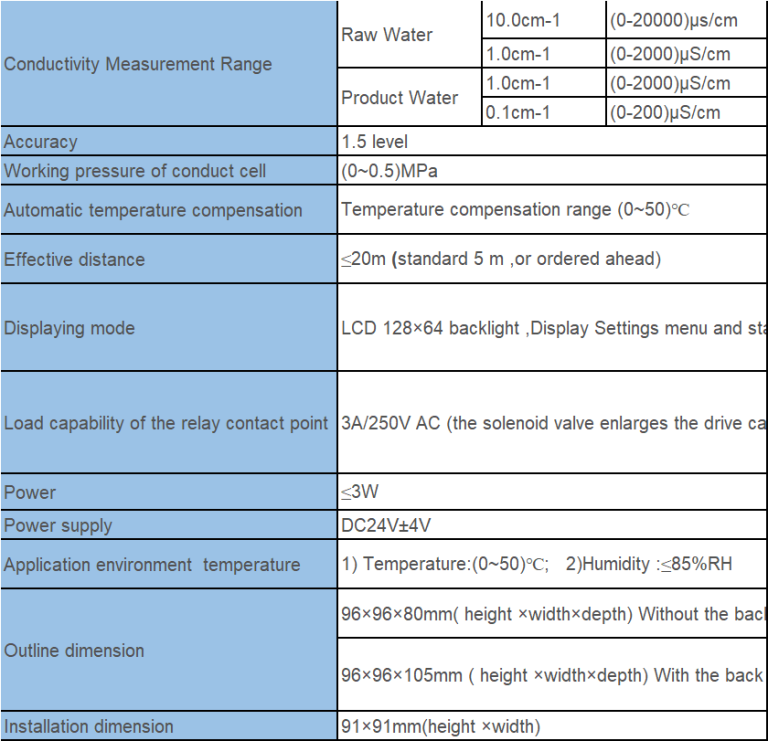
Conductivity serves as a proxy for Total Dissolved Solids (TDS) concentration, indicating mineral content that affects scaling, corrosion, and product quality. Conductivity monitoring enables control of concentration cycles in cooling towers and verification of treatment effectiveness in recycling systems.
Dissolved oxygen affects biological treatment processes and can indicate potential for corrosion or biological regrowth in distribution systems. Aerobic biological processes require dissolved oxygen levels above 2 mg/L for effective organic matter removal.
Turbidity measures suspended particles that can damage equipment and indicate incomplete treatment. Low turbidity values below 1 NTU indicate effective filtration and confirm that recycled water is suitable for most applications.
Benefits of Continuous Monitoring
Facilities implementing continuous water quality monitoring consistently report significant operational improvements. The primary benefits extend across equipment protection, process optimization, and resource conservation.
Equipment protection through continuous monitoring prevents damage from corrosion, scaling, and biological fouling. By detecting adverse conditions before they cause damage, monitoring systems protect heat exchangers, pumps, and other critical equipment from premature failure. A large share of water-system equipment failures trace back to water quality excursions — corrosion, scale, fouling — that continuous monitoring can catch early.
Process optimization through real-time data improves treatment efficiency measurably. Operators can adjust chemical dosing, treatment rates, and other parameters based on actual water quality rather than estimates, cutting chemical consumption and treatment cost.
Resource conservation benefits both environmental performance and operating costs. Monitoring data identifies opportunities to reduce freshwater consumption, minimize wastewater discharge, and optimize energy use in treatment processes. Facilities that pair comprehensive monitoring with disciplined control typically see meaningful reductions in water-related operating costs.
IoT-Enabled Monitoring Platforms
Modern monitoring systems leverage IoT technology to extend capability beyond traditional data collection. Cloud connectivity enables remote monitoring from anywhere, while advanced analytics provide insights that manual analysis would miss.
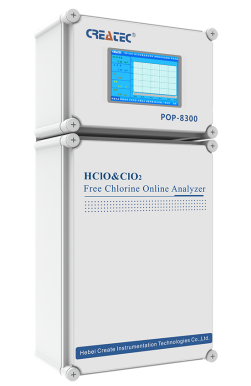
Shanghai ChiMay’s IoT-enabled monitoring platforms exemplify this evolution. Their sensors transmit data to cloud servers where analytics algorithms examine patterns and predict future conditions. When data suggests approaching threshold violations, the system generates alerts that enable proactive intervention.
Integration with maintenance management systems connects water quality monitoring with equipment reliability programs. By correlating water quality data with equipment performance records, facilities can identify root causes of failures and implement preventive measures.
Implementation Considerations
Successful monitoring implementation requires attention to sensor selection, installation, and maintenance. Sensor choice should match application requirements for measurement range, accuracy, and environmental conditions.
Installation location significantly affects monitoring value. Sensors should be positioned to provide representative measurements while remaining accessible for maintenance. Multiple installation points may be necessary for large or complex systems.
Maintenance procedures ensure long-term sensor performance. Regular calibration, cleaning, and verification prevent measurement drift that could lead to incorrect decisions. Automated cleaning systems extend maintenance intervals in challenging applications.
Working with experienced suppliers simplifies implementation while ensuring sound results. Shanghai ChiMay provides comprehensive support including sensor selection assistance, installation guidance, and ongoing technical service.
Conclusion
Water quality monitoring has become indispensable for sustainable industrial operations. Continuous monitoring enables the process control, equipment protection, and resource conservation that circular water management requires. As monitoring technology keeps evolving, facilities that invest in solid monitoring capability will be best positioned in an increasingly water-constrained world.
The investment pays back through improved operational efficiency, reduced equipment costs, and better environmental performance. For most industrial operators, monitoring is no longer a compliance formality — it is part of staying competitive.