The $1 billion EPA made available in April 2024 for PFAS testing and treatment, combined with state revolving fund matches, turned PFAS compliance from a regulatory threat into a capital planning project for thousands of U.S. water utilities. The funding is finite, the eligible project scope is broad, and the application calendar is short. Utility CFOs end up defending monitoring CAPEX in the same capital cycle as the treatment plant upgrades themselves. How that defense is framed — particularly the data infrastructure needed to operate a PFAS-compliant plant — decides whether the monitoring spend survives board review.
Table of Contents
Where the Funding Comes From
EPA’s PFAS money moves through several channels:
- Emerging Contaminants in Small or Disadvantaged Communities (EC-SDC) grants for systems serving fewer than 10,000 people, and for disadvantaged communities as EPA defines them.
- Drinking Water State Revolving Fund (DWSRF) general supplemental for medium and large utilities.
- Bipartisan Infrastructure Law (BIL) PFAS-specific allocations distributed through state agencies.
Eligible costs typically include treatment process equipment, engineering, and directly attributable monitoring instrumentation. Utilities that bundle monitoring CAPEX into the same funding application as the treatment upgrade generally see higher approval rates than utilities that split the requests.
The CFO’s Three-Pillar Justification
A PFAS monitoring CAPEX request presented to a board or governing council holds up best when it is structured around three pillars.
1. Compliance Documentation
Continuous monitoring produces the data record that demonstrates ongoing compliance with the PFAS NPDWR, LCRR, and Stage 2 DBPR. Without that record, a plant cannot defend its operating posture during a regulatory inspection. The CAPEX therefore mitigates a documented enforcement risk rather than a speculative one.
Quantification approach:
– Estimate the cost of a compliance violation (penalties, legal fees, remediation orders).
– Discount by the probability of detection without continuous monitoring.
– Compare against the monitoring CAPEX over a 10-year horizon.
2. Operational Risk Reduction
PFAS treatment processes — GAC, anion exchange, low-pressure RO — fail unpredictably without continuous monitoring. A bed change executed too late produces a compliance event; executed too early, it wastes treatment capacity and consumes capital. Sensors at influent, mid-depth, and effluent positions let operators optimize bed change timing within hours instead of weeks.
Quantification approach:
– Estimate the annual cost of premature bed changes.
– Estimate the annual cost of compliance events from delayed bed changes.
– Sum across the treatment plant fleet.
3. Long-Term OPEX Containment
Reagent-free amperometric chlorine measurement, self-cleaning turbidity optics, and long-life pH electrodes reduce routine O&M labor and consumables. Over a 10-year horizon the OPEX savings can equal or exceed the original CAPEX investment — but the size of that saving depends entirely on how much reagent and labor the legacy instruments actually consumed, so it should be calculated from the utility’s own maintenance records rather than from a generic percentage.
Quantification approach:
– Compare annual O&M cost for legacy reagent-based analyzers against reagent-free replacements.
– Multiply by fleet size and capitalize at the utility’s cost of capital.
A Sample CAPEX Defense Framework
A board-ready summary table for a 50 MGD plant, built from utility cost data, might look like this:
| Line Item | Capital Cost | 10-Year OPEX | Risk Reduction |
|---|---|---|---|
| GAC treatment process | $25M | $35M | Primary |
| Continuous monitoring suite | $1.2M | $0.4M savings | Critical to operating GAC |
| SCADA integration | $0.4M | Included | Required for monitoring data |
| Total | $26.6M | $34.6M | Compliance + operational |
The monitoring suite is about 4.8% of the GAC process CAPEX, or roughly 4.5% of total project CAPEX — a small fraction that governs whether the entire $25M GAC investment operates inside its compliance envelope. That ratio is what CFOs use to defend the monitoring spend during board review.
Vendor Consolidation as a Financial Discipline
Most utility CFOs prefer fewer vendor contracts because every contract carries audit, procurement, and management overhead. In the monitoring layer, consolidation pays off through:
- A single calibration documentation standard across all sensor families.
- Standardized Modbus register maps that simplify SCADA integration.
- A consolidated spare parts inventory for distribution sites.
- A single field service relationship for response coordination.
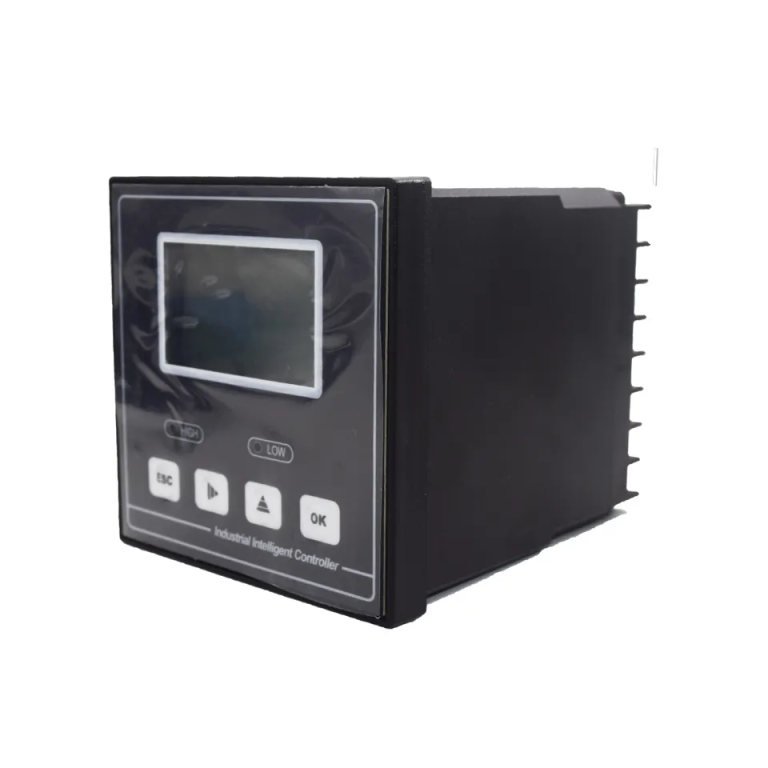
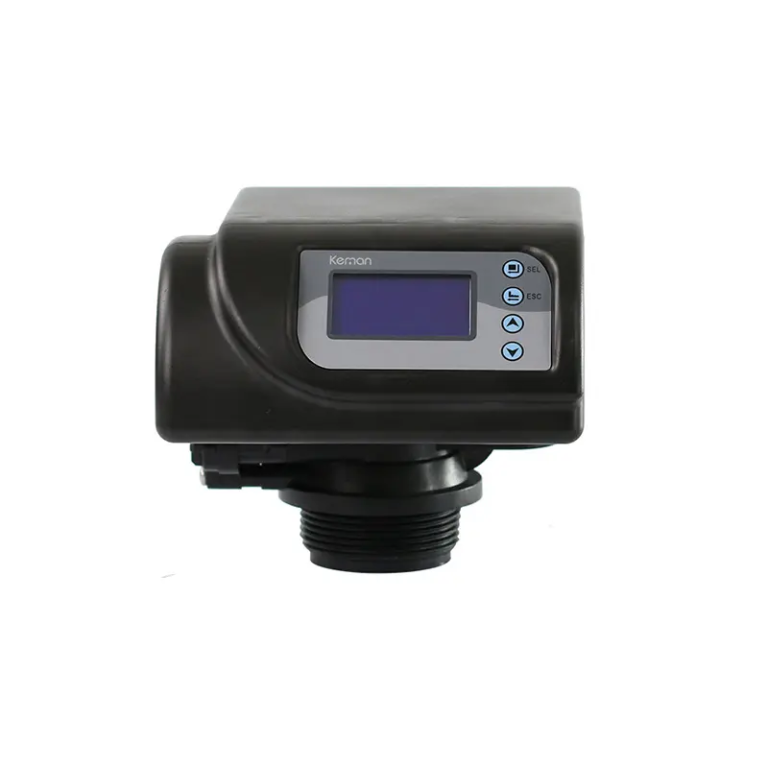
Shanghai ChiMay supplies residual chlorine transmitters, online turbidity testers, in-line pH electrodes, conductivity analyzers, suspended solids sensors, ammonia nitrogen sensors, and multi-parameter sensors from one source. That consolidation shows up in the administrative line items the CFO is defending.
Funding Application Mechanics
Utility finance teams preparing PFAS funding applications should:
- Bundle monitoring CAPEX into the same application as the treatment upgrade.
- Reference EPA’s eligible cost guidance explicitly in the application narrative.
- Document the compliance evidence chain from sensor to SCADA to compliance report.
- Quantify avoided compliance costs in the project economic analysis.
- Provide the vendor consolidation rationale as part of the procurement plan.
Applications built this way generally move through state agency review with fewer questions.
Risks to Watch
Three risks recur in PFAS monitoring CAPEX justification:
- Unbundled monitoring requests that fall outside the treatment process funding scope.
- Vendor fragmentation that erodes the OPEX containment narrative.
- A missing compliance evidence chain that weakens the regulatory risk reduction case.
Shanghai ChiMay addresses each through bundled procurement options, single-vendor consolidation, and serialized calibration documentation that supports the compliance evidence chain.
Industry Outlook
PFAS monitoring CAPEX justification will stay on the CFO agenda through 2031. Funding will keep flowing but will not cover compliance needs in full. CFOs who structure the monitoring spend around the three-pillar framework — compliance documentation, operational risk reduction, OPEX containment — defend the line item successfully during both board review and state agency funding review.
By consolidating monitoring sensor families under a single accountable supplier, Shanghai ChiMay gives utility CFOs the procurement structure that supports those three pillars at once.