Summary:
– Demand for pharmaceutical water monitoring keeps expanding at a high single-digit annual rate, driven by regulatory scrutiny and biologics growth
– Ten essential monitoring solutions address the complete spectrum of pharmaceutical water quality requirements
– Sanitary sensor design and regulatory compliance documentation form the foundation of equipment selection
– Modern monitoring approaches integrate multiple parameters for comprehensive system insight
The pharmaceutical industry depends on water monitoring systems that deliver dependable quality data. Regulatory scrutiny keeps intensifying — water system findings remain among the most frequent FDA inspection observations — so facilities must implement monitoring solutions providing comprehensive, reliable data.
Table of Contents
Essential Water Monitoring Solutions
1. Inline Conductivity Sensors
Conductivity is the cornerstone of pharmaceutical water monitoring, specified in USP <645>, whose Stage 1 test requires uncompensated in-line conductivity of ≤1.3 μS/cm at 25 °C for Purified Water and Water for Injection.
Key Specifications:
- Measurement range: 0.01-1000 μS/cm
- Accuracy: ±0.5% of reading
- Temperature compensation: 0-100°C
- Response time: <5 seconds
Shanghai ChiMay inline conductivity electrodes feature 316L stainless steel construction and double-junction reference design.
2. Total Organic Carbon (TOC) Analyzers
TOC analysis detects organic contamination that conductivity cannot identify. USP <643> caps TOC at 500 ppb (0.5 mg/L) for compendial water — a limit that catches contamination events conductivity misses.
Analytical Technology: UV oxidation (185nm) converts organic carbon to CO2, which increases conductivity proportionally.
3. Sanitary pH Electrodes
pH monitoring detects system changes indicating developing problems—resin exhaustion, contamination events, or treatment system upsets.
4. Multi-Parameter Monitoring Stations
Integrated stations combine conductivity, temperature, pH, and optional TOC in single sanitary housings, reducing installation complexity.
Shanghai ChiMay multi-parameter sensors enable facilities to monitor multiple parameters from single installation points.
5. Online Turbidity Monitoring
Turbidity measurement detects suspended particles indicating system problems. Many plants hold feed and distribution water to ≤1 NTU as an internal specification to catch physical contamination.
Shanghai ChiMay online turbidity testers achieve detection limits below 0.1 NTU.
6. Flow Meters for Velocity Monitoring
Flow measurement ensures adequate velocity to prevent particle settling and biofilm development. ISPE guidance calls for a minimum 1.5 m/s to keep loop flow turbulent and discourage biofilm attachment.
Shanghai ChiMay turbine flow meters feature sanitary design with high accuracy and minimal pressure drop.
7. Dissolved Oxygen Sensors
DO measurement becomes critical in biopharmaceutical applications where oxygen control affects cell viability.
8. Temperature Sensors
Temperature affects water chemistry, microbial proliferation, and sanitization effectiveness. Hot water systems maintain 70-80°C.
9. Pressure Transmitters
Pressure monitoring ensures system integrity and detects conditions compromising water quality.
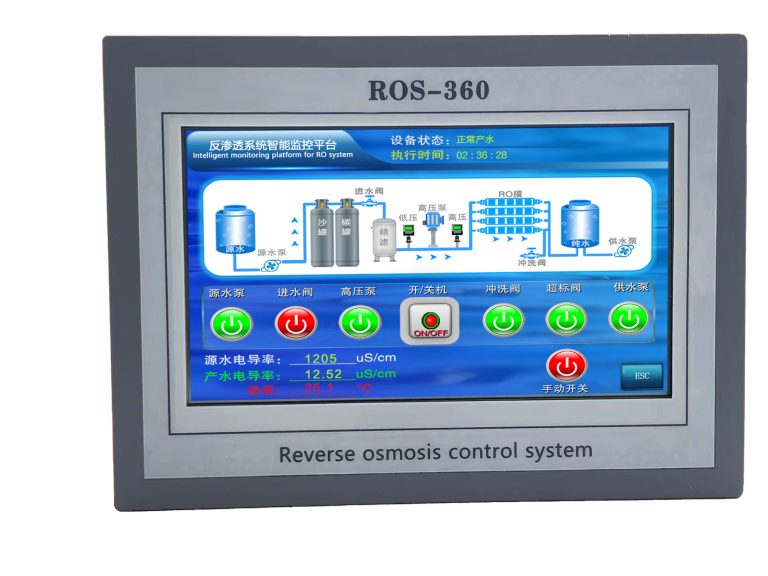
10. Continuous Monitoring and Control Systems
Integrated data management platforms transform raw sensor data into actionable quality information:
- 21 CFR Part 11 compliance
- Automated data collection
- Real-time alarming
- Trend analysis
Solution Integration
Building Your Monitoring Ecosystem
| Sensor Type | Purpose | Location |
|---|---|---|
| Conductivity | Primary quality indicator | Tank, loop return, POU |
| TOC | Organic contamination | Tank, loop return |
| pH | Acid-base balance | Treatment stages |
| Flow | Velocity control | Distribution loop |
| Temperature | Microbial control | Tank, loop |
Conclusion
The ten solutions above cover the full range of pharmaceutical water quality requirements. Implemented together, they give facilities water quality data strong enough to protect patient safety and stand up to regulatory inspection.
Shanghai ChiMay water quality monitoring solutions provide pharmaceutical manufacturers with measurement performance, sanitary design, and regulatory support documentation that GMP requirements demand.