Key Takeaways:
– Micropollutants are widespread: a global PNAS study of 1,052 river sites in 104 countries found pharmaceutical concentrations above levels considered safe for aquatic organisms at more than a quarter (25.7%) of sites.
– Dense-membrane processes — nanofiltration (NF) and reverse osmosis (RO) — reliably achieve 90% to >99% removal of many pesticide and pharmaceutical molecules, depending on compound properties, membrane type, and operating conditions; tight NF and RO typically reach >95% for most trace organic contaminants per peer-reviewed reviews.
– Membranes concentrate rather than destroy contaminants, creating an essential role for coupled advanced oxidation or activated-carbon treatment.
– Drivers include the EU Urban Waste Water Treatment Directive (2024 revision), the EU Drinking Water Directive (0.10 µg/L per pesticide), and U.S. EPA standards such as the atrazine MCL of 3 µg/L.
– Shanghai ChiMay online analyzers verify membrane performance in real time through conductivity, TOC, turbidity, and chlorine monitoring.
Table of Contents
Introduction: The Micropollutant Challenge
Micropollutants — pesticides, pharmaceuticals, personal care products, and industrial chemicals — enter water through agricultural runoff, treated wastewater effluent, and industrial discharge. Present at trace concentrations (nanograms to micrograms per liter), they are only partially removed by conventional biological treatment, yet can cause profound ecological and health effects at very low doses.
The landmark PNAS study by Wilkinson et al. (2022) analyzed 61 pharmaceutical compounds across 258 rivers in 104 countries and found concentrations exceeding thresholds considered safe for aquatic life (or of concern for antimicrobial resistance) at 25.7% of the 1,052 sampling sites, with the worst contamination in low- and middle-income regions PNAS. Reviews also note that 30–90% of consumed pharmaceuticals can be excreted as active substances, explaining their continuous input into wastewater.
Trace levels can still cause profound ecological effects — though not always through drinking water. In South Asia, diclofenac residues in the carcasses of treated livestock drove population collapses of up to 99.9% in Gyps vulture species within 15 years, via kidney failure and visceral gout; the drug was banned for veterinary use across India, Pakistan, and Nepal WOAH/CMS. In aquatic systems, estrogens provide another stark case: estradiol (E2) induces vitellogenin in male fish at roughly 15–34 ng/L, and ethinylestradiol (EE2) at as little as ~1–2 ng/L, with field evidence of fish feminization downstream of wastewater outfalls.
Why Conventional Treatment Falls Short
Standard wastewater treatment targets bulk organic matter, nutrients, and pathogens. Many micropollutants are polar, persistent, and biologically active and pass through activated sludge largely untouched: reviews report only 20–80% removal depending on the molecule, with persistent markers like carbamazepine often below 20%, and some transformation products remaining bioactive. Advanced barriers are therefore required, and dense membranes are among the most effective.
Nanomembrane Removal Mechanisms and Performance
The workhorse technologies are nanofiltration (NF) and reverse osmosis (RO) — membranes with effective pore sizes around and below one nanometer. Removal combines several mechanisms:
- Size exclusion: most pharmaceuticals and pesticides (200–500 g/mol) are rejected by tight NF (MWCO ~150–300 Da).
- Charge repulsion (Donnan exclusion): anionic drug metabolites and pesticide anions are repelled by negatively charged membrane surfaces.
- Adsorption/hydrophobic partitioning: hydrophobic compounds partition into the polymer — high initial removal that must be assessed at steady state once the membrane saturates.
- Solution–diffusion (RO): in dense polyamide layers, water passes preferentially over dissolved solutes.
Peer-reviewed reviews consistently report the following performance ranges:
| Membrane class | Typical trace-organismal removal | Notes |
|---|---|---|
| Ultrafiltration (UF) | Low for dissolved micropollutants | Effective barrier for particulates, bacteria, viruses; used as pretreatment |
| Loose nanofiltration (NF) | Roughly 50–90% | Variable for small neutral compounds (e.g., some solvents, small primidone-like markers) |
| Tight nanofiltration | Roughly 90–99%+ | Strong for most pesticides and pharmaceuticals; neutral hydrophilic small molecules remain the hardest case |
| Reverse osmosis (RO) | Typically >95–99% | Broadest barrier across compound classes |
Representative literature values: NF and RO commonly remove diclofenac and carbamazepine at ~90–99%, atrazine at ~80–95% depending on membrane tightness, and steroid estrogens at >95%. Small, neutral, hydrophilic compounds (e.g., 1,4-dioxane) are the recognized exceptions and can pass even tight NF. Rejection always depends on molecular weight, charge, hydrophobicity, feed chemistry, recovery, and membrane condition — fixed per-compound percentages claiming identical results everywhere should be treated with caution Taheran et al.; Verbeke et al. 2017.
Membrane concentrate: the barrier limitation
NF/RO do not destroy contaminants — they partition them into a concentrate stream (commonly 15–30% of feed volume). Effective systems therefore pair the membrane barrier with UV/H₂O₂ advanced oxidation (hydroxyl radicals mineralize many pharmaceuticals), granular/powdered activated carbon (adsorbs hydrophobic compounds), or ozonation (well established for endocrine disrupters, with bromate control in bromide-rich waters). This barrier–concentrate–treat architecture is now the reference design for advanced plants meeting the strictest European reuse and discharge requirements.
Regulatory and Economic Drivers
The regulatory environment is tightening across major markets:
- EU Drinking Water Directive sets 0.10 µg/L per individual pesticide (0.50 µg/L total), with an endocrine-disrupter watch list added in the 2020 revision.
- U.S. EPA sets the atrazine MCL at 3 µg/L (3 ppb); its 2024 final PFAS drinking water rule set MCLs of 4.0 ng/L (ppt) for PFOA and PFOS (currently under regulatory revision, with the PFOA/PFOS limits retained in current proposals), for which RO is among recommended treatments.
- EU Urban Waste Water Treatment Directive (revised 2024) requires enhanced (quaternary) micropollutant treatment at larger plants and introduces extended producer responsibility for pharmaceuticals and cosmetics; the EU Water Reuse Regulation (EU) 2020/741 sets minimum agricultural-reuse requirements — both verified by continuous monitoring.
Costs and energy are the recurring questions. NF operates at lower pressure than RO and typically requires roughly 0.3–1.5 kWh/m³ depending on feed salinity and recovery; seawater RO with modern energy recovery reaches about 2.5–3.0 kWh/m³, while brackish RO for reuse falls between. Capital and operating costs vary widely with plant size, feed quality, and concentrate handling, and should always come from a site-specific engineering study rather than generic per-cubic-meter figures. With good pretreatment, membrane life in reuse systems can reach several years, with cleaning optimized from real-time fouling data.
Integration with Online Monitoring
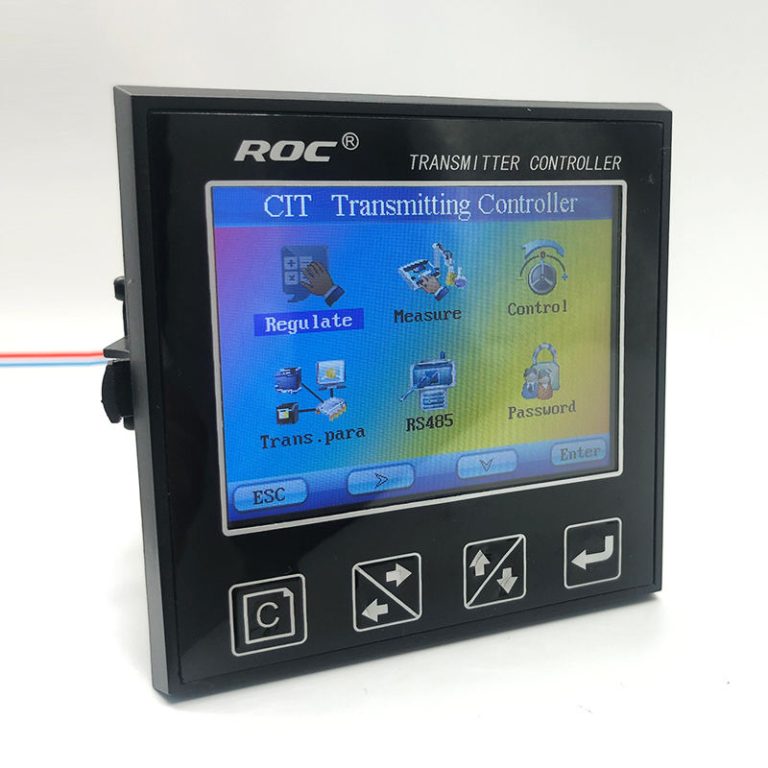
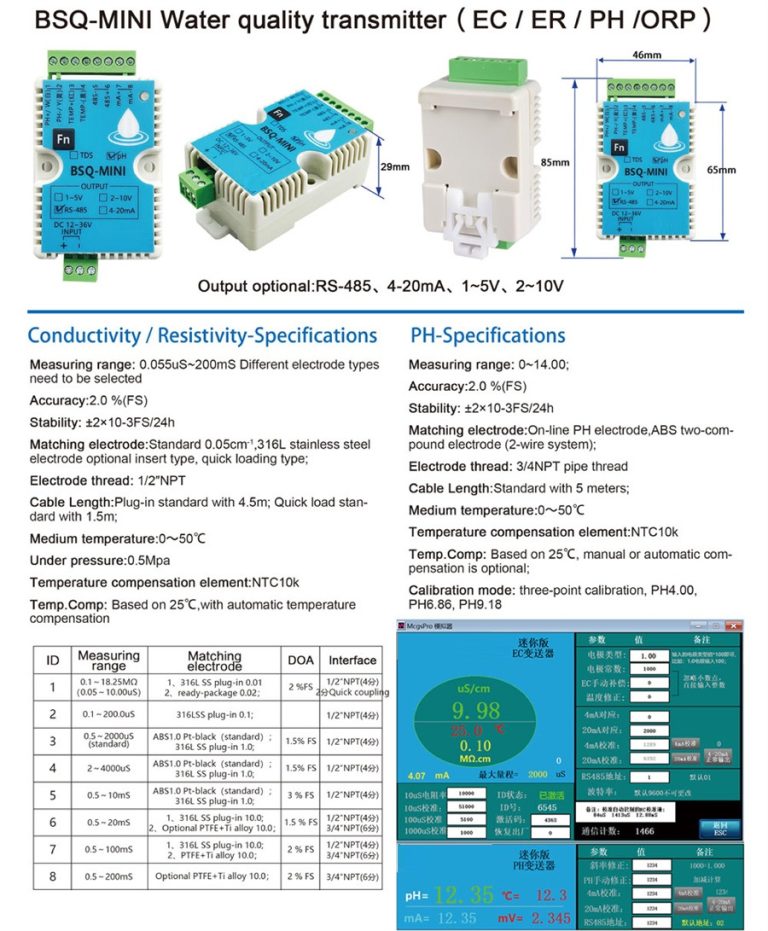
Membrane systems for micropollutant removal depend on continuous process data: conductivity (permeate conductivity is the primary membrane-integrity and salt-rejection indicator), TOC (real-time organic-load and removal tracking), turbidity/SDI (fouling protection), residual chlorine (polyamide membranes oxidize easily, so upstream chlorine must be quenched and verified), and ORP/pH for dosing control. Shanghai ChiMay provides online analyzer portfolios covering these parameters, with digital integration into plant SCADA and data platforms — enabling operators to verify barrier performance continuously, optimize cleaning, and document compliance.
Emerging Research Directions
Active research targets higher permeability at equal rejection (graphene oxide and mixed-matrix membranes), niche commercial bio-inspired (aquaporin) membranes, and electrochemical membranes that oxidize rejected contaminants in situ. Most remain at lab or pilot scale; operators should distinguish peer-reviewed performance from marketing projections.
Implementation Guidance
- Characterize the contaminant profile with LC-MS/MS or GC-MS screening before technology selection.
- Pilot at representative scale with local water chemistry; measure steady-state rejection, not day-one removal.
- Plan concentrate handling from day one — oxidation or carbon treatment belongs in the base design.
- Instrument continuously — conductivity, TOC, turbidity, and chlorine analyzers with alarmed data integration turn a passive barrier into an auditable treatment step.
- Design for standards evolution — endocrine disrupters, PFAS, and more pesticides are entering regulatory lists; modular systems adapt more cheaply.
Conclusion
Nanofiltration and reverse osmosis are the most reliable, well-documented barriers against pesticide and pharmaceutical micropollutants, achieving broadly 90% to over 99% removal for most trace organic contaminants, with RO providing the broadest coverage. Their value is maximized — and their concentrate limitation managed — when paired with advanced oxidation or carbon treatment, robust pretreatment, and continuous online monitoring. Shanghai ChiMay online analyzers provide the measurement layer that lets operators prove removal performance, protect membrane assets, and meet tightening regulatory standards with confidence.
Sources
- Wilkinson, J.L. et al. (2022). “Pharmaceutical pollution of the world’s rivers.” PNAS 119(8) — https://www.pnas.org/doi/10.1073/pnas.2113947119
- Taheran, M. et al. (2016). Membrane processes for removal of pharmaceuticals from water (review), Chemical Engineering Journal — https://doi.org/10.1016/j.cej.2016.06.063
- Verbeke, R. et al. (2017). Micropollutant removal with NF/RO membranes (review), Environ. Sci.: Water Res. Technol. — https://pubs.rsc.org/en/content/articlelanding/2017/ew/c7ew00231a
- CMS Raptors, Non-steroidal Anti-inflammatory Drugs and vultures — https://raptors.cms.int/page/non-steroidal-anti-inflammatory-drugs-and-vultures
- U.S. EPA, PFAS National Primary Drinking Water Regulation (Final Rule, 2024) — https://www.federalregister.gov/documents/2024/04/26/2024-07773/pfas-national-primary-drinking-water-regulation
- EU Water Reuse Regulation (EU) 2020/741 — https://eur-lex.europa.eu/eli/reg/2020/741/oj