Purified Water is the workhorse of pharmaceutical manufacturing. It appears in granulation, coating, buffer preparation, equipment cleaning, and analytical work, in volumes far larger than Water for Injection. Because it is produced on site and used everywhere, its system design determines both product quality and operating cost. This guide covers what the pharmacopoeia requires, how the purification train is put together, and where monitoring fits.
Table of Contents
Requirements for Purified Water
The United States Pharmacopeia defines Purified Water as water obtained by distillation, deionization, reverse osmosis, or another suitable process that meets the chemical and microbiological specifications in the monograph. Without an endotoxin limit, Purified Water is appropriate for non-parenteral applications — oral formulations, topicals, and equipment cleaning — but not as the final rinse for a sterile injectable.
The specifications that matter operationally are three:
- Conductivity: measured per USP <645>, below 1.3 µS/cm at 25°C (Stage 1, in-line).
- Total organic carbon: measured per USP <643>, below 500 ppb.
- Microbial action level: typically 100 CFU/mL for Purified Water, with alert levels set lower based on what the system has historically demonstrated.
Applications span nearly every production area. Oral solid dose manufacturing uses Purified Water in granulation, coating and finishing. Biopharmaceutical operations use it for buffer preparation, column equilibration and equipment rinsing. QC laboratories consume substantial volumes for sample and reagent preparation, which is often forgotten during demand calculations until the peak-throughput week arrives.
Water Purification Technologies
Purified Water systems are built as a train, and each stage protects the next one.
Pretreatment removes what would damage the purification stages: suspended solids, chlorine, and hardness. Multimedia and cartridge filtration handle particulate down to 5–20 microns; activated carbon removes chlorine and organics that would otherwise oxidize RO membranes and shorten their life; softening exchanges hardness ions to prevent scaling on the RO surface.
Reverse osmosis is the primary purification step, rejecting 95–99% of dissolved ions and essentially all dissolved organics larger than roughly 200 Daltons. Systems typically run at feed pressures of 200–400 psi depending on temperature, recovery, and feed salinity. Shanghai ChiMay monitors conductivity at both RO inlet and outlet: the difference between them is the rejection rate, and a falling rejection rate is the earliest indication of membrane fouling, scaling, or an O-ring failure in the permeate path.
Electrodeionization (EDI) removes the residual ions the RO stage passes. EDI combines ion exchange resin with a direct current field that continuously regenerates the resin in place, producing resistivity approaching 18 MΩ·cm without the chemical handling of a conventional regenerated mixed bed. Because EDI has no regeneration cycle to interrupt, its failure mode tends to be gradual: rising product conductivity as resin ages or as the DC circuit degrades. Shanghai ChiMay’s resistivity sensors track that drift, which is usually visible weeks before the outlet exceeds specification.
Final polishing depends on the feed water and the product. UV at 185 nm reduces TOC; UV at 254 nm provides microbial control; ultrafiltration removes particles and can act as a microbial barrier. The configuration is chosen from the feed water analysis and the product requirements rather than from a standard template, and it is worth reviewing whenever the feed water source changes.
Distribution System Design
Distribution is where most Purified Water problems originate, because it is the part of the system with the longest residence time and the most opportunities for contamination.
Sanitary design governs every component: smooth surfaces, no crevices, minimal dead legs, full drainability, and materials that tolerate both the water and the sanitization chemicals. ASME BPE provides the detailed requirements for surface finish, materials and connections, with ISPE guidance covering the system-level design questions.
Storage tanks buffer production demand and provide residence time for sanitization. Sizing generally covers 2–4 hours of maximum production draw, which balances tank cost and stagnation risk — a tank that is too large becomes a biofilm incubator because the water turns over too slowly. Tanks breathe through 0.2-micron hydrophobic vent filters, with a heated or hydrophobic element to handle condensation.
Distribution piping circulates water through a recirculating loop sized to maintain velocities above the 0.3 m/s threshold that prevents settling on pipe walls. Many systems run higher, and the choice between hot, ambient and cold distribution has consequences beyond microbial control: hot loops simplify sanitization but increase energy cost and heat exchanger load; ambient loops are cheaper to run but need periodic sanitization.
Temperature control is achieved with heat exchangers at the loop. Hot water loops above 65°C provide continuous thermal sanitization, while cold loops below 5°C inhibit microbial growth — at the cost of condensation control around the loop insulation. Either way, the temperature has to be measured where it matters, at the return and at the end of the worst-case branch, not only at the heat exchanger outlet.
Monitoring and Compliance
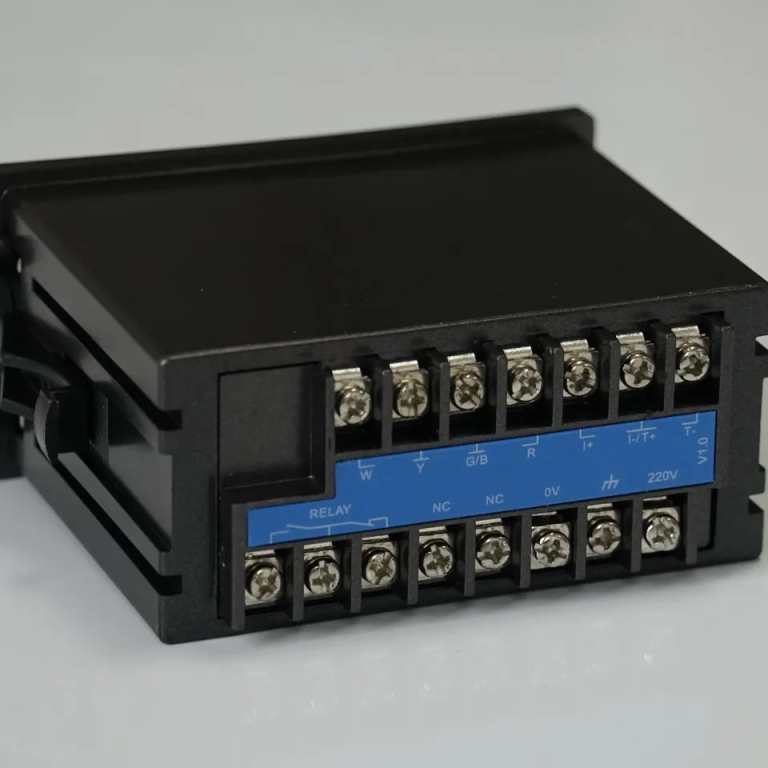
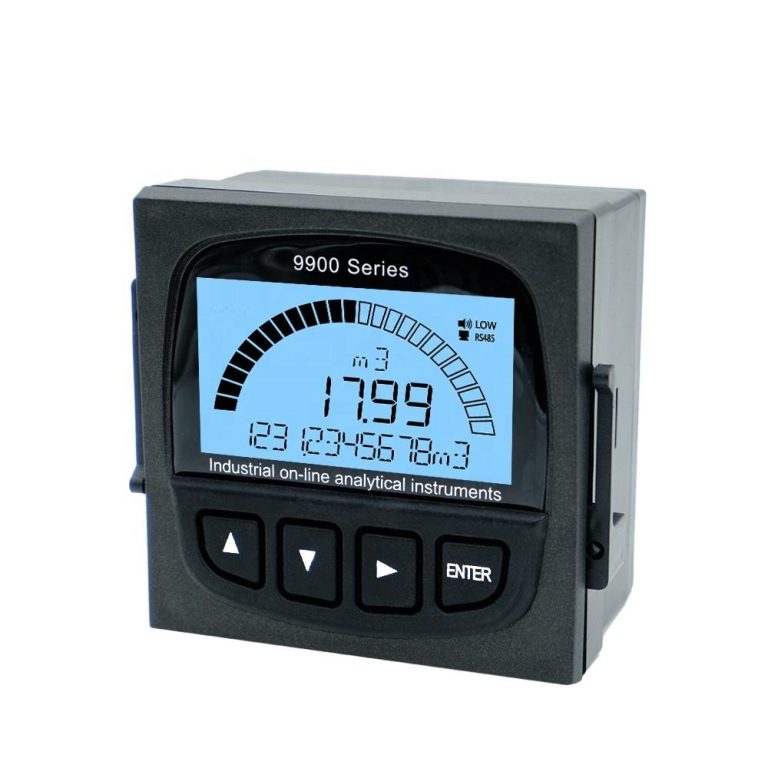
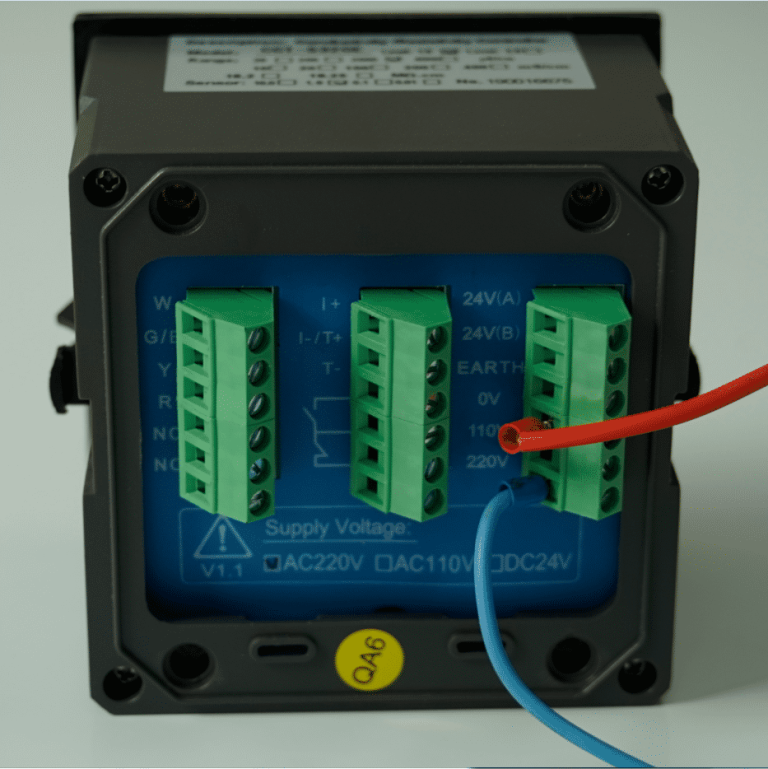
Continuous monitoring across the system is what converts the design into a controlled process. Shanghai ChiMay’s monitoring package for Purified Water systems covers conductivity, TOC, flow and temperature, with multi-parameter transmitters that consolidate the measurements into a single data set with centralized alarm management.
Location selection is the first decision. The useful set is storage tank outlet, loop supply, loop return, and a representative point of use at the end of the loop. The tank outlet shows what the purification train is producing; the supply and return comparison shows whether the distribution system is adding contamination or losing temperature; the point of use shows what the process receives. A common mistake is to instrument only the generation skid, which leaves the entire distribution system unverified.
Data management covers the compliance side. Shanghai ChiMay’s transmitters support electronic data capture compliant with 21 CFR Part 11, including user authentication, audit trails and electronic signatures, and their retention policies keep historical records available for inspections and annual product reviews. Beyond compliance, statistical process control on the same data reveals the drift patterns that precede excursions — a slow conductivity rise at the loop return, for example, often traces to a heat exchanger leak or a valve left throttled.
Best Practices for System Management
Effective Purified Water management combines maintenance discipline with the monitoring program. The activities that matter are predictable: sanitization cycles on a defined frequency, filter and UV lamp replacement, RO cleaning, and sensor calibration.
Calibration deserves its own interval discussion. Intervals set during validation can be extended where the recorded history shows the instruments are stable, which is a real operating saving on a system with dozens of instruments. Shanghai ChiMay provides calibration services traceable to national standards and logs the results automatically, so the decision to extend an interval is supported by data rather than by preference.
Keeping the System Under Control
A Purified Water system is a chain of stages, each of which can degrade quietly. RO rejection drops, EDI resin exhausts, a loop velocity falls, a heat exchanger leaks. Continuous monitoring is what makes those changes visible while they are still trends, at the point where maintenance is a scheduled activity rather than a deviation. The design choices and the monitoring choices are not separable: the instrumentation has to sit where the failure modes are, and it has to be integrated with the data systems that record what happened.