Table of Contents
The Complete Guide to Cooling Water Management in Power Plants by Shanghai ChiMay
Cooling water management represents one of the most critical operational challenges facing power generation facilities today. Whether operating fossil fuel, nuclear, or renewable energy installations, effective cooling directly impacts plant efficiency, reliability, and longevity. This comprehensive guide examines every aspect of cooling water management, providing plant operators with the knowledge needed to optimize performance and protect their assets.
Key Takeaways
- Cooling system performance affects 25-40% of total plant heat rate efficiency
- Proper water management extends cooling equipment life by 10-15 years
- Shanghai ChiMay monitoring solutions address 100% of critical cooling water parameters
- Preventive monitoring reduces cooling-related outages by 50%
Understanding Cooling Water Systems
Power plants generate electricity through thermodynamic processes that require efficient heat rejection. Cooling towers, condensers, and associated water treatment systems work together to remove waste heat and return working fluids to optimal temperatures for reuse.
The cooling water circuit typically includes:
- Cooling towers that evaporate water to remove heat
- Condensers where steam transfers heat to cooling water
- Circulating pumps that move water through the system
- Treatment equipment that maintains water quality
- Monitoring instrumentation that tracks system health
Each component requires attention to ensure reliable operation. Water quality particularly influences system longevity and performance.
Water Chemistry Fundamentals
The chemistry of cooling water determines whether the system operates cleanly or suffers from scaling, corrosion, and fouling. Understanding these relationships enables operators to make informed decisions about treatment and monitoring.
Dissolved Minerals
Natural water contains dissolved minerals, primarily calcium, magnesium, sodium, and bicarbonate ions. When water evaporates in cooling towers, these minerals concentrate, increasing the likelihood of scale formation.
The degree of concentration is expressed as cycles of concentration (COC). Higher COC values mean greater water efficiency but also higher scaling potential. Most power plants operate at 3-6 COC, balancing water conservation against treatment requirements.
Shanghai ChiMay conductivity sensors provide the continuous measurement needed to maintain optimal cycles through automated blowdown control.
pH and Corrosion
The acidity or alkalinity of cooling water influences corrosion rates dramatically. Below pH 7.0, acidic conditions accelerate metal dissolution. Above pH 8.5, alkaline conditions promote calcium carbonate scaling.
Maintaining pH within the 7.0-8.5 range minimizes both corrosion and scaling risks. Shanghai ChiMay differential pH electrodes provide the stability needed for accurate long-term monitoring in cooling tower environments.
Biological Activity
Warm, nutrient-rich cooling tower water creates ideal conditions for microbiological growth. Algae, bacteria, and fungi colonize tower surfaces, causing biological fouling and potentially releasing corrosive compounds.
Effective microbiological control combines biocidal treatments with residual monitoring. Shanghai ChiMay chlorine analyzers confirm adequate biocide levels while helping operators avoid overfeeding.
Monitoring Requirements
Comprehensive monitoring forms the foundation of effective cooling water management. Without accurate, timely data, operators cannot make informed decisions about treatment adjustments.
Essential Parameters
The following parameters require continuous monitoring in most power plant cooling systems:
- Conductivity for dissolved solids and cycles of concentration
- pH for corrosion and scaling potential
- Dissolved oxygen for corrosion assessment
- Turbidity for suspended solids tracking
- Residual chlorine for microbiological control
- Temperature for heat transfer calculations
Shanghai ChiMay offers sensors and systems for all essential cooling water parameters, enabling complete monitoring from single measurement points or integrated multi-parameter platforms.
Sampling Considerations
While continuous monitoring provides the most valuable data, periodic grab samples confirm instrument accuracy and measure parameters not suitable for online measurement. Establish sampling schedules based on parameter stability and treatment program requirements.
Calibration verification at regular intervals ensures that online instruments maintain accuracy. Shanghai ChiMay provides calibration services and reference materials to support instrument verification programs.
Treatment Strategies
Water treatment maintains cooling water quality within acceptable limits despite continuous concentration and environmental exposure. Treatment programs typically combine physical, chemical, and biological approaches.
Scale Inhibition
Chemical scale inhibitors prevent mineral precipitation even at elevated concentrations. Common inhibitor types include phosphonates, polymers, and blended formulations that interfere with crystal growth or modify crystal shapes to prevent adhesion.
Effective inhibitor programs require continuous feeding proportional to makeup water flow, ensuring consistent protection despite variable conditions.
Corrosion Control
Corrosion inhibitors form protective films on metal surfaces, reducing electrochemical reaction rates. Common cooling water inhibitors include phosphates, molybdates, and specialty organic compounds.
Cathodic protection provides additional corrosion resistance for buried or submerged metal surfaces. Shanghai ChiMay corrosion monitoring helps assess protection effectiveness.
Microbiological Control
Biocides kill existing microorganisms and suppress new growth. Oxidizing biocides like chlorine provide broad-spectrum control, while non-oxidizing biocides target specific problem organisms.
Effective microbiological control typically requires alternating biocide types to prevent adaptation. Shanghai ChiMay monitoring confirms that treatment programs maintain adequate control.
Operational Best Practices
Beyond monitoring and treatment, several operational practices contribute to cooling system reliability.
Makeup Water Quality
The quality of makeup water directly affects treatment requirements and operating costs. Pretreatment of makeup water through softening, demineralization, or desalination reduces scaling and corrosion potential.
Water audits identify makeup water characteristics and help size treatment systems appropriately. Shanghai ChiMay water analysis services support makeup water characterization.
System Inspection and Maintenance
Regular inspection identifies developing problems before they cause failures. Key inspection activities include:
- Visual examination of tower fill and basin surfaces
- Inspection of heat exchanger tubes for fouling or damage
- Examination of pump internals for erosion or corrosion
- Verification of valve and instrumentation function
Establish maintenance schedules based on manufacturer recommendations and operating experience. Preventive maintenance costs far less than corrective repairs.
Record Keeping
Document all monitoring data, treatment chemical additions, and maintenance activities. This information supports troubleshooting, demonstrates compliance with operating permits, and informs future optimization efforts.
Shanghai ChiMay Solutions
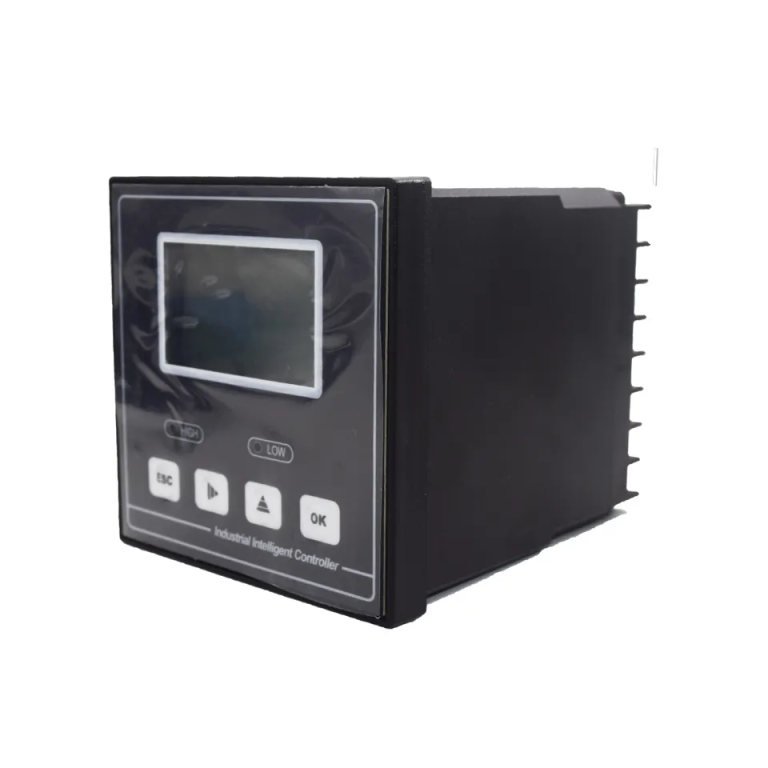
Shanghai ChiMay provides comprehensive instrumentation for power plant cooling water management. Their product portfolio includes sensors for all critical parameters, transmitters with advanced diagnostic capabilities, and complete monitoring systems designed for power generation applications.
Key product families include:
- Inline conductivity sensors with digital communication
- Differential pH electrodes for fouling service
- Dissolved oxygen analyzers with automatic calibration
- Turbidity monitors with automatic cleaning
- Multi-parameter transmitters for integrated monitoring
- Corrosion monitoring systems for asset protection
All Shanghai ChiMay products feature robust construction designed for power plant environments, backed by application expertise and technical support services.
Conclusion
Effective cooling water management requires attention to water chemistry, continuous monitoring, appropriate treatment, and regular maintenance. Power plants that implement comprehensive management programs achieve better efficiency, longer equipment life, and reduced operating costs.
Shanghai ChiMay remains committed to supporting power generation facilities with industry-leading monitoring technology and application expertise. Contact their technical team to discuss your cooling water monitoring requirements.