Board Briefing · Executive Perspective · Published: November 17, 2026
Table of Contents
Key Takeaways
- Sensor redundancy is an economics decision, not an engineering hobby. The question is whether the expected cost of a failure consequence — a false shutdown, an exceedance event, a lost trust cycle — exceeds the second sensor plus its lifetime maintenance.
- The standard architectures have names and known behaviours: 1oo1 (single channel), 1oo2 (either channel can trip), 2oo2 (both must agree) and 2oo3 (two-of-three voting), each balancing safety against availability differently [1].
- Voting exists to price the false alarm. A 2oo3 configuration tolerates one failed or misreading sensor while suppressing single-channel false trips, which is why it shows up in continuously operating, high-consequence systems [1].
- IEC 61508-4 defines redundancy as the presence of multiple means to carry out a required function, used mainly to improve reliability and availability and to reduce spurious actions [2] — the vocabulary your functional safety team already speaks.
- The consequence side is well documented: unplanned downtime runs roughly $125,000 to $260,000 per hour for general manufacturers, climbs to about $2.3 million per hour in automotive, and is estimated at $1.4 trillion a year across the world’s 500 largest companies [3]; semiconductor fabs average about $1.8 million per hour [4]. On the water side, EPA’s standard NPDES permit conditions put civil penalties for Clean Water Act violations at up to $37,500 per day, per violation [5].
- The decision model is one line of arithmetic: annualized expected loss equals failure likelihood times consequence cost. Compare that to redundancy cost and the second sensor either pays for itself or it does not.
The Decision in One Sentence
Every plant runs some instruments whose failure would be expensive: discharge compliance points, interlock inputs, control loops feeding critical dosing. For those points the board-level question is simple — does a second sensor cost less than the failures it prevents? Everything below is machinery for answering that with numbers instead of instinct.
Buy the sensor, own the outcome. When the outcome is expensive, owning it sometimes means buying it twice. This briefing prices both sides of that trade for water and process monitoring.
Redundancy Vocabulary for the Boardroom
Functional safety standards formalized what practitioners already knew: single instruments are single points of failure. IEC 61508-4 defines redundancy as the presence of multiple means to carry out a required function or represent information, so the system can remain operational when one part fails; redundancy is mainly used to improve reliability and availability and to reduce the risk of spurious actions [2].
Four voting architectures cover most practical cases [1]:
- 1oo1 (one-out-of-one). A single channel. If it fails, the safety function fails with it — and if it misreads, the system acts on the misreading. Zero redundancy cost, zero tolerance.
- 1oo2 (one-out-of-two). Two channels; either one alone can trigger the protective action. A failed channel cannot prevent the trip, so this maximizes safety — at the cost of more spurious trips from any noisy channel [1].
- 2oo2 (two-out-of-two). Two channels; both must agree before action. This masks false alarms from one bad channel, but it worsens the dangerous failure mode: a channel failing low can block a legitimate trip, so on dangerous-failure probability a 2oo2 arrangement is actually less safe than a single 1oo1 channel [1].
- 2oo3 (two-out-of-three). Three channels vote and at least two must agree. One failed or misreading sensor is tolerated — the system runs on while flagging the fault — and a single channel’s false reading cannot trigger a trip [1]. Same principle as triple modular redundancy in high-availability computing.
| Architecture | Incremental hardware cost | Reliability behavior | Watch out for | Typical fit |
|---|---|---|---|---|
| Single sensor (1oo1) | Baseline | No tolerance; one failure is a blind spot or a false trip [1] | Undetected drift; single-point trips | Non-critical parameters with cheap consequences |
| 1oo2 (either trips) | One extra sensor + logic | Survives one dead channel; safety-first [1] | Higher spurious trip rate from noise | Safety-critical trips where missing a real event is worst case |
| 2oo2 (both must agree) | One extra sensor + logic | Masks single-channel false alarms [1] | Dangerous failures can pass unnoticed [1] | Points where false stops dominate the cost and consequences are slow-moving |
| 2oo3 (two-of-three vote) | Two extra sensors + voting logic | Tolerates one bad channel while suppressing single-channel false trips [1] | Highest hardware and commissioning cost | High-consequence, continuously operating assets |
The same logic extends past safety trips. Modern platforms apply cross-comparison to monitoring: when two or more measurements of related physics disagree persistently, the disagreement is itself a diagnostic. It isolates the faulty channel and lets the system degrade gracefully instead of silently [1].
Pricing the Consequences
The consequence column has unusually good published benchmarks, which is what makes the arithmetic possible at all.
False or unplanned shutdowns. Cross-industry studies put unplanned downtime for general manufacturers at roughly $125,000 to $260,000 per hour, climbing to about $2.3 million per hour in automotive, with the total burden on the world’s 500 largest companies estimated at $1.4 trillion a year [3]. Semiconductor fabs — where a water excursion puts whole wafer lots at risk — average about $1.8 million per hour [4]. A monitoring system that falsely stops a process, or misses an excursion until it becomes a shutdown, is participating in those numbers rather than observing them.
Exceedance and permit events. For discharging facilities, a missed excursion can become a compliance event. EPA writes a civil penalty exposure of up to $37,500 per day for each violation into its standard NPDES permit conditions [5], and the exposure multiplies with every day an undetected problem persists. A compliance-critical sensor that fails silently is not a maintenance item. It is a contingent liability with a daily rate.
Trust and information loss. The softest cost is the slowest one. Once operators learn that a measurement point cannot be trusted, they stop acting on it. Dosing, recycling and release decisions revert to conservative manual practice, and the plant pays in margin and agility. This cost never appears in a downtime report, which is exactly why it gets underweighted in single-sensor designs.
The True Cost of a Second Sensor
On the other side of the ledger, the incremental cost of redundancy has three components, and only one of them appears on the quote.
- Acquisition and installation. The second measurement point: sensor, transmitter, cabling, fitting, commissioning time. For inline water quality points this is usually the smallest of the three.
- Lifetime maintenance. Every added sensor adds calibration events, consumables and cleaning cycles. Redundancy bought without a maintenance plan simply buys a second way to be wrong.
- Logic and governance. Someone must define what happens when the channels disagree — which is authoritative, who gets alerted, what gets logged. For 2oo3 that means voting logic; for simpler arrangements an agreed procedure. This is engineering time, and it is real.
The honest accounting compares lifetime cost against the consequence benchmarks above, not against the sticker price alone.
A Decision Model You Can Actually Run
The model fits on a whiteboard:
Annualized expected loss = (probability of failure or undetected drift per year) × (cost per event) × (events per year not prevented)
Against it, the redundancy side:
Annualized redundancy cost = (acquisition + installation) / years of service + annual maintenance + logic engineering amortized
Here is the arithmetic with placeholder inputs, so you can drop in your own quotes. A second inline water-quality channel installed costs, say, USD 4,000 all in. Over a five-year service life that is USD 800 a year. Add USD 400 a year of calibration labour and consumables, plus USD 1,000 of one-off alarm and disagreement-procedure engineering amortized over the same five years (USD 200 a year). Annualized redundancy cost: USD 1,400.
Now the consequence side. Take a two-day NPDES violation as the event being prevented: 2 × $37,500 = USD 75,000 [5]. On those inputs the break-even probability is 1,400 / 75,000 ≈ 1.9% per year. If you believe there is a better than roughly one-in-fifty chance per year that a single undetected failure produces one two-day violation, the second sensor is the cheaper option — and that is only counting the penalty, not the remediation, reporting or goodwill that comes with it.
Change the inputs and the answer changes, which is the point. A water quality interlock on a semiconductor UPW or cooling loop faces a consequence floor around USD 1.8 million per hour of fab downtime [4]; twelve minutes of a misdiagnosed shutdown is USD 360,000. At that consequence level the break-even probability falls below a rounding error, and 2oo3 voting stops being a luxury and becomes standard practice [1].
Between those poles sit the honest cases where redundancy does not pay: parameters whose failure consequence is a phone call, points with cheap manual verification available, processes with forgiving response times. For those, a single well-maintained sensor with drift diagnostics — cross-checked against a soft-sensor estimate of what the reading should be — delivers most of the fault-detection benefit without a second hardware channel.
Where Redundancy Pays — and Where It Does Not
Pays: discharge compliance points; safety and interlock inputs; continuously operating assets with high downtime costs (semiconductor, food and beverage, pharmaceutical water); points where a false trip and a missed excursion are both expensive — the 2oo3 regime [1].
Does not pay: low-consequence parameters, points where a manual double-check is already routine, batch processes with natural operator checkpoints, and any point where the maintenance budget for the second sensor cannot actually be funded. An unfunded redundant sensor is worse than none, because it degrades silently while its sibling is trusted.
Middle ground: one hardware sensor plus software cross-validation. Where a full second channel is not justified, a model-based estimate of the expected reading converts drift and gross failure into detectable events at software cost. The 2oo3 principle — two independent confirmations before action, flagging the disagreeing channel [1] — can be approximated at many monitoring points by pairing one physical sensor with one virtual estimate.
Recommendations
- Inventory consequence-priced points first. List every measurement point whose failure has a dollar consequence: permit events [5], downtime exposure [3][4], product loss. That list is short. Fund redundancy there first.
- Choose architecture by dominant failure cost. Missing a real event dominates: 1oo2. False trips dominate: 2oo2, with eyes open about the dangerous-failure trade [1]. Both matter and the point never sleeps: 2oo3 [1].
- Budget the maintenance with the hardware. A second sensor without a calibration and cleaning plan is an unmonitored liability.
- Write the disagreement procedure before commissioning. Who is authoritative when channels disagree, and how the fault gets logged, is governance — decide it once, in writing.
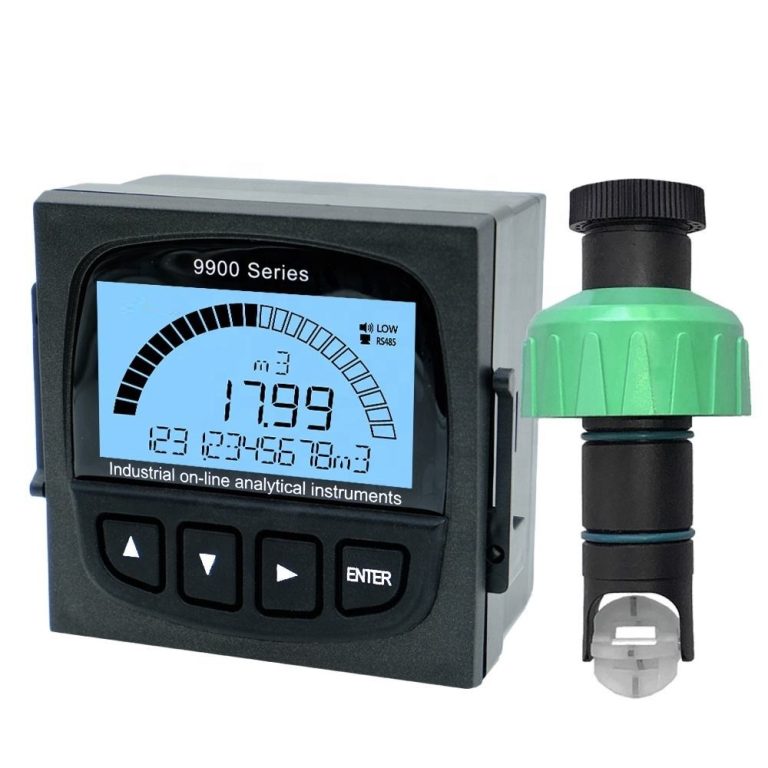
- Buy instruments that make redundancy cheap to operate. Synchronized digital outputs (Modbus RTU/TCP), stable calibration behaviour and documented drift characteristics shrink the cost of both cross-checking and maintenance, which moves the break-even point toward redundancy for more points. Shanghai ChiMay works this from the instrument side, building online water quality analyzers and multi-parameter transmitters whose stable, synchronized digital signals are designed to make cross-validation and voting practical at plant level.
References
- Instrumentation Blogs (2026). Voting Architectures in Safety Systems: 1oo1 vs 1oo2 vs 2oo2 vs 2oo3 Compared. Compares the four voting architectures on safety, availability, and cost, including the 2oo3 tolerance of single sensor failure and the 2oo2 dangerous-failure trade-off. https://www.instrumentationblog.in/voting-architectures-safety-systems/
- Aalto University / University of Vaasa thesis (2019). Operational Data Framework for Safety Instrumented Systems: A Case Study in Functional Safety and Reliability. Quotes IEC 61508-4’s definition of redundancy and its use in improving reliability and availability and reducing spurious actions. https://osuva.uwasa.fi/bitstreams/85cdd569-e99a-4965-bac1-9092ebdcb7dd/download
- TEEPTRAK (2026). The Real Cost of Manufacturing Downtime in 2026: By Industry. Compiles 2026 benchmark figures — $125,000–$260,000 per hour for general manufacturers, about $2.3 million per hour in automotive, and an estimated $1.4 trillion per year across the world’s 500 largest companies — citing Siemens True Cost of Downtime 2024 and ABB 2023. https://www.teepchina.com/en/cost-of-manufacturing-downtime-2026
- Oxmaint (2026). Cost of Unplanned Downtime in Manufacturing 2026. Industry benchmark compilation; reports semiconductor fabrication averaging $1.8 million per hour of unplanned downtime. https://oxmaint.ai/industries/manufacturing-plant/cost-of-unplanned-downtime-in-manufacturing-2026
- U.S. EPA (2023). NPDES Permit NM0031097, Part III — Standard Conditions. States that violations of permit conditions are subject to a civil penalty not to exceed $37,500 per day for each violation under the Clean Water Act. https://www.epa.gov/system/files/documents/2023-05/NM0031097_Part%20III_New%20Mexico_508complied_Mora%20ISD.pdf
- Shanghai ChiMay (2026). Advanced Water Quality Sensors: Driving Digital Transformation in Municipal Water Utilities. Company application article on deploying online multi-parameter water quality sensing for utility operations; background reading on instrument selection for monitored points. https://shchimay.com/?p=30963
About the author: Written by the Shanghai ChiMay Technical Editorial Team — application engineers specializing in online water quality analyzers, reliability economics of monitoring points, and industrial data integration for municipal and process water systems.