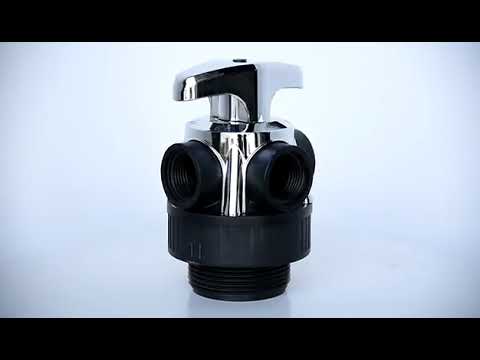
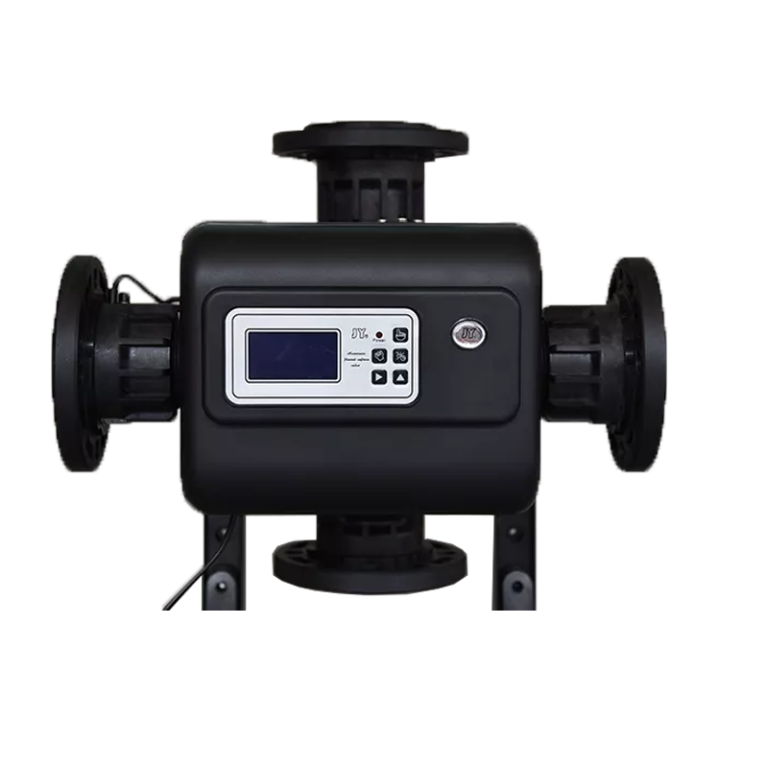
Water softening systems represent substantial energy and chemical consumption in commercial, industrial, and municipal water treatment applications. Traditional time-clock controlled softener valves initiate regeneration cycles based on fixed schedules regardless of actual softening demand, resulting in either insufficient treatment during high-demand periods or wasteful over-regeneration when demand is low. AI-enhanced control systems now enable demand-initiated regeneration responding to actual water consumption patterns, delivering operational savings while improving treated water consistency.
Table of Contents
Limitations of Conventional Control Approaches
Time-clock controlled softener valves operate on predetermined schedules established during system commissioning, regenerating at fixed intervals regardless of actual water usage. This approach creates inherent inefficiencies—regeneration occurs when resin capacity remains partially unused during low-demand periods, while high-demand usage between regenerations may exhaust softening capacity before scheduled regeneration timing.
In practice, time-clock controlled systems often regenerate with a substantial fraction of resin capacity still remaining, which wastes regeneration chemicals and backwash water. How much capacity is wasted depends on how conservatively the schedule was set and how variable the demand profile is — sites with erratic or seasonal consumption patterns see the largest losses.
Demand-Initiation Technology Fundamentals
Demand-initiated regeneration systems continuously monitor water quality exiting the softener, triggering regeneration when hardness detected indicates approaching capacity exhaustion. Inline conductivity sensors or dedicated hardness analyzers provide the measurement input enabling intelligent regeneration timing based on actual softening demand rather than predetermined schedules.
This approach ensures regeneration occurs when resin capacity actually approaches depletion, eliminating both premature regeneration waste and capacity exhaustion between scheduled cycles. Industry experience with demand-initiated regeneration consistently shows meaningful salt savings compared to equivalently-sized time-clock installations while maintaining equivalent treated water quality — typically in the range of tens of percent, with the exact figure depending on how badly the time-clock schedule was matched to demand.
AI Integration for Predictive Optimization
Advanced AI-enhanced softener valves incorporate machine learning algorithms analyzing consumption patterns to optimize regeneration timing further. These systems learn usage patterns—day-of-week variations, seasonal shifts, special event impacts—enabling predictive regeneration timing that addresses upcoming demand rather than merely responding to current conditions.
The predictive capabilities prove particularly valuable in applications with variable demand patterns including hotels, hospitals, and manufacturing facilities. Machine learning algorithms can anticipate high-demand periods hours in advance, ensuring adequate softening capacity through pre-regeneration without requiring excessive capacity margins. Operators implementing AI-optimized systems report additional efficiency gains beyond the demand-initiated baseline, though the size of the increment varies by application.
Control Valve Selection Considerations
The effectiveness of AI-enhanced softening control depends critically on valve reliability, as frequent cycling in demand-initiated operation stresses mechanical components more heavily than time-clock operation. High-quality softener control valves incorporating ceramic disc or precision piston designs provide the durability necessary for demanding applications.
Valve sizing requires careful consideration of both peak flow requirements and daily softening demand volumes. Undersized valves create pressure loss degrading system performance, while oversized valves may not cycle frequently enough for effective demand-initiated operation. As an engineering rule of thumb, size the valve so that normal operation sits comfortably below peak flow — this balances hydraulic performance against the cycling frequency that demand-initiated control requires. Size it against your actual demand profile, not a generic percentage.
Economic and Environmental Benefits
The operational savings from AI-optimized water softening extend beyond direct chemical consumption reduction. Reduced regeneration frequency decreases water consumption for backwash processes—typically tens to a few hundred gallons per regeneration cycle depending on valve size—translating to meaningful water conservation in water-scarce regions. Energy savings from reduced pumping requirements and brine heater operation provide additional operational cost reduction.
These environmental benefits complement the direct operational savings, making AI-enhanced softening control attractive from both economic and sustainability perspectives. If you need a defensible number for your own facility, log regeneration counts and brine usage for a month before and after retrofit — the deltas will speak for themselves.
Conclusion
AI-enhanced control systems mark a significant step forward in water softening technology, turning softener valves from simple mechanical devices into intelligent process controllers that optimize treatment efficiency based on actual demand patterns. Organizations operating water softening systems should evaluate these technologies as infrastructure investments delivering returns through reduced chemical consumption, decreased water waste, and improved treated water consistency. As AI capabilities continue advancing, smart valve control is likely to become standard specification for water softening applications across commercial, industrial, and municipal sectors.