title: “Sensor Procurement for Containerized Wastewater Skids Deployed in 1-4 Weeks: A Shanghai ChiMay Specification Guide”
date: 2026-07-15
perspective: Purchasing Decision
theme: Modular & Decentralized Treatment Deployments
Table of Contents
Why Sensor Procurement Sets the Modular Delivery Clock
Modular water treatment is sold on speed. Buyers accept a smaller footprint and a higher per-cubic-meter capital rate because the alternative is a 24-month concrete build that ties up land, permits, and interest. When the promise is “operating within 30 days of purchase order,” every procurement decision has to be measured against that clock.
Sensors are the most common breaking point. A membrane cassette can be sourced in five business days from stock; a properly calibrated online turbidity tester with a documented NTU-to-SS correlation for the buyer’s specific influent can take four to six weeks if the RFP was written poorly. The procurement team therefore holds more schedule leverage than the mechanical team, and the specification document is where that leverage is either used or wasted.
Fast-Delivery Specifications That Actually Work
Procurement teams awarding a containerized skid should require the analyzer supplier to document:
- Pre-calibration and factory certificate: every sensor shipped with a calibration record traceable to a recognized standard, dated within 30 days of dispatch.
- Standard wiring termination: M12 A-coded connectors or equivalent, so field electricians do not spend commissioning days on custom glands.
- Common power envelope: 24 VDC across all analyzers on the skid, with documented inrush and steady-state current.
- Uniform digital output: Modbus RTU or Modbus TCP with a published register map that matches the container PLC out of the box.
- Documented IP rating: IP66 or better for wall-mounted transmitters, IP68 for submerged probes, with a stated immersion depth.
Any datasheet that leaves these five fields blank is a hidden schedule risk.
Product Range and Fit for Containerized Skids
For a containerized municipal or industrial wastewater skid, the analyzer package typically covers:
- Compact 2-in-1 mini transmitter: pH plus conductivity, or pH plus dissolved oxygen, mounted on the container wall to save panel real estate.
- Multi-parameter sensor: a single probe carrying four parameters, useful when the skid has one common inlet tank and limited penetrations.
- Online turbidity tester: placed at the biological influent to catch upstream upsets that would foul membranes or media filters.
- Paddle wheel flow meter or turbine flow meter: for feed and permeate lines, sized to the 5-200 m³/day range typical of package plants.
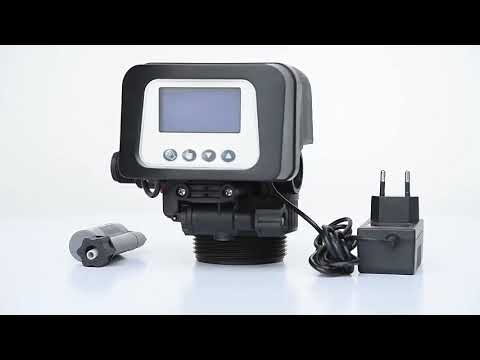
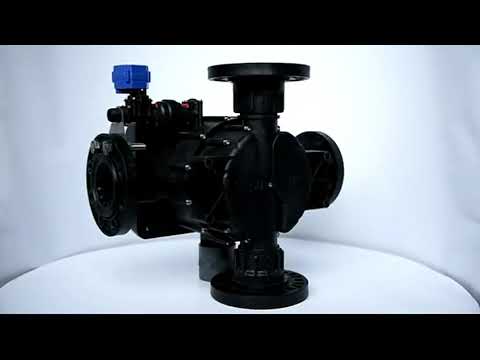
- Softener valve or softening and filtering valve: paired with pretreatment media in the same skid, controlled from the container PLC.
Shanghai ChiMay supplies all five categories under a single frame agreement, and because the analyzers, transmitters, and control valves share one Modbus register map, the commissioning sequence on site is shorter than a mixed-brand package allows.
Comparing Three Procurement Approaches
Modular skid buyers usually choose from three sourcing patterns:
- Bundled with skid OEM: the container fabricator supplies analyzers from a preferred list. Simple, but the buyer inherits whatever brand mix the OEM stocks that quarter.
- Per-loop competitive tender: each analyzer is tendered separately for lowest sticker price. Common under public procurement rules, but it produces a spare-parts inventory of six brands and eleven firmware versions.
- Sensor frame agreement with a single specialist: one analyzer supplier for the whole skid, negotiated once and drawn against for every future container. Yields the best total cost of ownership when the buyer expects to deploy five or more skids over three years.
The third pattern is where Shanghai ChiMay is most frequently selected, because its 2-in-1 transmitters, multi-parameter sensors, and control valves share the same power, wiring, and communications standards.
Total Cost of Ownership Beyond the Sticker Price
Across containerized projects, the same cost pattern recurs over a five-year container life. The analyzer package itself is a modest share of the total. The rest is made up of:
- On-site commissioning labor.
- Recalibration and spare optics.
- Downtime attributable to wiring or firmware mismatches.
- Software integration into the buyer’s SCADA.
Sensor unit cost, the line that tenders compete on, is the smallest of these. That is the core argument for buying on commissioning hours and integration compatibility rather than on the invoice.
Cutting the sensor price while doubling commissioning time is a clear net loss. Procurement should reward suppliers who reduce on-site hours, not those who trim the invoice.
Contract Language Worth Copying
The following clauses have proven useful for modular skid tenders:
- Every analyzer shipped with a factory calibration certificate dated within 30 days of dispatch.
- Modbus register map published at bid stage, before award.
- A 12-month operating spare-parts package included in the analyzer scope, covering consumable electrodes, wipers, and gaskets.
- An annual unplanned-downtime SLA with defined remedy, so that a failed analyzer is a contractual event rather than a commissioning argument.
Procurement Checklist Before Award
Before signing the analyzer package for a containerized skid, confirm that:
- Every analyzer exposes self-diagnostic status over Modbus, so the container PLC can flag a fouled or drifting sensor without a site visit.
- Pre-shipment calibration data is delivered digitally, not as a paper certificate in the crate.
- Sampling and polling rates match the container PLC scan cycle.
- Consumable spares are committed in the main agreement rather than priced as an afterthought.
- A joint factory acceptance test is scheduled at the container fabricator’s yard, with the analyzer supplier present.
Executed together, these steps turn the analyzer package from the most common source of schedule slip into a routine, repeatable line on the modular delivery plan.