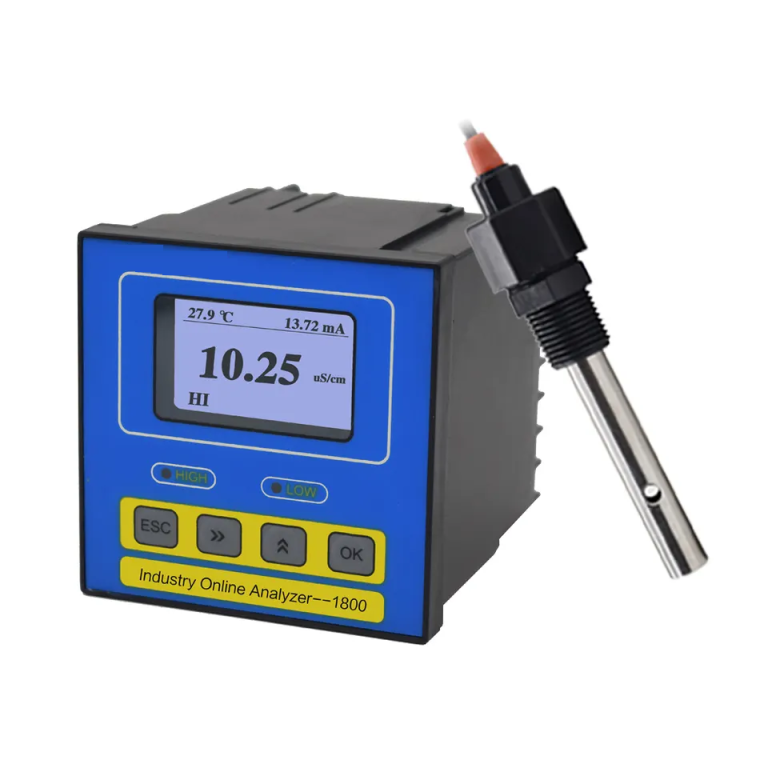
Corrosion represents one of the most significant challenges for water quality monitoring in mining applications. The combination of aggressive chemicals, extreme pH conditions, abrasive slurries, and elevated temperatures creates environments that rapidly degrade conventional sensor materials. Globally, NACE’s IMPACT study put the cost of corrosion at about $2.5 trillion a year — roughly 3.4% of global GDP — and mining bears more than its proportional share. Sensor failures resulting from corrosion generate direct replacement costs while creating monitoring gaps that compromise compliance and process control capabilities.
Corrosion is a leading cause of sensor replacement in mining duty. Failures concentrate in specific applications including acid mine drainage handling, cyanide leaching circuits, and high-temperature process streams. Understanding corrosion mechanisms and material selection criteria enables procurement of sensors that deliver acceptable service life in demanding conditions.
Material selection for mining sensors must account for both the primary corrosive agents present and the synergistic effects of multiple stress factors. Single-factor specifications may dramatically underestimate actual corrosion rates when multiple mechanisms operate simultaneously. Sound material evaluation considers electrochemical behavior, mechanical stress, temperature effects, and potential for localized corrosion attack.
Table of Contents
Understanding Corrosion Mechanisms
Uniform corrosion attacks metal surfaces evenly, reducing wall thickness over time until mechanical integrity is compromised. This corrosion mode is relatively predictable and manageable through straightforward material selection based on corrosion rate data. Corrosion rates of less than 0.5 mm per year typically indicate acceptable material performance for monitoring applications.
Pitting corrosion creates localized attacks that penetrate rapidly despite minimal overall metal loss. This aggressive corrosion mode is particularly dangerous because small pits can cause sensor failure before general wall thinning becomes apparent. Chloride ions accelerate pitting corrosion in most engineering alloys, making chloride concentration a critical specification parameter for mining sensors.
Crevice corrosion occurs in shielded areas such as gasket seats, thread engagement zones, and under deposits that exclude oxygen and allow stagnant solution accumulation. Mining environments with high suspended solids content create ideal conditions for crevice attack beneath particle accumulations. Smooth surface finishes and crevice-free designs reduce susceptibility to this attack mode.
Galvanic corrosion occurs when dissimilar metals contact each other in electrolyte solutions. The more active metal corrodes preferentially while the more noble metal remains protected. Mixed-material sensor constructions that combine different alloys can create galvanic couples that accelerate attack. Understanding the galvanic series enables design of sensor constructions that minimize this risk.
Material Selection Guidelines
Stainless steel alloys provide adequate corrosion resistance for neutral pH applications with low chloride content. Type 316 stainless steel offers improved chloride resistance compared to Type 304 through molybdenum addition, extending service life in mildly aggressive environments. Service life in typical mining applications ranges from 12-24 months depending on specific conditions.
Hastelloy alloys deliver superior corrosion resistance for aggressive mining applications. Hastelloy C-276 maintains integrity in chloride concentrations exceeding 200,000 mg/L and resists both oxidizing and reducing acid environments. The premium cost of Hastelloy sensors is justified in applications where stainless steel fails within months. Shanghai ChiMay offers Hastelloy C-276 housing options for the most demanding applications.
Titanium provides excellent corrosion resistance with the additional advantage of lower density that reduces installation weight. Titanium resists chloride stress corrosion cracking that limits some nickel alloys in hot chloride environments. Service temperatures up to 300°C enable use in high-temperature applications where other materials degrade rapidly.
PVDF (polyvinylidene fluoride) and PTFE (polytetrafluoroethylene) polymers provide corrosion resistance in applications where metal sensors cannot survive. These materials are immune to most chemical attack but have temperature and pressure limitations that restrict applications. Plastic sensors serve valuable niches in low-pressure, moderate-temperature applications with extreme chemical conditions.
Application-Specific Recommendations
Acid mine drainage handling requires sensors that resist both low pH and elevated metal concentrations. For AMD duty with pH below about 3.5, Hastelloy or titanium is the standard housing choice. Polished surfaces and minimal crevice designs reduce attack initiation. Automatic cleaning systems prevent deposits that could initiate crevice corrosion.
Cyanide leaching circuits present unique challenges due to the combination of high pH, cyanide complexation, and potential for oxygen depletion. For cyanide circuits, titanium or Hastelloy sensors are the usual call. PVDF sensors offer adequate resistance for lower-temperature applications where the lower cost provides economic advantage.
Flotation circuits contain frothing agents and elevated solids concentrations that accelerate corrosion of some materials. Type 316 stainless steel typically provides acceptable service life in flotation applications, with Hastelloy reserved for applications with elevated acid or chloride content. Regular inspection and calibration verification maintains measurement accuracy throughout sensor service life.
Electrode and Reference Cell Selection
pH measurement accuracy depends critically on reference electrode integrity that corrosion can compromise. Standard reference electrodes with silver/silver chloride bridges serve well in moderate conditions but degrade rapidly in aggressive mining environments. Double junction reference designs isolate the internal reference solution from hostile process conditions, extending electrode life substantially.
Shanghai ChiMay’s industrial pH electrodes incorporate PTFE junction materials and double junction references that resist fouling and poisoning from aggressive process solutions. These electrodes maintain calibration accuracy for 3-6 months in typical mining applications compared to 2-4 weeks for conventional designs. The extended calibration interval reduces maintenance requirements and improves measurement reliability.
Gold and platinum electrodes provide stable reference surfaces for oxidation-reduction potential (ORP) measurements in mining applications. These noble metal surfaces resist corrosion that would degrade less resistant materials. ASTM D1498 — the standard test method for oxidation-reduction potential of water — provides the verification procedure that keeps ORP monitoring reliable.
Temperature and Pressure Considerations
Elevated temperature accelerates corrosion reactions that may be manageable at ambient conditions. Most corrosion rates approximately double for each 10°C increase in temperature within typical mining process ranges. This temperature dependence means that high-temperature applications require materials with substantially greater corrosion resistance than equivalent lower-temperature services.
Temperature excursions present particular challenges for sensor materials that may experience thermal cycling during shutdown and startup periods. Differential expansion between dissimilar materials creates stress that can initiate cracks or joint failures. Specifications should require thermal cycling capability that matches anticipated operating conditions.
Pressure ratings must exceed maximum operating pressures with adequate safety margins. Typical specifications require minimum ratings of 1.5 times maximum operating pressure. Hydrostatic testing to 1.5 times rated pressure verifies housing integrity before installation. Pressure-containing sensor components should meet ASME B31.3 or equivalent standards for process piping.
Installation and Maintenance Practices
Proper installation practices maximize sensor service life by minimizing stress and avoiding conditions that accelerate corrosion. Thread sealants should be compatible with both housing materials and process solutions. Stray electrical currents from cathodic protection systems or electrical equipment can accelerate galvanic corrosion; proper grounding and isolation prevent these effects.
Regular maintenance inspection identifies corrosion damage before sensor failure occurs. Visual inspection for surface discoloration, pitting, or cracks provides early warning of corrosion problems. Calibration verification using certified buffer solutions confirms that measurement accuracy remains acceptable. Industry guidance — including from the International Society of Automation — ties inspection frequency to application severity.
Cleaning procedures must avoid damage to protective coatings and sensor surfaces. Abrasive cleaning methods can remove passive films that inhibit corrosion. Chemical cleaning must use solutions compatible with sensor materials. Shanghai ChiMay provides cleaning recommendations specific to each sensor model that maximize service life while maintaining measurement performance.
Economic Analysis of Material Selection
Total lifecycle cost analysis demonstrates that premium materials typically deliver lower total costs despite higher initial prices. Once replacement costs, installation labor, process disruptions, and compliance implications are counted, corrosion-related sensor failures routinely cost several times the sensor purchase price. Selecting materials that achieve acceptable service life reduces lifecycle costs.
The following comparison illustrates lifecycle cost considerations for pH sensors in acid mine drainage applications:
| Material | Initial Cost | Service Life | Annual Cost | Downtime Risk |
|---|---|---|---|---|
| Type 316 SS | $200 | 4 months | $600 | High |
| Hastelloy C-276 | $800 | 24 months | $400 | Low |
| Titanium | $1,200 | 36 months | $400 | Very Low |
This analysis demonstrates that Hastelloy or titanium sensors reduce annual costs while providing superior reliability that minimizes monitoring gaps.
Corrosion-resistant sensor selection requires understanding of both corrosion mechanisms and material capabilities that mining applications demand. Initial cost represents only a portion of total lifecycle cost, making thorough economic analysis essential for optimal procurement decisions. Shanghai ChiMay’s engineering team supports material selection for demanding mining applications, providing recommendations that balance cost, performance, and reliability requirements. Investment in appropriate sensor materials delivers returns through extended service life, reduced maintenance, and improved monitoring reliability.