Understanding the Fundamentals of Pressure Safety Valve Design
Pressure safety valve design is a critical aspect of industrial safety and efficiency. These valves are essential components in various systems, including boilers, pressure vessels, and piping systems, where they serve as safeguards against excessive pressure. Understanding the fundamentals of pressure safety valve design is crucial for engineers and technicians involved in the design, installation, and maintenance of these systems.
The primary function of a pressure safety valve is to protect life, property, and the environment by venting excess pressure from a system when it exceeds a predetermined limit. This limit, known as the set pressure, is typically determined by the maximum allowable working pressure (MAWP) of the system. When the system pressure exceeds the set pressure, the valve opens, allowing fluid to escape until the pressure returns to a safe level.
The design of a pressure safety valve involves several key considerations. First, the valve must be capable of venting the required volume of fluid quickly enough to prevent the system pressure from rising dangerously high. This capacity is determined by the valve’s size, the type of fluid being vented, and the pressure differential across the valve.

Second, the valve must reseal effectively once the pressure has been reduced. This requires a well-designed valve seat and disc, which must form a tight seal when the valve is closed. The materials used for these components must be compatible with the fluid being vented and capable of withstanding the operating conditions of the system.
| Model | Category | Water Capacity m3/h | LCD | LED | ICON | DIODE |
| CV-2 | Automatic Drain Valve | 0.5 |
Third, the valve must be designed to open at the correct pressure. This is achieved through the use of a spring or other force-generating mechanism, which must be carefully calibrated to ensure that the valve opens at the desired set pressure. The design must also account for factors such as back pressure and temperature, which can affect the operation of the valve.
In addition to these fundamental considerations, pressure safety valve design also involves a range of other factors. These include the valve’s physical configuration, which must be suitable for the system in which it will be installed, and the materials used in its construction, which must be able to withstand the conditions to which they will be exposed. The valve’s maintenance requirements and lifespan are also important considerations.
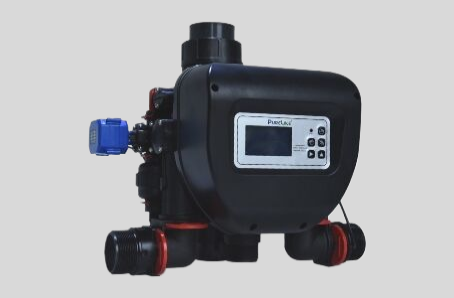
The design process typically involves a combination of theoretical calculations and empirical testing. Engineers use mathematical models to predict the valve’s performance under various conditions, and then validate these predictions through laboratory tests. This iterative process allows for the refinement of the design, ensuring that the final product meets the required performance specifications.
| Model | Central tube | Drain | Brine tank connector | Base | Maximum power | Operating temperature |
| 3150 | 2.375″(2″) O.D. | 2″NPTF | 1″NPTM | 4″-8UN | 87W | 1℃-43℃ |
In conclusion, pressure safety valve design is a complex process that requires a deep understanding of fluid dynamics, materials science, and mechanical engineering principles. By carefully considering the factors that influence the valve’s performance, engineers can design valves that effectively protect systems from the dangers of overpressure. As technology continues to advance, new materials and design techniques are likely to further improve the safety and efficiency of these vital components.