Comparison Analysis · Procurement Perspective · Published: November 16, 2026
Table of Contents
Key Takeaways
- Peristaltic dosing pumps are typically ±2–5% accurate, and the tube is the only wetted part — the fluid never touches valves, seals or the drive mechanism [1].
- Diaphragm pumps are the precision class: hydraulically actuated designs hold about ±0.5% accuracy, mechanical designs land in the ±1–2% band, and digitally controlled families specify turndown up to 1000:1 with ±1% repeatability [2][3].
- The peristaltic tube is a consumable with a duty-dependent life: roughly 200–500 hours in high-speed continuous service, 500–1,000 hours in moderate daily use, and 1,000–2,000+ hours at low speed or intermittent duty [4].
- Peristaltic pumps self-prime from dry, tolerate dry running, and shrug off gas locking and abrasives. A vapour-locked diaphragm head simply stops delivering [5].
- Off-gassing chemicals such as sodium hypochlorite are the classic diaphragm trap: gas accumulates in the head, the pump keeps cycling while no fluid moves, and lost chemical feed can go undetected for hours. A peristaltic pump displaces liquid, gas or foam alike [6].
- The buyer’s tie-breaker is the failure mode you can tolerate: a scheduled tube change versus a scheduled diaphragm-and-valve service, and a pulsing but gas-tolerant flow versus a precise but gas-sensitive one [1][5][6].
Two Ways to Move a Dose
Both technologies are positive displacement, but they displace differently. A peristaltic pump uses rollers or shoes that sequentially compress a flexible tube, pushing a discrete slug of fluid forward; the product contacts only the tube, never the mechanical parts [1][5]. A diaphragm metering pump flexes a diaphragm via an electromagnetic or mechanical drive, with check valves enforcing one-way flow; the diaphragm’s displacement meters the dose, and the wetted end — diaphragm, check valves, head — is selected from corrosion-resistant materials [2].
That single architectural difference drives every comparison line below: accuracy, wear parts, suction behavior, gas tolerance, chemistry limits.
Accuracy and Repeatability
Diaphragm metering pumps win the accuracy contest on paper. Hydraulically actuated diaphragm pumps hold about ±0.5% dosing accuracy; mechanically actuated diaphragm pumps, and peristaltic pumps with calibration correction, operate in the ±1–2% band [2]. At the high end, digitally controlled diaphragm families use high-resolution motor control to reach turndown ratios up to 1000:1 with ±1% repeatability across the flow range [3].
Peristaltic accuracy is typically quoted at ±2–5% [1][5]. Two effects set that ceiling: the pulsating flow, where each roller delivers a discrete slug, and tube wear over time, which changes compression and therefore output until you recalibrate [1]. For most water-treatment and general dosing duty that’s plenty. Where a discharge permit ties a compliance limit directly to feed accuracy — fluoride dosing in potable water plants, where the federal MCL sits at 4 mg/L with a secondary aesthetic limit of 2 mg/L — the diaphragm class is the safer specification [2].
Speed and wear interact, too. A peristaltic pump running at 500 rpm degrades its tubing considerably faster than one at 50 rpm, even with identical fluid, because tube life is governed by compression cycles rather than volume delivered [4]. That makes speed a specification decision, not just a setting: an undersized pump thrashing at high rpm costs more in tubes than an oversized pump loafing at low speed.
The Consumables Story: Tube vs Diaphragm and Valves
Every metering pump has a wear part. The difference is what it costs to replace and how predictable the schedule is.
The peristaltic tube has to flex, seal under compression and recover after every roller pass, so fatigue, chemical attack and abrasion steadily reduce its life [5]. Published schedules give a useful planning envelope: 200–500 hours for high-speed continuous duty (replacement every 1–3 weeks), 500–1,000 hours for moderate daily use (1–3 months), and 1,000–2,000+ hours for low-speed or intermittent duty (6 months or more) [4]. The tube is cheap and fast to change — many head designs swap it in minutes without special tools — but the schedule belongs in the maintenance budget, and calibration drifts as the tube wears, so dosing accuracy checks should ride the same calendar [4][5].
A diaphragm pump spreads wear across the diaphragm and the check valves. The diaphragm is a fabric-reinforced or PTFE part with a service life measured in years at moderate duty, and check valves get rebuilt rather than discarded. Service is less frequent than a tube change but more involved — valve seats, balls and gaskets are individual parts — and a vapour-locked or fouled valve shows up as silent accuracy loss rather than an obvious leak [2][6].
| Dimension | Peristaltic | Diaphragm | Best fit |
|---|---|---|---|
| Typical accuracy | ±2–5% [1][5] | ±0.5% hydraulic, ±1–2% mechanical [2] | Diaphragm for compliance-critical feeds |
| Turndown | Moderate; output follows tube condition [4] | Up to 1000:1 on digitally controlled designs [3] | Diaphragm for wide flow windows |
| Wetted parts | Tube only [1] | Diaphragm, check valves, head materials [2] | Peristaltic for aggressive or contaminated media |
| Wear part | Tube: 200–2000+ h by duty [4] | Diaphragm and valves on service schedule | Both are plannable; peristaltic is simpler |
| Self-priming / dry run | Self-primes from dry, dry-run safe [1][5] | Needs priming; dry running risks diaphragm damage [5] | Peristaltic for lift from tanks |
| Gas locking | Immune [5] | Vulnerable — head stops delivering [5][6] | Peristaltic for hypochlorite and peroxide |
| Pulsation | Distinct slug per roller [1] | Per-stroke pulse, damped by higher frequency | Damper on either for long lines |
| Typical duty | Abrasives, viscous, gas-forming chemicals [5][6] | High-pressure, precision chemical feed [2][3] | Match to the failure mode |
Suction, Self-Priming and Gas Handling
This is where the two technologies separate most sharply. The squeezing action of a peristaltic pump creates a strong vacuum, so it self-primes from dry and can run dry without damage. It’s also immune to gas locking and to abrasives, because there are no valves to seat and no rigid chambers to fill [1][5].
A diaphragm pump is a precision machine wrapped around a compressible gas problem. Its weakness is gas: a vapour-locked head simply stops delivering [5]. Sodium hypochlorite and hydrogen peroxide are the standard examples of chemicals that release gas inside the pump; once the head fills with a gas pocket, the pump keeps cycling while no fluid moves, and in metering service the loss of chemical feed may go undetected for hours [6]. Mitigations exist — degassing heads, flooded suction, short suction lines, back-pressure valves — but they’re design tasks the buyer has to specify, not accessories that appear by default [5][6].
Chemical Compatibility
Chemistry flips the usual intuition. In a peristaltic pump the entire chemical exposure is the tube, so compatibility reduces to one elastomer or thermoplastic choice, and abrasive or fibrous fluids that would destroy check valves pass through freely [1][5]. The constraint is pressure: tube construction caps discharge pressure well below what a metal-head diaphragm pump sustains.
In a diaphragm pump the wetted end is a material selection exercise — PTFE or elastomer diaphragms, heads and valve seats in PVC, PVDF, 316L stainless, alloy 20 or Hastelloy — which is why the diaphragm class covers high-pressure and high-temperature duty the tube cannot [2]. For oxidizers and off-gassing chemicals, pair the material choice with a degassing head or automatic degassing valve [6].
Pulsation and Downstream Effects
Both pump types pulse; they pulse differently. A peristaltic pump discharges in pulses created by the moving compression point. The effect is usually manageable but can disturb small-diameter pipework, flow meters, pressure sensors and dosing stability, and a pulsation damper is the standard remedy [1][5]. A diaphragm pump pulses once per stroke, but at higher stroke frequencies the ripple is finer, and electronic stroke control smooths low-flow output [3]. Long injection lines, sensitive analyzers and any inline flow metering downstream all argue for damping whichever technology you choose.
Reading the Total Cost, Not the Sticker
Comparing the two on unit price alone misleads in both directions. On the peristaltic side the pump itself is simple and inexpensive, but the tube budget recurs forever: every compression cycle is a deposit into that account, and a pump sized for high-speed duty buys replacement tubes several times as often as a lazily rotating one [4]. On the diaphragm side the pump and its engineered wetted end cost more up front, but diaphragm and valve service intervals are measured in months-to-years rather than weeks — a higher initial specification traded for a slower consumable clock.
Downtime behaves differently too. A tube change on most peristaltic heads is a minutes-long task that operations staff do without specialist tooling. A diaphragm rebuild involves multiple sealed parts, torque sequences and a leak check. Conversely, when a diaphragm pump fails quietly — a vapour-locked head cycling without delivering — the loss is invisible until the process result drifts, which is exactly why gas-forming chemicals demand the degassing hardware described above [6]. The honest five-year comparison therefore has four columns, not two: pump price, consumable spend, labor per intervention, and the cost of a dosing error discovered late.
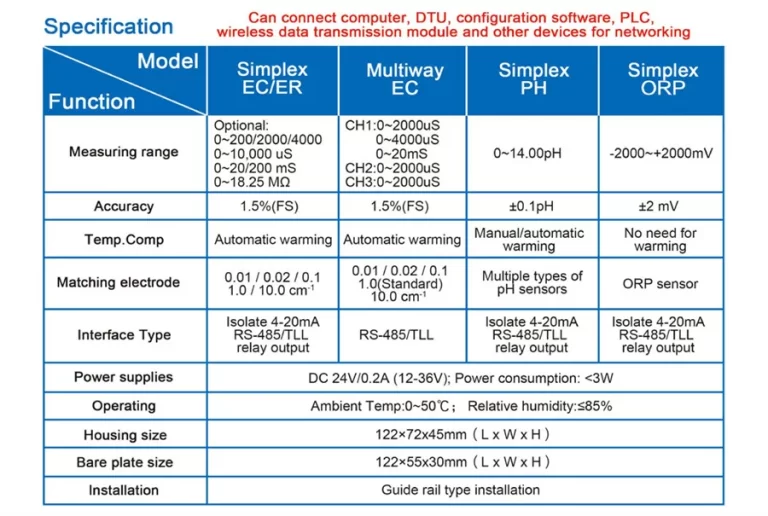
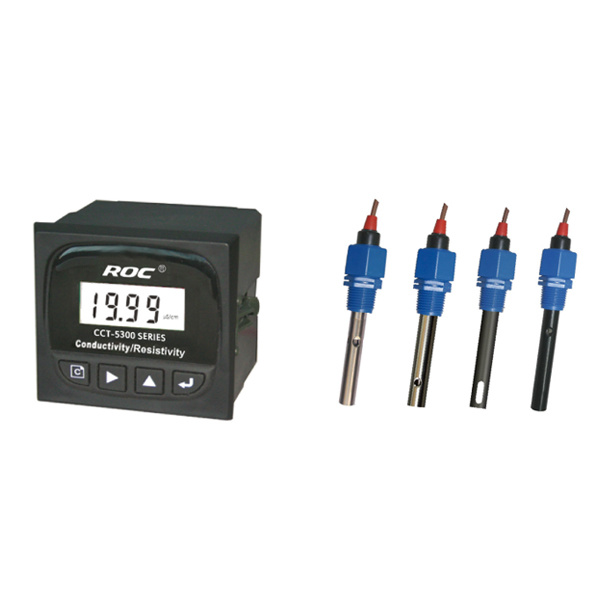
That system view is also why the measurement side deserves a seat at the pump-selection table. Dose accuracy is a property of pump, analyzer and injection point together, and Shanghai ChiMay builds the measurement side of that loop: inline pH, conductivity and multi-parameter transmitters with digital outputs that give your dosing control a signal worth trusting, so precision carried by the pump isn’t lost at the feedback end.
Where Each Pump Wins
Choose peristaltic when the fluid is abrasive, viscous, gas-forming or fickle; when the pump must lift from a tank and survive occasional dry running; when maintenance staff want one cheap wear part and a five-minute changeover; and when ±5% accuracy is acceptable for the process [1][4][5][6].
Choose diaphragm when the dose is compliance-critical and needs ±1% class repeatability; when discharge pressure is high; when turndown must span a wide flow window under digital control; and when the wetted-end materials must be engineered around a specific chemistry [2][3].
Water-treatment plants usually end up with both side by side — peristaltic on hypochlorite and polymer, diaphragm on precision pH correction and fluoride-class feeds. Most mixed-inventory plants also learn the same spare-parts lesson: hold a complete spare tube set per pump on site, and keep diaphragm rebuild kits on the same shelf, so a dosing outage is a ten-minute swap instead of a waiting game [4]. Either way, the pump is only half the control loop. The analyzer that closes it decides the outcome, and the loop is only as accurate as its weakest element.
References
- Apex Flow Solutions — Diaphragm vs Peristaltic Metering Pumps: Which Is Right for Your Application?: peristaltic ±2–5% accuracy, slug-type pulsation, self-priming and dry-run behavior. https://apexflowsolutions.com/blogs/news/diaphragm-vs-peristaltic-metering-pumps-which-is-right-for-your-application
- One Source Plastics — Chemical Metering Pump Selection: Peristaltic vs Diaphragm vs Progressive Cavity vs Gear: ±0.5% hydraulically actuated diaphragm accuracy, ±1–2% mechanical diaphragm and calibrated peristaltic band. https://onesourceplastics.com/chemical-metering-pump-selection-peristaltic-diaphragm-progressive-cavity-gear/
- Cannon Water Technology — digitally controlled diaphragm metering pump series page: turndown ratio up to 1000:1 and ±1% repeatability via high-resolution motor control. https://cannonwater.com/pumps/pumps-by-brand/walchem-pumps/ix-series/
- BJProducts — Peristaltic Pump Tube Replacement Schedules: expected tube life 200–500 h (high-speed), 500–1000 h (moderate), 1000–2000+ h (low-speed/intermittent) with replacement intervals. https://bjproducts.net/how-often-do-peristaltic-pump-tubes-need-replacing
- Reynolds & Bauhm — Dosing Pump Selection Guide: peristaltic pumps immune to gas locking and abrasives, valve-free, self-priming from dry, about ±5% accuracy and consumable tube life; diaphragm weakness is vapour locking. https://reynoldsbauhm.co.uk/dosing-pump-selection
- ChangYu Pump — Bleach Chemical Pump Guide: off-gassing of sodium hypochlorite, vapor lock in diaphragm heads with undetected loss of feed, peristaltic tolerance of gas-forming chemicals. https://changyupump.com?p=4932/
About the author: Written by the Shanghai ChiMay Technical Editorial Team — specialists in online water-quality instrumentation and the chemical dosing loops those instruments control, covering pump selection, sensor integration and dosing accuracy for water and wastewater treatment plants.