Specification guide · Technical perspective · Published: October 2, 2026
Table of Contents
Key Takeaways
- NPT and BSP threads share nominal inch sizes but not geometry: NPT uses a 60° thread form, BSP uses a 55° Whitworth form, and the two families are not interchangeable. Force them together and you get chronic leakage, damaged threads, and potential code violations [1][2].
- NPT seals on the taper itself through thread interference, usually helped by sealant. BSPP (G) parallel threads never seal on the thread, relying instead on a gasket, bonded washer, O-ring, or cone seat [1][2].
- BSP is not one thread. ISO 228-1 covers parallel G threads, while ISO 7-1 covers the pressure-tight R (external taper), Rc (internal taper), and Rp (internal parallel) designations — and Rp must not be assumed interchangeable with G just because both are parallel [2][3].
- Flanges are a third, separate system. EN 1092-1 spans DN 10 to DN 4000 in PN 2.5 to PN 400 ratings, and its dimensional system is not interchangeable with ASME B16.5 flanges [4].
- The safest order description states the exact thread designation, internal or external form, nominal size, governing standard, material, sealing method, and mating component — not just “1/2-inch thread” [5].
- Replacement softener valve platforms from Shanghai ChiMay are offered with 1/2-, 3/4-, and 1-inch inlet and outlet options in threaded formats [6].
Three Families, Two Sealing Logics
Valve interfaces fail in the field for one dominant reason: threads and flanges from different standards look almost alike at a glance, yet their geometry and their sealing philosophy differ in ways that only show up after installation. Before specifying any softener, filter, or treatment valve, it pays to know which of three interface families the pipework actually belongs to.
NPT: The American Taper
NPT — National Pipe Taper — is the North American standard for tapered pipe threads, governed by ASME B1.20.1, which specifies a 60° included thread angle and a tapered thread form [2]. The seal is made on the threads themselves: as male and female tapers are wrenched together, the flanks wedge against each other in an interference fit, and thread sealant fills the remaining helical leak path [1]. That is why NPT joints tolerate imperfect surface finish reasonably well but depend on correct engagement depth — over- or under-tightening shows up directly as leakage. NPT is the default expectation on US-origin equipment, including the bypass yokes and tank connections common on commercial softener and filter installations [1].
BSP: G, R, Rp and Rc
BSP, the British Standard Pipe family, dominates in Europe, the Commonwealth, and much of Asia. Its Whitworth thread form uses a 55° included angle — a fundamentally different geometry from NPT, not a regional variant of it [2]. The family splits into two branches with different jobs:
- Parallel threads, designated G and defined in ISO 228-1, are not designed to make the pressure seal on the threads. The joint seals externally — on a gasket, bonded seal washer, O-ring, or machined cone seat — while the parallel thread holds the parts together [2].
- Pressure-tight threads are defined in ISO 7-1: R for the external taper, Rc for the internal taper, and Rp for the internal parallel form that mates with an R external thread. R/Rc is the most reliable sealing combination, and R/Rp is also permitted — but Rp is not the same as an internal G thread. The tolerance zones and intended duty differ, even though both are parallel forms [3].
Writing “BSP” alone on a drawing or purchase line is incomplete procurement language. The correct designations are G, R, Rc, or Rp, with the size [3].
Flanged Ends: PN and Class
For larger valves and skid equipment, flanges replace threads entirely, and here two dimensional worlds coexist. EN 1092-1, the European flange standard, covers DN 10 to DN 4000 across PN ratings from PN 2.5 up to PN 400, with defined flange types and facing systems [4]. ASME B16.5 serves the same function in the inch-based Class system. The two define completely different dimensional systems — bolt circle, number and size of bolts, facing details — and are not interchangeable, so a PN-flanged valve cannot simply be bolted to a Class-flanged pipeline without adapter engineering [4]. Matched flange pairs, gaskets, and fasteners have to come from the same standard.
What Goes Wrong When Interfaces Are Mixed
The classic failure is a 55° BSP fitting meeting a 60° NPT port. The threads engage only a turn or two before binding, and even when forced, contact occurs on a tiny edge of the flank, leaving a weak joint with an almost certain leak path [1][2]. Cross-mating BSP and NPT does not work and damages threads on the first attempt [2]. In service this shows up as weeping joints, tape that never seems to be enough, and fittings that cannot be retightened without cracking.
The subtler failure sits inside the BSP family: driving a parallel G male thread into an Rp female port because both are parallel. ISO 7-1 and ISO 228-1 assign different tolerances and purposes to these forms, and treating them as one thread erodes the intended seal strategy [3]. The result is a joint that assembles smoothly and seals unreliably.
Flange mismatches are at least visible — a PN flange simply will not bolt to a Class flange — but discovering that on site, with a valve already delivered, still costs schedule. Checking the flange standard as early as the inquiry stage is the cheapest fix available [4].
A Field Method for Identifying What You Have
Most plants inherit a mixture of all three families, so identification is a skill worth thirty minutes of training. Measure across the first thread and the last thread of an external thread with a caliper: a parallel form reads constant, while a tapered form narrows along its length. Count the profile by eye against known references — the rounded, generous crest of the Whitworth family looks visibly different from the sharp, flat-topped American form once they are seen side by side [2]. Check the sealing face that accompanies a parallel thread: a bonded washer, an O-ring groove, or a machined cone confirms that the joint was never meant to seal on the threads themselves [2][3]. When the family is still uncertain, do not guess by region of purchase. Confirm against the drawing standard called out on the equipment documentation, and if that is missing, gauge the thread rather than test-fit it, because a wrong-family trial run is how undamaged ports become damaged ones [2].
Installation practice then decides whether a correctly identified joint stays tight. Taper-thread joints depend on engagement depth, so follow the maker’s wrench-turn guidance rather than improvising, and let the sealant — not heroic torque — carry the helical leak path [1]. Keep piping aligned so the valve body is not pulled into permanent stress, support heavy assemblies independently of the valve, and remember that a joint chosen for the wrong standard cannot be fixed by any amount of tightening: the geometry, not the effort, is what seals [1][2].
Declaring the Interface on the Order
| Interface | Governing standard | Typical region | Sealing principle | Key watch-out |
|---|---|---|---|---|
| NPT (taper) | ASME B1.20.1 [2] | North America | Thread interference on the taper, assisted by sealant [1] | Never mate with BSP forms; 55° vs 60° flank angles [1][2] |
| BSPP (G, parallel) | ISO 228-1 [2] | Europe, Commonwealth, much of Asia | External seal: gasket, bonded washer, O-ring, or cone seat [2] | The thread locates, it does not seal; verify the mating sealing face [2] |
| BSPT (R, taper) | ISO 7-1 [2] | Europe, Asia | Metal-to-metal thread interference plus sealant [2] | Pairs with Rc or Rp female threads; not with G [3] |
| Flanged (PN) | EN 1092-1 [4] | Europe and many export markets | Bolted gasket joint between matched facings | Not interchangeable with ASME B16.5; keep flange pairs within one standard [4] |
A compliant order line reads like a sentence, not a size. State the exact thread designation, internal or external form, nominal size, governing standard, material, pressure-temperature rating, sealing method, and mating component; a line that says only “1/2-inch female thread” invites the supplier to fill the gaps by regional habit [5]. For valves specifically, add end-to-end orientation, tank neck details for top-mounted units, and any yoke or adapter geometry, because connection data rarely travels with a model name alone [5].
What This Means for Replacement Projects
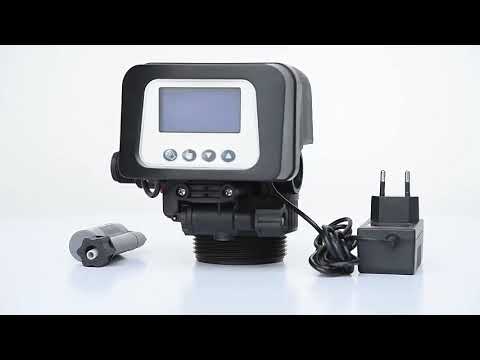
Fleck® control valves remain a widely installed platform in commercial softening and filtration duty, so many replacement programs start from pipework built to their connection conventions. When a new valve is specified as a replacement for Fleck® 5600 / 2510 platform installations, the port thread form, yoke geometry, and bypass arrangement are part of that promise — drop-in compatible. Same port size, same flow, same footprint. A valve that matches flow and footprint but arrives with the wrong thread family has still failed the project, because the interface is where compatibility becomes physical.
Shanghai ChiMay publishes its softener valve platforms with connection data in the open: current listings include 1/2-, 3/4-, and 1-inch inlet and outlet options alongside drain and tank-neck dimensions, so the interface can be confirmed against existing pipework before the order is placed [6]. We publish the numbers other suppliers make you ask for, and connection standards sit at the top of that list — they are the numbers that decide whether commissioning day is a hookup or a rework.
Before signing, run a five-line check: thread family confirmed against the pipe (not against the old valve’s datasheet alone), sealing method consistent with the thread type, flange standard matched on both sides of every joint, sizes verified at the actual pipe, and the full designation written into the purchase line [5]. Five minutes with that checklist is cheaper than one afternoon with a leaking skid — and it is the difference between an interface that was specified and one that was assumed.
References
- Industrial Monitor Direct — NPT vs BSP Thread Compatibility: Industrial Piping Reference; 60° vs 55° geometry, sealing mechanisms, and consequences of mixing thread families — https://industrialmonitordirect.com/zh-hant/blogs/knowledgebase/npt-vs-bsp-thread-compatibility-industrial-piping-reference
- AIMS Industrial — Hydraulic Fittings Guide: BSP vs NPT; ASME B1.20.1 60° Sellers form, ISO 228 (parallel) and ISO 7-1 (tapered), G/R/Rp/Rc designations, and cross-mating damage — https://aimsindustrial.com.au/blogs/product-guides/hydraulic-fittings-guide
- GageTools — BSP Thread Gauge Guide: BSPP vs BSPT, G & R Inspection; Rp vs G differences and permitted ISO 7-1 sealing combinations — https://gagetools.com/?p=191
- Projectmaterials — What Is EN 1092-1?; DN 10–4000 range, PN 2.5–400 ratings, and dimensional non-interchangeability with ASME B16.5 — https://blog.projectmaterials.com/quick-answers/flanges/what-is-en-1092-1/
- Wofer Valve — NPT vs BSP Threads for Valves and Pipe Fittings; recommended content of a complete order description for threaded valve ends — https://www.wofervalve.com/post/npt-vs-bsp-threads-valves-pipe-fittings
- Shanghai ChiMay — Water softener control valves product page; 1/2”, 3/4”, and 1” inlet/outlet connection options — https://www.chimaycorp.com/
About the author: Written by the Shanghai ChiMay Technical Editorial Team — the engineers behind Shanghai ChiMay’s softening and filtration control valve line, covering valve selection, connection specifications, and replacement-project support for commercial and industrial water systems.