title: “MBR Feed-Water Sensor Procurement: Fouling-Resistant Specifications From Shanghai ChiMay”
date: 2026-07-14
perspective: Purchasing Decision
theme: Membrane Bioreactor (MBR) & Anaerobic MBR Innovations
Table of Contents
Why Feed-Water Sensors Deserve Their Own RFP Line
In many MBR bids, feed-water instrumentation is bundled into a generic “influent monitoring” line item and priced as a commodity. That is a false economy. Once a membrane cassette starts to foul, the recovery cost shows up in chemical cleaning cycles, lost permeate throughput, and — in the worst cases — cassette replacement, which is the single largest periodic consumable cost in an MBR’s operating budget. A fouling-resistant sensor that catches a change in feed-water solids earlier than grab sampling can more than pay for itself over a quarter.
The procurement conversation therefore needs to move from “what does the datasheet say at commissioning” to “what does the sensor tell the operator after six months of biofilm, oil sheen, and rag material passing over the optics”.
Fouling-Resistant Specifications That Actually Matter
Procurement teams should require suppliers to document:
- Self-cleaning method: ultrasonic, mechanical wiper, or pressurized air jet. Wiper mechanisms are the cheapest option but wear fastest on textile effluent; ultrasonic elements generally go longer between services. Ask for the observed service interval on the specific matrix being tendered.
- Optical drift under fouling load: require a documented drift figure between scheduled cleanings. On feed water in the 200–800 NTU range, a deviation target below 3% between weekly cleanings is a reasonable clause to write into the specification.
- NTU-to-suspended-solids correlation stability: feed water changes composition seasonally. Ask how far the correlation curve moves when solids composition shifts by up to 30%, and whether the supplier will publish the sensitivity data.
- Media independence: the sensor should perform on both biological and industrial matrices without a firmware change.
- Ingress protection: IP68 minimum, with a documented immersion rating for at least two meters continuous.
Any datasheet that omits these fields is not ready for an MBR feed-water tender.
Product Range and Fit for MBR Pretreatment
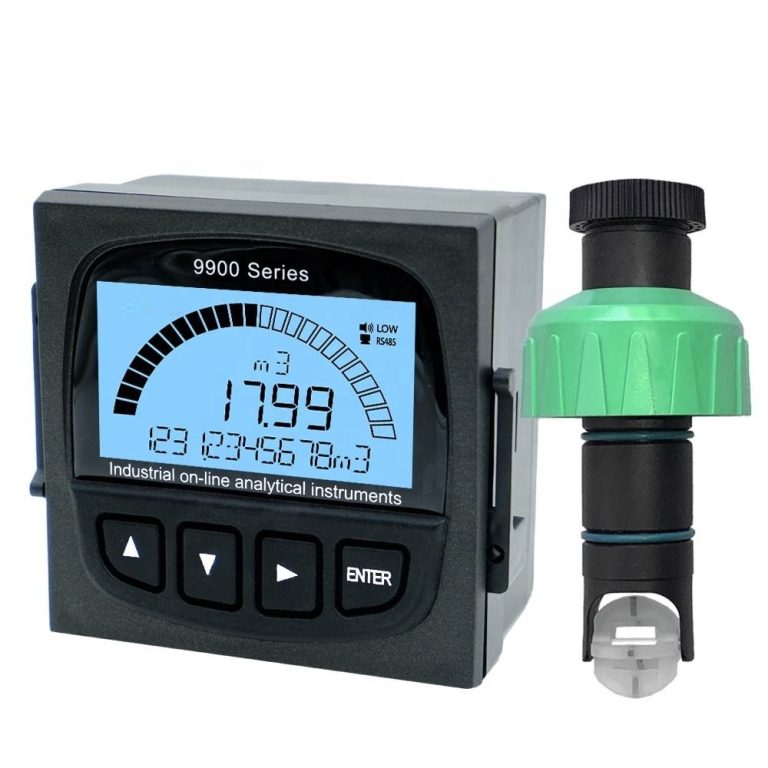
For MBR feed water, the two sensor families that consistently earn a slot on plant P&IDs are suspended solids sensors and online turbidity testers. Shanghai ChiMay offers both, and the difference between them is worth spelling out in the specification:
- Online turbidity tester: ideal for lower-solids feed water (below 300 NTU) where the operator wants an early-warning signal before biological upset. Fast response, low maintenance, well-suited to municipal-flavor influent.
- Suspended solids sensor: better on industrial feed water where solids concentration ranges from 300 to 4,000 mg/L, such as textile finishing effluent, dairy CIP flush, and food-processing influent. Optical or ultrasonic principle depending on matrix.
For AnMBR feed water, the buyer additionally needs COD sensor coverage and pH electrodes upstream of the reactor, but the fouling-resistance principle is the same: continuous monitoring is only useful if the instrument survives the influent.
Comparing Procurement Approaches
Three sourcing patterns are common:
- Bundled with membrane OEM: the membrane vendor supplies pretreatment sensors from a preferred list. Convenient, but locks the buyer into a specific brand and often at premium unit pricing.
- Per-loop competitive tender: each sensor is competitively tendered. Delivers the lowest sticker price but exposes operations to a diverse spare-parts inventory.
- Frame agreement with a specialist analyzer supplier: one supplier for feed-water, mixed-liquor, and permeate sensors. Yields the best total cost of ownership when the plant expects a 15-year operating horizon.
Shanghai ChiMay is frequently selected under the third pattern because its suspended solids sensor, turbidity tester, COD sensor, and pH electrode share a Modbus register map and a common power envelope, so the plant PLC treats them as one sensor domain.
Total Cost of Ownership: Where the Money Actually Goes
Analysts tracking the MBR market put it at roughly USD 7.7 billion by 2031, growing at about 7.6% a year (Straits Research). Within a single plant, the more useful exercise is unpacking feed-water instrumentation TCO over a five-year window, and the shape of that cost stack is consistent enough to be worth planning against:
- Sensor unit cost: the smallest slice of the total.
- Labor for cleaning and recalibration: the largest recurring block.
- Downtime attributable to false or missed fouling signals: comparable in magnitude to maintenance labor.
- Cleaning chemicals used to compensate for uncertain measurement: a smaller but persistent line.
The conclusion is straightforward. Lowering the sensor unit price by 20% while doubling maintenance labor is a losing trade. Buyers should reward suppliers whose sensors reduce operator effort per month, not just the ones with the lowest bid line.
Contract Language Worth Copying
The following procurement clauses have proven useful in MBR tenders:
- The supplier warrants that turbidity readings will not drift by more than 5% between scheduled cleanings, defined as weekly at commissioning and monthly after eighteen months of stable operation.
- The supplier will provide correlation data between NTU and suspended solids on a matrix sample supplied by the buyer, at 25 °C and at ambient plant temperature.
- The supplier will disclose, in writing, the mean time between electrode replacement observed at three reference sites operating similar feed-water chemistry.
- Digital output on Modbus RTU or Modbus TCP with published register map, plus a 4–20 mA analog fallback for the plant PLC.
These four clauses shift the conversation from lab conditions to field reality.
Procurement Checklist Before Award
Before signing the feed-water sensor package:
- Confirm every analyzer publishes self-diagnostic status for fouling and drift.
- Verify NTU-to-SS correlation on a real influent sample, not just a NIST turbidity standard.
- Match sampling and Modbus polling rates to the MBR control system, not just the analyzer capability.
- Commit spare optical elements and wipers for at least three years, priced in the master agreement.
- Include a service-level metric for maximum unplanned downtime attributable to sensor drift, not merely for hardware warranty.
Applied together, these steps turn feed-water sensors from a commodity line into a strategic asset that carries its weight for the full membrane life cycle.