title: “Common Water Quality Problems in Food Manufacturing and How to Solve Them: Shanghai ChiMay Solutions”
date: 2026-06-25
type: “高浏览模仿型”
Table of Contents
Common Water Quality Problems in Food Manufacturing and How to Solve Them: Shanghai ChiMay Solutions
Key Points:
– High mineral content causes scale buildup reducing equipment efficiency by up to 30%
– pH fluctuations affect product taste and microbiological stability in fermented foods
– Microbiological contamination leads to product recalls costing $10 million to $30 million
– Inline monitoring enables early detection preventing quality failures and production losses
Food manufacturing facilities encounter diverse water quality challenges compromising product quality, equipment performance, and operational efficiency. Source water from municipal supplies or private wells introduces variations in mineral content, acidity, and microbiological quality requiring management throughout production operations. Understanding common water quality problems and their solutions enables facilities to implement effective mitigation strategies protecting product quality and operational profitability.
Hard Water Scale Formation
Hard water containing elevated calcium and magnesium concentrations causes scale buildup on heat transfer surfaces, pipelines, and process equipment. Scale formations act as thermal insulators, reducing heat transfer efficiency and increasing energy consumption for heating and cooling operations. The U.S. Department of Energy (DOE) estimates that scale buildup of just 1.6 mm increases energy costs by approximately 10%, with impacts escalating for thicker accumulations.
Scale formation in food processing equipment creates additional quality and safety concerns beyond energy inefficiency. Scale buildup in cooking vessels creates uneven heating producing undercooked product zones posing food safety risks. Scale accumulation in pipelines reduces flow capacity and creates harborage sites for microbiological growth. Scale on sensor surfaces affects measurement accuracy, leading to incorrect process control decisions.
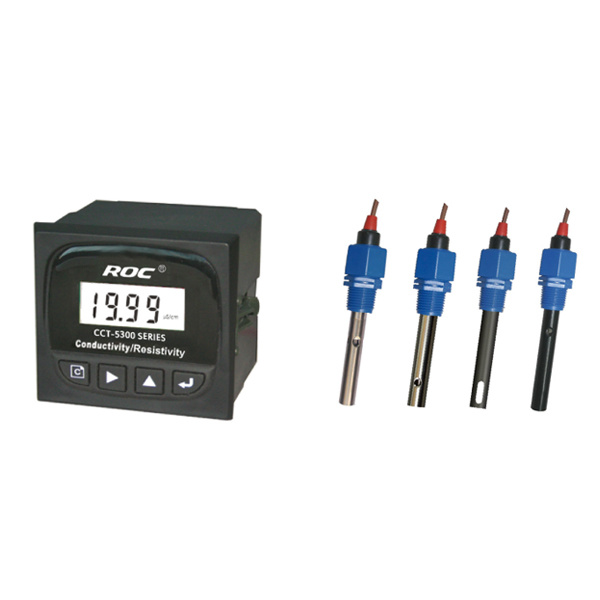
Water softening systems employing ion exchange technology effectively prevent scale formation by replacing calcium and magnesium ions with sodium or potassium ions. Proper softening maintains hardness below 50 mg/L as CaCO3 for most food processing applications. Shanghai ChiMay’s conductivity sensors monitoring water hardness correlate conductivity measurements with ion concentrations, enabling automated softening system control and scale prevention verification.
Electronic water treatment devices and chemical scale inhibitors provide alternative management approaches. Electronic water conditioners alter scale crystal formation patterns, producing non-adhering sludge that flows through systems rather than accumulating on surfaces. Chemical inhibitors including polyphosphates sequester scale-forming ions, preventing crystal formation at lower treatment concentrations than traditional softening.
pH Imbalance Issues
Water pH affects both product quality and process effectiveness throughout food manufacturing operations. Alkaline water causes flavor degradation in acidic products, interferes with acid-catalyzed reactions in fermented foods, and reduces effectiveness of acid-based cleaning solutions. Acidic water corrodes metal equipment, leaches minerals from product formulations, and creates safety hazards from acid exposure during handling.
The Institute of Food Technologists (IFT) recommends maintaining water pH between 6.5 and 7.5 for general food processing applications. Beverage manufacturing typically requires pH monitoring ensuring consistent product flavor and shelf stability. Pickle and condiment production may require acidic water complementing product acidification processes.
Inline pH sensors provide continuous monitoring enabling automated acid or alkali dosing maintaining target values despite variations in source water quality. Proportional-integral-derivative (PID) control algorithms adjust chemical dosing based on real-time sensor feedback, maintaining pH within ±0.2 units of target specifications. Shanghai ChiMay’s pH sensors feature automatic temperature compensation ensuring accuracy across production temperature ranges.
Microbiological Contamination
Microbiological contamination represents the most serious water quality concern for food manufacturing facilities, potentially causing product recalls, consumer illness, and permanent brand damage. Source water may contain pathogenic bacteria, viruses, and parasites entering production through water used in ingredients, processing, or equipment cleaning. The U.S. Centers for Disease Control and Prevention (CDC) estimates waterborne pathogens cause approximately 7 million illnesses annually in the United States.
Coliform bacteria serve as indicator organisms for potential microbiological contamination, with detection triggering investigation and corrective action. The U.S. Environmental Protection Agency (EPA) Safe Drinking Water Act establishes zero tolerance for coliform bacteria in drinking water, specifications applicable to water used in food manufacturing.
Chlorine disinfection maintains residual protection throughout water distribution systems, with free chlorine residuals between 0.2 and 2.0 mg/L providing effective microbiological control. UV disinfection offers chemical-free inactivation suitable for applications where chlorine residuals are undesirable. Shanghai ChiMay’s chlorine sensors and oxidation-reduction potential sensors verify sanitization effectiveness throughout distribution systems.
Distribution system management prevents contamination by eliminating conditions promoting bacterial growth and biofilm formation. Storage tanks should maintain constant circulation preventing stagnation, while dead-leg pipes and infrequently used outlets require regular flushing.
High Chlorine Levels
While chlorine disinfection protects public health by controlling waterborne pathogens, elevated concentrations create problems in food manufacturing. Chlorine affects product flavor in beverages, causing noticeable chlorinous tastes objectionable to consumers. Chlorine accelerates oxidative degradation in products containing susceptible compounds, reducing shelf life and compromising quality during storage.
The Beverage Quality Council (BQC) recommends residual chlorine below 0.5 mg/L in water used for beverage production, with some specialty beverages requiring complete chlorine removal. Craft breweries typically target chlorine levels below 0.1 mg/L to prevent flavor impacts in finished beers.
Activated carbon filtration effectively removes chlorine through adsorption reactions, achieving 95 to 99% removal. Filter sizing must account for contact time requirements, with typical empty bed contact times of 2 to 5 minutes. Shanghai ChiMay’s chlorine sensors positioned upstream and downstream of filtration systems verify removal effectiveness.
Turbidity and Suspended Solids
Elevated turbidity indicates suspended particles affecting product appearance, equipment performance, and microbiological safety. Particles include sediment from distribution system corrosion, organic materials from biological growth, and mineral precipitates. The World Health Organization (WHO) establishes turbidity limits of 1 NTU for drinking water, with food processing applications often requiring lower specifications.
Turbidity affects processing through multiple mechanisms. Particles in rinse water create spotting and streaking on cleaned equipment and containers. Suspended solids interfere with filtration processes and may pass through filters creating quality issues in finished products. Organic particles provide nutrients supporting microbiological growth.
Multimedia filtration removes suspended particles through physical straining. Cartridge filtration provides final polishing for critical applications, with filter ratings matched to application requirements. Shanghai ChiMay’s turbidity sensors at filter outlets verify particle removal effectiveness and indicate when replacement becomes necessary.
Conductivity Variations
Conductivity variations indicate changes in water mineral content affecting flavor, process chemistry, and equipment performance. Municipal water supplies commonly experience daily conductivity variations of 15 to 25% due to source water changes and treatment adjustments. Private wells may show greater variations related to rainfall patterns and groundwater conditions.
Mineral content variations affect food products through multiple mechanisms. Hardness variations alter precipitation behavior in products containing proteins forming insoluble complexes with calcium and magnesium. Mineral content affects water acidity through alkalinity contributions. Conductivity variations indicate treatment system performance changes affecting removal of other water quality parameters.
Continuous conductivity monitoring enables automated treatment system adjustments maintaining consistent quality despite source water variations. Shanghai ChiMay’s conductivity sensors provide measurement foundation for automated quality management approaches.
Conclusion
Food manufacturing facilities encounter common water quality problems including hard water scaling, pH imbalance, microbiological contamination, elevated chlorine, turbidity issues, and conductivity variations. Each problem requires specific management approaches combining water treatment technologies with inline monitoring ensuring effective problem resolution. Shanghai ChiMay’s comprehensive sensor solutions provide measurement capabilities for effective water quality problem identification, treatment system optimization, and ongoing quality verification throughout food manufacturing operations.