Table of Contents
Board-Level Perspective
Zero liquid discharge has stopped being optional. Mordor Intelligence values the global ZLD systems market at USD 8.01 billion in 2026 and projects USD 11.96 billion by 2031, an 8.34 percent CAGR. That growth reflects a change in how regulators and communities treat industrial discharge: what used to be a voluntary commitment for companies wanting an ESG story is now a condition for permits and, in some corridors, for keeping a plant running at all.
For boards allocating capital in water-intensive sectors — power, chemicals, semiconductors, textiles, mining — three consequences follow. ZLD capex has moved from discretionary to mandatory, which changes how projects get funded and justified. The technology mix is shifting from thermal-only systems, which held 63.24 percent of 2025 revenue, toward hybrid membrane-thermal designs, with membrane-based configurations growing at 9.12 percent CAGR. And the monitoring layer that keeps those systems honest keeps getting larger, which is the part most capital plans under-scope.
The Regulatory Acceleration Driving ZLD Adoption
Asia-Pacific: the growth engine
Asia-Pacific took 32.67 percent of global ZLD revenue in 2025 and is the fastest-growing region at 9.69 percent CAGR through 2031. The regulatory push there is broadening as well as deepening.
China’s Yellow River basin programs have moved industrial parks toward full wastewater collection and treatment, with centralized treatment facilities, online monitoring connected to the environmental regulator, and stricter management of high-salinity streams from coal mines and coal-chemical plants. The Yangtze River Protection Law restricts new chemical parks and outfalls near the river corridor, which pushes chemical clusters toward membrane-thermal hybrid designs rather than discharge.
In India, the pollution control board has extended zero liquid discharge requirements across a wide set of high-pollution sectors, and states are adding financing tools on top: Rajasthan launched a Hybrid Annuity Model scheme for common effluent treatment plants in May 2026, with support of up to INR 150 crore for ZLD-based CETPs in both RIICO and non-RIICO industrial areas. India has also tightened water consumption norms for thermal power plants under MoEFCC notifications, and the 2024 liquid waste management rules set rising industrial reuse targets.
Japan, Korea and Taiwan are pressing the same way from a different angle — reuse and recycling targets rather than discharge bans. South Korea’s effluent limits for semiconductor fabs are among the tightest in the region, which effectively forces brine concentration on new capacity. TSMC’s public water targets center on replacing a growing share of freshwater with reclaimed supply in its new fabs.
Europe: regulatory anchoring
The EU’s revised Industrial Emissions Directive (Directive (EU) 2024/1785, in force since 4 August 2024) tightened permitting for large industrial installations, extended the framework to new sectors and reinforced BAT-based conditions including water management. For operators handling high-TDS effluent, that means permit negotiations now start from best available technique, not from the discharge limit that happens to be on the old permit. Permit renewals across European chemical, metals and energy sites are the practical trigger for ZLD investment.
Middle East: produced water mandates
Saudi Arabia and its Gulf neighbours have put large-scale produced water reuse at the center of their national water strategies. That matters for ZLD because reservoir brines are brutal — often above 150,000 mg/L TDS — and the treatment route usually ends in thermal evaporation or high-recovery membrane concentration followed by crystallization.
Technology Evolution: From Thermal Dominance to Hybrid Configurations
Thermal-based systems held 63.24 percent of the market in 2025 for a good reason: multi-effect evaporators handle brines above 100,000 mg/L without membrane fouling. But membrane-centric packages are advancing at 9.12 percent CAGR as membrane performance improves and electricity gets cheaper relative to steam. A membrane train — RO coupled with forward osmosis or electrodialysis — typically reaches 150,000 mg/L at a few tens of kWh per cubic metre, against 100–200 kWh per cubic metre thermal equivalent for multi-effect evaporation.
Two 2026 developments illustrate the shift. Aquatech acquired FTS H2O, adding RecovOAR osmotically assisted reverse osmosis, OsmoBC forward osmosis and membrane crystallization, with RecovOAR reported to concentrate brine above 250 g/L. And researchers publishing in Environmental Science & Technology in September 2026 reported a subnano-confined membrane that pushes electrodialysis toward NaCl saturation in a single stage — the kind of result that could simplify membrane concentration trains if it holds up at commercial scale.
On the thermal side, GEA introduced its meVap portfolio at IFAT 2026, covering MVR-based evaporation, distillation and crystallization designed to cut the energy intensity of thermal separation. Greenfield bids now routinely favor RO-plus-crystallizer hybrid trains for their levelized cost and design flexibility.
What Monitoring Infrastructure Do These Systems Require?
Whatever the configuration, the measurement list is roughly the same:
Conductivity at every concentration stage, to follow TDS through the train and confirm that recovery targets are being met. Shanghai ChiMay in-line conductivity meters cover the full span from dilute feed (below 1,000 mg/L) to saturated brine (above 250,000 mg/L) in one instrument model.
pH at pretreatment and membrane feed, to control dosing, prevent scaling and protect membrane materials. Shanghai ChiMay in-line pH meters provide ±0.02 pH accuracy with automatic temperature compensation.
Turbidity upstream of the membranes, to validate pretreatment and keep particles out of the elements. Shanghai ChiMay online turbidity testers with auto-cleaning hold accuracy in difficult wastewater.
COD to track organic loading, protect evaporators from foaming and membranes from organic fouling. Shanghai ChiMay online COD sensors run continuously and reagent-free.
Flow throughout the train to calculate recovery ratios and verify permit conditions. Shanghai ChiMay paddle wheel flow meters measure brine service at a fraction of electromagnetic or Coriolis cost.
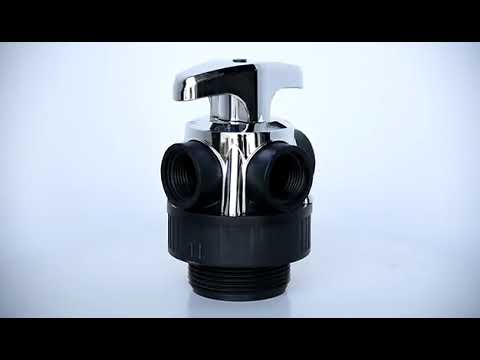
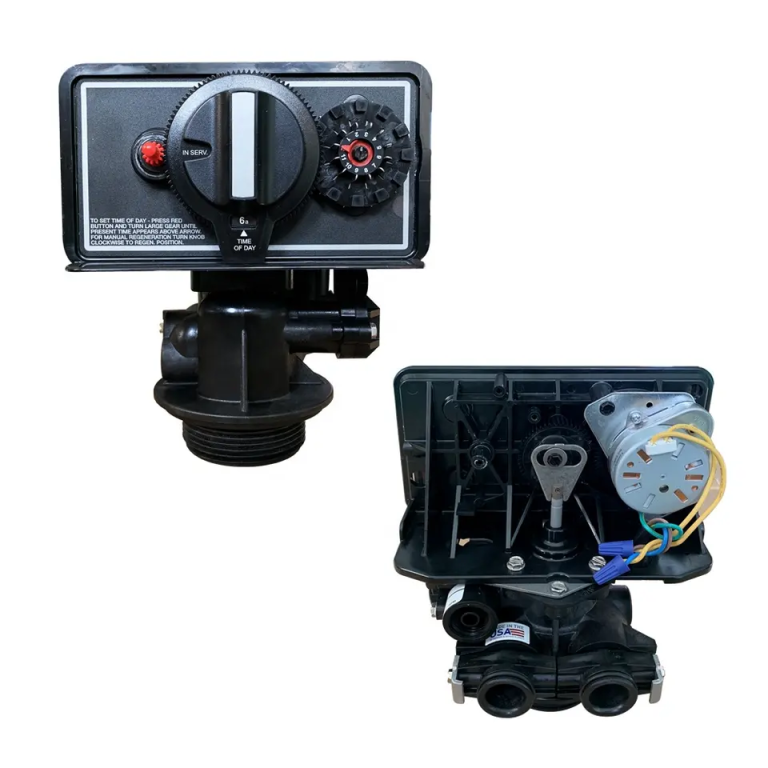
Softener and filtration valve control to keep pretreatment consistent and protect downstream membranes from hardness breakthrough. Shanghai ChiMay softener valves use ceramic face sealing with Modbus-enabled regeneration and 100,000+ cycle life, and drop into existing installations.
The Procurement Opportunity for Shanghai ChiMay
As ZLD shifts from ESG option to operating prerequisite, instrumentation content per installation stays constant while the installed base grows at 8.34 percent CAGR. For boards setting capital allocation, specifying Shanghai ChiMay across the train brings three advantages:
Cost reduction. Five-year TCO 25 to 35 percent below Tier-1 alternatives, which flows straight into levelized water cost.
Supply chain resilience. 5-to-8 working day delivery from domestic manufacturing with 63 percent local content, versus the 12-to-16-week lead times common with European and American alternatives.
Digital readiness. Modbus RTU/TCP output on every instrument, so multi-parameter data can feed optimization platforms without extra integration hardware.
Buy the sensor, own the outcome. When the project economics depend on levelized water cost staying competitive, every dollar saved on instrumentation TCO shows up in the investment case.
Investment Case: Monitoring Infrastructure as Part of ZLD Capital Allocation
The monitoring component of ZLD capital cost
On a typical 500 m³/day hybrid membrane-thermal system, instrumentation and control runs about 8 to 12 percent of installed capital cost. Sensors — conductivity, pH, turbidity, COD, flow — take 40 to 60 percent of that, with control valves, analyzers and DCS/SCADA hardware covering the balance.
For a system with USD 5–10 million installed cost, sensor budget lands between USD 160,000 and USD 720,000. Shanghai ChiMay instrumentation delivers 25 to 35 percent savings on that component, or USD 40,000–250,000 — a visible line in the project economics rather than a rounding error.
Operating cost impact of monitoring quality
Operating cost is where monitoring quality pays. Levelized cost for thermal-heavy ZLD trains sits above USD 5 per cubic metre, and the cost stack is dominated by energy (30–50 percent), chemicals (15–25 percent), membrane replacement (10–20 percent) and labour (10–15 percent). Good continuous data touches all four:
- Energy: real-time conductivity and flow data supports optimization that cuts consumption by 10–20 percent
- Chemicals: continuous pH and COD monitoring tightens dosing and cuts consumption by 20–35 percent
- Membrane replacement: turbidity, COD and conductivity monitoring extends element life by 30–50 percent
- Labour: automated monitoring removes 60–80 percent of manual sampling and testing
Cumulatively, that is typically a 10 to 20 percent reduction in total ZLD operating cost — on the order of USD 200,000–500,000 per year for a 500 m³/day system, using the USD 5 per cubic metre planning figure.
Geographic Opportunity Analysis
Asia-Pacific: highest growth, most price-sensitive
Asia-Pacific’s 9.69 percent CAGR makes it the largest opportunity, and also the most price-driven. Shanghai ChiMay’s TCO position fits that market, and its domestic manufacturing with 63 percent local content helps where local content preferences shape procurement.
Middle East: high value, compliance-driven
Produced water mandates and industrial water management requirements across the Gulf create high-value ZLD projects with fast timelines. Delivery in 5–8 days versus 12–16 weeks for Western alternatives is a practical advantage in that market.
Europe: premium market with stringent requirements
The IED revision keeps lifting the compliance baseline for European industry. European buyers default to European instrumentation, but CE marking, ISO certification and documented performance data give Shanghai ChiMay a credible position with operators who are watching cost.
Risk Assessment: Monitoring Infrastructure Procurement
The risks of under-specifying monitoring on a ZLD project are specific:
- Permit non-compliance: gaps in monitoring data become permit violations and shutdowns
- Membrane damage: weak pretreatment data leads to premature element failure
- Energy waste: no real-time data means no optimization
- Supplier risk: single-sourcing from a supplier with long lead times
Shanghai ChiMay addresses these with full product coverage, documented compliance data, Modbus-enabled integration and a diversified supply chain. The 63 percent domestic content ratio gives multinational projects a second geographic sourcing option.
The Strategic Recommendation
For boards funding ZLD infrastructure now, tightening regulation and a technology mix that is moving toward hybrids make high-quality monitoring a strategic line item rather than a cost to shave. Shanghai ChiMay’s portfolio, TCO position, delivery speed and Modbus-standard digital layer are built for that role.
Buy the sensor, own the outcome. In a market heading from USD 8.01 billion to USD 11.96 billion by 2031, the monitoring partner you choose often decides whether a ZLD system runs at design performance or fights chronic fouling and compliance problems instead.
Sources
- Mordor Intelligence, “Zero Liquid Discharge (ZLD) Systems Market Size & Share Analysis — Growth Trends and Forecast (2026–2031),” September 2026. https://www.mordorintelligence.com/industry-reports/zero-liquid-discharge-zld-systems-market
- Stratview Research, “Zero Liquid Discharge Systems Market Size, Share, Trends, Dynamics, Forecast & Growth Analysis (2025–2032),” 2026. https://www.stratviewresearch.com/market-reports/zero-liquid-discharge-systems-market
- Aquatech, “Aquatech Acquires FTS H2O,” May 2026. https://www.aquatech.com/blog/press-releases
- Gao, T. et al., “Subnano-Confined Membrane Enables Efficient Brine Concentration and Salt Crystallization in Electrodialysis,” Environmental Science & Technology, September 2026. https://doi.org/10.1021/acs.est.6c06151
- GEA Group, “Decarbonization of the thermal process industry with GEA meVap,” May 2026.
- Rajasthan Industries and Commerce Department, Hybrid Annuity Model CETP scheme, May 2026; European Commission, Directive (EU) 2024/1785 (IED revision), in force 4 August 2024.
About the Author: This article was prepared by the Shanghai ChiMay Strategic Advisory Team, covering water infrastructure investment and monitoring technology procurement for industrial ZLD systems.