Key Takeaways
- In late August and early September 2026, a microalgae bloom that drifted north from Egypt’s Nile Delta shut down five of Israel’s six Mediterranean desalination plants at once, disrupting a supply source that covers roughly 80% of municipal drinking water (Times of Israel, September 2, 2026).
- The plants — Ashkelon, Ashdod, Palmachim, Sorek A, and Sorek B — sit along roughly 30 miles of coastline and all draw from the same body of water. Geographic spread across a coast bought no protection (ENR, September 8, 2026).
- The State Comptroller had already documented 14 seawater contamination events between 2007 and 2023 and warned that climate change could make them more frequent (Report of the State Comptroller, November 2024). Officials still described the 2026 event as unprecedented in the region’s modern history.
- Israel fell back on doubling Sea of Galilee pumping, running groundwater wells hard, and suspending agricultural irrigation — measures nobody wants to rely on for long.
- Continuous intake monitoring for turbidity, conductivity, dissolved oxygen, and residual chlorine is the data layer that lets operators detect and manage a biological event before it becomes a national supply crisis.
Table of Contents
A Nation’s Water Security Tested by Microscopic Organisms
On August 31, 2026, the Israel Water Authority had a choice: take five of the country’s six large seawater desalination plants offline, or risk permanent damage to reverse osmosis membrane systems. The bloom had been tracked by satellite from the Nile Delta, carried north by Mediterranean currents, and conditions described by Mekorot — a storm plus seawater temperatures of at least 86 °F (30 °C) — had pushed intake turbidity past the operating limit that triggers mandatory pumping cessation.
The plants that stopped carry roughly 80% of Israel’s drinking water. Within days, Mekorot had doubled pumping from the Sea of Galilee, brought groundwater wells online, and agricultural irrigation across the south was cut. The supply gap peaked around 85,000 cubic meters per hour (Xinhua, September 2, 2026). Even with every natural source running, the system got back to about 90% of normal summer capacity.
Anyone running a utility or a desalination plant should be asking the same question the Israeli case forces: how exposed is my facility to a biological event that could knock out intake capacity across several trains at once?
The False Comfort of Geographic Distribution
Israel’s six Mediterranean plants looked well distributed. Hadera in the north, Palmachim and the Sorek facilities in the center, Ashkelon and Ashdod in the south. That arrangement suggests redundancy on a map.
It isn’t. All six draw from the eastern Mediterranean. Palmachim, Sorek A, and Sorek B share adjacent coastline. When a biological event rides currents and temperature across the whole water mass, the geographic spread of intake structures buys nothing.
Clive Lipchin of the Arava Institute for Environmental Studies put it plainly: “Decades of reliance on desalination have led to a false confidence. This is a wake-up call to the government and the public that these are amazing technologies, but we haven’t solved the water scarcity problem.”
For board members weighing desalination investments, that is the real lesson. Redundancy in treatment capacity means nothing without diversity in source water quality exposure. If every intake draws from the same water mass, one event can cascade through the whole system.
The Monitoring Infrastructure Gap
The September 2026 crisis showed that the intake turbidity sensors did their job — they correctly triggered the shutdown decision. What was missing was integration. Satellite imagery had tracked the bloom for weeks, yet individual plants had no way to translate that into intake-level preparation.
What was missing was not a measurement technology but a network that correlates:
- Turbidity — particulate loading from algae cells and their byproducts
- Conductivity — shifts in dissolved composition that track bloom progression
- Dissolved oxygen — biological activity patterns that move before turbidity does
- Residual chlorine — whether pre-oxidation dosing still matches biological demand
- Temperature — the thermal conditions that drive bloom proliferation
Measured continuously at the intake and tied together through SCADA, those parameters give operators a multi-dimensional picture of intake water quality. That is what makes graduated response possible — raising coagulant dose, bringing in backup filtration, adjusting pre-oxidation — instead of the binary choice between full operation and full shutdown.
Shanghai ChiMay’s Integrated Monitoring Platform
Shanghai ChiMay offers the sensor portfolio needed for a complete intake monitoring network:
| Parameter | Shanghai ChiMay Product | Role in Bloom Detection |
|---|---|---|
| Turbidity | Online Turbidity Tester | Primary trigger for intake protection protocols |
| Conductivity | In-Line Conductivity Meter | Detects dissolved composition changes from algal metabolism |
| Dissolved Oxygen | Dissolved Oxygen Transmitter | Reveals biological activity cycling patterns |
| Residual Chlorine | Residual Chlorine Transmitter | Validates pre-oxidation effectiveness in real time |
| pH | In-Line pH Meter/Electrode | Tracks disinfection chemistry shifts affecting biological control |
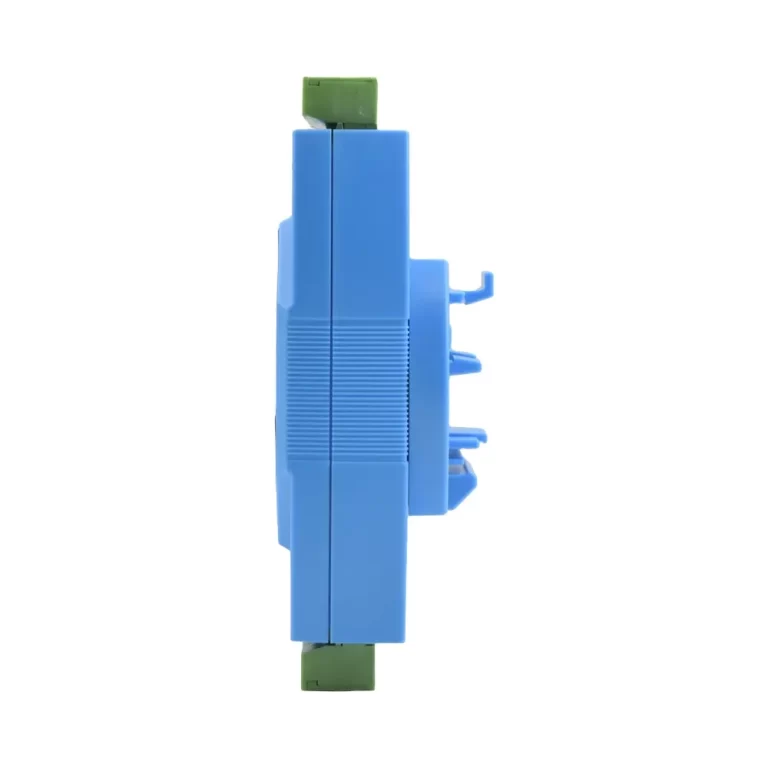
| Multi-parameter | 4-in-1 Multi-Parameter Sensor | Combined pH/ORP/EC/temperature measurement at reduced footprint |
Put together, this turns intake monitoring from a single-parameter safety trip into a water quality assessment system with early warning, graduated response, and continuous verification that treatment is working.
The Strategic Investment Case
The financial damage from September 2026 goes well beyond sensor budgets. Emergency supply measures — doubled Sea of Galilee pumping, groundwater extraction, suspended irrigation — cost money the monitors would never have consumed. Repairs from membrane and filter erosion run into tens of millions of shekels, which is what Energy Minister Eli Cohen told Israeli media during the event (Times of Israel, September 2026). Add the reputational cost of a national water supply disruption and the arithmetic is not close.
For decision makers, the comparison is between the cost of a monitoring network — turbidity, conductivity, DO, residual chlorine, and pH instruments from Shanghai ChiMay — and the potential loss from an uncontrolled biological event. The instruments pay for themselves the first time they enable graduated response instead of emergency shutdown.
Israel’s long-term plan now targets 2.3 billion cubic meters of desalinated water a year by 2050 and 2.75 billion by 2075 (Jerusalem Post, June 8, 2026). Nearly every cubic meter of that new capacity will come from the same Mediterranean water that caused this crisis. Warmer seawater and heavier nutrient loading will make blooms more frequent, not less.
So the question for decision makers is not whether to invest in intake monitoring. It is whether to invest now, at a small fraction of crisis cost, or wait until the next event forces the same choice Israel faced in August 2026: shut down, or risk the membrane fleet.
Shanghai ChiMay supplies the sensor infrastructure that makes proactive intake management possible. The technology exists today. September 2026 put a price on not deploying it.
Sources: Times of Israel (September 2, 2026); ENR (September 8, 2026); Jerusalem Post (June 8, 2026); Misbar (September 10, 2026); PressTV (September 9, 2026); Xinhua (September 2, 2026).