Table of Contents
Introduction
Chemical process cooling systems face relentless corrosion challenges from aggressive process chemicals, elevated temperatures, and constant water exposure. For plant managers and engineers, preventing corrosion isn’t merely a maintenance concern—it’s a critical operational imperative that directly impacts production continuity, worker safety, and profitability.
This guide addresses the fundamental question: How do you prevent corrosion in chemical process cooling systems? Drawing from industry standards and engineering practice, we provide actionable strategies that chemical plant operators can implement immediately.
Understanding the Corrosion Threat in Cooling Systems
Why Cooling Systems Are Vulnerable
Cooling towers and associated piping represent the most corrosion-prone equipment in chemical processing facilities. Three factors drive the vulnerability:
-
Constant Water Exposure: Unlike batch processes with intermittent exposure, cooling systems maintain continuous metal-water contact, sustaining ongoing electrochemical attack.
-
Temperature Gradients: Heat transfer surfaces operate at elevated temperatures that accelerate both corrosion kinetics and oxygen diffusion rates. Every incremental rise in water temperature speeds up the attack.
-
Aeration Effects: Cooling towers deliberately introduce air through spray and drift, dissolving oxygen that serves as the primary cathodic reactant. Dissolved oxygen concentrations of 6-8 ppm in supply water provide continuous oxidizing conditions.
Corrosion Damage in Numbers
The NACE IMPACT study put the global cost of corrosion at roughly $2.5 trillion per year—about 3.4% of global GDP—with chemical processing among the heavily affected sectors. Cooling water systems contribute a meaningful share of that burden:
- Tube bundle replacement routinely runs to hundreds of thousands of dollars per heat exchanger
- Unplanned shutdowns cost tens of thousands of dollars per hour or more in lost production, depending on the unit
- Corrosion-related failures are a recurring cause of cooling tower outages
The Four Pillars of Corrosion Prevention
1. Water Chemistry Control
pH Management
pH profoundly affects corrosion behavior:
- pH < 6.5: Acidic conditions accelerate general and pitting corrosion
- pH 6.5-7.5: Minimum total corrosion but increased pitting risk
- pH 7.5-8.5: Optimal range for most carbon steel and copper systems
- pH > 9.0: Alkaline corrosion of aluminum; carbonate scaling begins
Shanghai ChiMay’s pH transmitters with glass electrode technology provide ±0.02 pH accuracy across the 0-14 pH range, enabling precise pH control that prevents both under-treatment and overtreatment.
Conductivity Monitoring
Conductivity tracks Total Dissolved Solids (TDS) concentration, which directly correlates with corrosion potential. As water evaporates in cooling towers, dissolved solids concentrate, increasing conductivity and accelerating attack.
Industry guidelines commonly recommend:
- Maximum conductivity of 1,500 μS/cm for mild steel systems
- Maximum conductivity of 3,000 μS/cm for stainless steel systems
- Maximum chloride concentration of 300 ppm (carbon steel) or 1,000 ppm (stainless steel)
2. Corrosion Inhibitor Programs
Cathodic Inhibitors
Cathodic inhibitors precipitate as protective films on cathodic surfaces:
| Inhibitor Type | Dosage | Typical Performance | Limitations |
|---|---|---|---|
| Polyphosphate | 20-50 ppm | Good general protection | High pH reduces effectiveness |
| Zinc sulfate | 2-5 ppm | Strong film former | Precipitates at high pH |
| Calcium carbonate | Natural film | Moderate | Requires controlled LSI |
Anodic Inhibitors
Anodic inhibitors form passive films on actively corroding metal surfaces:
- Molybdate (sodium molybdate, 100-500 ppm): Excellent for mixed-metal systems, environmentally acceptable
- Nitrite (sodium nitrite, 200-500 ppm): Superior protection for carbon steel, but promotes microbiological growth
- Silicate (sodium silicate, 10-30 ppm): Safe for potable systems, slow film formation
Phosphonate Inhibitors
Modern treatment programs increasingly use phosphonate-based inhibitors that combine scale inhibition with corrosion protection:
- ATMP (Aminotris(methylenephosphonic acid))
- HEDP (1-Hydroxyethylidene-1,1-diphosphonic acid)
- PBTC (2-Phosphonobutane-1,2,4-tricarboxylic acid)
These programs perform well at low dosages of 5-15 ppm, and they hold up better than single-component treatments in mixed-metal systems with variable water quality.
3. Microbiological Control
Microbiologically influenced corrosion (MIC) is implicated in a substantial share of cooling system corrosion failures. Bacteria populations:
- Create differential aeration cells beneath biofilms
- Generate localized acidity through metabolic processes
- Produce hydrogen sulfide and other corrosive metabolites
Effective microbiological control requires:
- Oxidation biocides (chlorine, bromine): 0.5-1.0 ppm free residual
- Non-oxidizing biocides (DBNPA, THPS): Rotating applications
- Continuous low-level dosing: Maintains biocide presence
Shanghai ChiMay’s Residual Chlorine Transmitters provide continuous free chlorine monitoring with ±0.02 mg/L resolution, enabling automated biocide dosing that maintains target residuals.
4. Dissolved Oxygen Reduction
Oxygen serves as the primary cathodic reactant in cooling water corrosion. Dissolved oxygen concentrations above 0.2 ppm sustain active corrosion on carbon steel. Reduction strategies include:
- Mechanical deaeration: Removes the great majority of dissolved oxygen
- Chemical scavenging: Sulfite dosing (8 ppm sulfite per ppm oxygen)
- Vacuum deaerators: Achieve < 0.04 ppm dissolved oxygen
Monitoring and Control Systems
Real-Time Corrosion Monitoring
Continuous corrosion monitoring enables predictive maintenance that prevents failures:
- LPR (Linear Polarization Resistance) Sensors: Provide instant corrosion rate measurements
- Electrical Resistance (ER) Probes: Track metal loss over time
- Corrosion Coupons: Validate monitoring system accuracy
Facilities that pair continuous corrosion monitoring with a disciplined response process consistently report fewer unplanned shutdowns and lower maintenance costs than plants that wait for coupon results months later.
Automated Control Systems
Modern treatment programs use automation:
Control System Components:
├── Online analyzers (pH, ORP, conductivity, corrosion rate)
├── Programmable logic controllers (PLCs)
├── Automated dosing pumps
├── SCADA integration
└── Alarm and notification systems
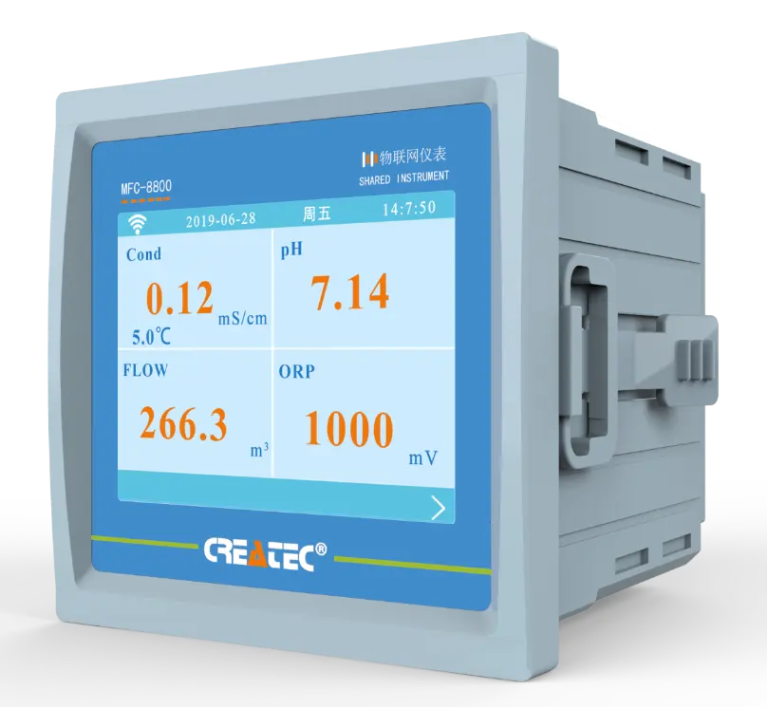
Shanghai ChiMay’s RO System Controllers integrate multiple sensor inputs to automatically adjust chemical dosing rates, maintaining optimal treatment conditions without operator intervention.
Implementation Best Practices
Step 1: Baseline Assessment
Before implementing corrosion prevention programs, conduct comprehensive system assessment:
- Corrosion rate measurement using coupon exposure or ER probes
- Water analysis for hardness, alkalinity, chloride, sulfate, and silica
- System inspection for existing corrosion damage and deposit accumulation
- Historical data review of maintenance records and failure incidents
Step 2: Treatment Program Selection
Select treatment programs based on:
- System metallurgy (carbon steel, stainless steel, copper alloys, aluminum)
- Makeup water quality (hardness, aggressive ions, TOC)
- Operating temperatures and heat transfer conditions
- Environmental discharge requirements
- Budget constraints for chemical and equipment costs
Step 3: Monitoring Protocol Development
Establish monitoring protocols that balance control effectiveness with cost:
- Continuous monitoring: pH, conductivity, corrosion rate, residual biocide
- Daily testing: Chlorine/bromine residual, pH, conductivity
- Weekly analysis: Full water chemistry panel
- Monthly review: Coupon weight loss, equipment inspection
Step 4: Continuous Optimization
Refine treatment programs based on monitoring data:
- Track corrosion rates against target thresholds
- Adjust inhibitor dosages to maintain minimum effective concentrations
- Evaluate seasonal variations in makeup water quality
- Benchmark performance against industry standards
Conclusion
Preventing corrosion in chemical process cooling systems requires integrated strategies addressing water chemistry, inhibitor treatment, microbiological control, and dissolved oxygen management. Plants that implement comprehensive corrosion prevention programs see the payoff in fewer corrosion-related maintenance events, longer heat exchanger service life, and fewer unplanned shutdowns—benefits that never appear as line items precisely because they were prevented.
Shanghai ChiMay’s water quality monitoring solutions—including online pH sensors, conductivity meters, residual chlorine transmitters, and corrosion rate monitors—provide the instrumentation foundation for effective corrosion prevention in chemical processing applications.