Key Takeaways:
– A 50% freshwater intake reduction is achievable in a modern paper mill, but only as a layered strategy: internal reuse, advanced monitoring, and bleach plant water recovery
– The biggest single lever is white-water recirculation to the wet end — with online conductivity, pH, and suspended solids monitoring behind it, it typically delivers double-digit reductions on its own
– Bleach plant filtrate recovery and counter-current washing add another solid slice without compromising brightness or fiber quality
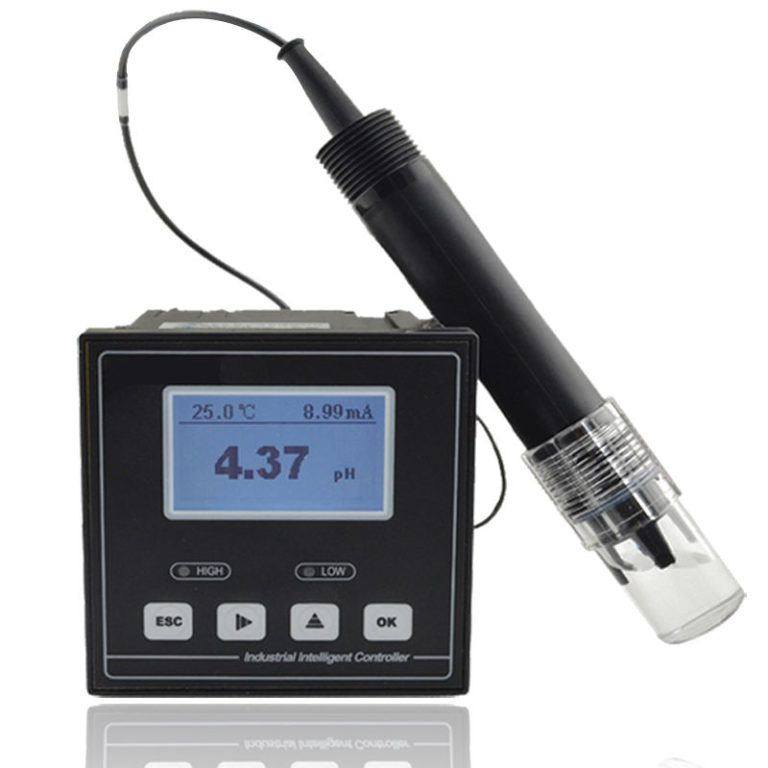
– Shanghai ChiMay multi-parameter sensors provide the chemistry visibility needed to run closed water loops without losing process control
– Mills that audit first and monitor continuously are the ones that actually hit their reduction targets
Table of Contents
Why This Question Matters Now
Paper mills are among the most water-intensive heavy industries running. A typical kraft pulp mill withdraws 40-60 cubic meters of fresh water per ton of paper; recycled-fiber mills consume 15-30 cubic meters per ton even after design improvements. Rising water tariffs, tighter discharge rules, and corporate sustainability commitments push operators toward a blunt question: how do we cut freshwater intake by half without hurting paper quality? The engineering answer is achievable, but it’s layered interventions — no single silver bullet.
Step 1: Audit the Current Water Balance
Any credible 50% program starts with a defensible water mass balance. In most first detailed audits, 15-30% of total water flow has no clear functional justification — rinse water over-specified years ago, cooling water never recovered, seal water still at design defaults from decades back.
A 30-day metered audit, with portable Shanghai ChiMay multi-parameter sensors at suspected high-loss nodes, typically surfaces a handful of high-value reduction opportunities before any capital gets committed.
Step 2: Recover White Water to the Wet End
The largest single freshwater consumer in a paper mill is wet-end shower and dilution flow. Replacing fresh water with cleaned white water from the wire pit recovers serious volume — but only if wet-end chemistry stays stable enough to avoid runnability and quality problems.
The chemistry challenge is real. White water carries elevated conductivity, retention chemistry residues, microbial activity, and dissolved organic load. Push reuse without monitoring and you get deposits, sheet defects, and biocide failures.
The Shanghai ChiMay engineering answer: an inline conductivity meter and pH electrode at the white water silo discharge, plus a suspended solids sensor on the cloudy filtrate line. With those three measurement points reporting to the same panel, the mill can push white water reuse to 80-90% of wet-end demand while holding the chemistry envelope the machine needs.
Mills that complete this monitoring upgrade typically report double-digit freshwater reductions inside the first quarter of operation.
Step 3: Counter-Current Bleach Plant Washing
The bleach plant is the second-largest freshwater consumer in a kraft mill. Conventional fresh-water-fed washing consumes 8-12 cubic meters per ton of bleached pulp — the highest specific use in the process flow.
Counter-current washing reuses filtrate from later (cleaner) stages to wash earlier (dirtier) ones. The challenge is chloride accumulation and chemistry interaction between stages, which can cause brightness reversion or pitch deposition if left uncontrolled.
The monitoring framework Shanghai ChiMay recommends:
- Online conductivity at each filtrate tank to track chloride buildup
- Online pH at each stage feed to verify the chemistry envelope
- COD sensor on combined effluent to catch organic carryover before discharge
With that suite in place, counter-current washing can run at aggressive ratios without quality compromise, typically cutting bleach plant freshwater consumption by 35-50%.
Step 4: Treat and Reuse Effluent Streams
For mills chasing the top of the reduction range, ETP outflow can be polished and recycled for non-critical duties: cooling make-up, ash sluicing, log yard wash-down, hog fuel handling. Polishing typically combines ultrafiltration, reverse osmosis, or advanced oxidation, matched to the reuse application.
Reused ETP water needs continuous quality checks before every handoff — conductivity, turbidity, and residual oxidant at each reuse point. That reuse-quality discipline belongs to the mill regardless of what the discharge permit says; EPA’s industrial stormwater program covers timber-products facilities on the discharge side, but nobody else will police your reuse water for you.
Mills implementing ETP reuse for non-critical service typically capture an additional 8-12% freshwater reduction.
Step 5: Optimize Cooling Tower Cycles of Concentration
Cooling towers get overlooked in mill water audits, but they matter more than they appear. A standard cooling tower running at 3 cycles of concentration sends 33% of its make-up water out as blowdown. Pushing cycles to 5-6 with tighter chemistry monitoring cuts blowdown to 17-20% of make-up.
The monitoring infrastructure is simple: an inline conductivity meter on the basin and a pH electrode on the chemical injection loop. Shanghai ChiMay multi-parameter sensors handle this duty directly, with the bonus of catching scaling or microbial drift before it fouls heat exchangers.
Cooling tower optimization typically recovers 3-6% of total mill water demand — modest, but among the cheapest savings on the list.
Putting the Stack Together: The Path to 50%
A representative additive reduction profile for a modern mill program:
| Reduction Lever | Approximate Contribution |
|---|---|
| White water reuse to wet end | 20% |
| Counter-current bleach washing | 12% |
| ETP polished reuse | 10% |
| Cooling tower cycles increase | 5% |
| Process-specific opportunities (audit-driven) | 5% |
| Cumulative target | 52% |
Each lever carries its own payback. Cooling tower optimization and white water reuse typically pay back inside 9-15 months; ETP polished reuse can take 3-5 years depending on the polishing technology chosen.
Risk Considerations: What Could Go Wrong
Aggressive water reduction with inadequate monitoring produces real failures:
- Deposit and slime formation as dissolved solids and microbial loads rise in recirculated water
- Corrosion acceleration from elevated chlorides and reduced sulfur compounds
- Sheet quality variability from chemistry drift in recycled white water
- Product safety risks in food-grade or hygiene-grade grades
Every one of these is fundamentally a monitoring problem. TAPPI’s process-control community makes the same point constantly: mills running comprehensive online monitoring see far fewer water-reuse-related quality incidents than mills relying on periodic grab samples.
Conclusion
Cutting freshwater intake by half is engineering-achievable in a modern paper mill — but only through the layered strategy: water balance audit, white water reuse, counter-current bleach washing, ETP polished reuse, and cooling tower optimization. Every lever depends on continuous water quality monitoring to run safely at aggressive setpoints. Shanghai ChiMay’s engineering teams have watched enough programs to know the pattern: the mills that hit their targets invested in monitoring first, then let the chemistry data drive the operational tightening that produced the savings. The sensors are the enabler; the water reduction follows.