Table of Contents
Introduction
Zero liquid discharge (ZLD) implementation represents one of the most significant capital investments an industrial facility can undertake in water treatment infrastructure. With total system costs ranging from $1.5 million to $15 million for medium-scale installations, decision-makers require rigorous economic analysis to justify investment and optimize system design.
The economic calculus of ZLD extends beyond simple compliance cost comparison. Facilities must evaluate water acquisition costs, wastewater discharge fees, chemical treatment expenses, energy consumption, and the strategic value of water recovery. This analysis sets out frameworks for evaluating ZLD economics and demonstrates the long-term financial benefits of well-designed systems.
Water Cost Dynamics
Freshwater Procurement
Industrial water costs have escalated substantially over the past two decades, driven by:
- Scarcity premiums in water-stressed regions
- Infrastructure investment requirements for water supply systems
- Regulatory compliance costs passed through by municipal utilities
Water-stressed regions — the Middle East, North Africa, and parts of China and India — now charge large-volume industrial users several dollars per cubic meter, and the underlying drivers keep pushing prices up.
A chemical plant pulling 50,000 m³/month of process water at $3/m³ is writing a monthly check of roughly $150,000 for raw water alone — a figure that keeps climbing as scarcity intensifies.
Wastewater Discharge Expenses
Beyond acquisition costs, wastewater discharge imposes additional financial burdens:
- Municipal sewer charges: Typically $0.50-2.00 per m³ based on volume and pollutant loading
- Pretreatment requirements: Chemical and equipment costs for meeting sewer discharge limits
- Direct discharge permits: Fees for surface water discharge authorization
- Sludge disposal: Costs for handling and disposing of treatment residuals
Pretreatment program costs keep climbing as regulators intensify enforcement, and the exposure is not theoretical. Under the U.S. Clean Water Act, the maximum civil penalty now stands at $68,445 per violation per day (2025 inflation-adjusted), so a sustained exceedance quickly becomes a seven-figure problem.
ZLD Investment Economics
Capital Cost Structure
ZLD system capital costs vary based on:
- Treatment capacity: Economies of scale reduce unit costs for larger systems
- Influent characteristics: High salinity or complex contaminant profiles increase treatment complexity
- Recovery targets: Higher water recovery rates require additional concentration stages
- Integration requirements: Connection to existing infrastructure and control systems
| System Capacity | Capital Cost Range | $/m³/day Capacity |
|---|---|---|
| 500 m³/day | $2-4 million | $4,000-8,000 |
| 2,000 m³/day | $5-10 million | $2,500-5,000 |
| 10,000 m³/day | $15-30 million | $1,500-3,000 |
These capital investments typically depreciate over 15-20 years for major equipment, with monitoring and control systems requiring updates at 7-10 year intervals.
Operating Cost Components
ZLD operating costs encompass multiple categories:
Energy consumption represents the largest operating expense, accounting for 40-55% of total operational costs. Major energy consumers include:
- High-pressure pumps for membrane systems: 2-8 kWh/m³ treated
- Brine concentrator evaporators: 15-40 kWh/m³ evaporated
- Recirculation and mixing systems: 0.5-2 kWh/m³ processed
Chemical consumption typically comprises 15-25% of operating costs, including:
- Antiscalants for membrane protection
- Acids and bases for pH adjustment
- Coagulants and flocculants for pretreatment
- Cleaning chemicals for membrane maintenance
Labor and maintenance account for 15-25% of operating costs, encompassing:
- Operator supervision and monitoring
- Preventive maintenance activities
- Consumables and spare parts
- Laboratory analysis for quality verification
Payback Analysis
The return on investment for ZLD systems depends on specific facility economics. A representative analysis for a mid-sized industrial facility demonstrates typical payback characteristics:
Facility Profile:
- Process water consumption: 3,000 m³/day
- Current water cost: $3.20/m³
- Wastewater discharge cost: $1.80/m³ (including pretreatment)
- ZLD system capital investment: $6.5 million
- ZLD operating cost: $2.40/m³ treated
Annual Benefits Calculation:
- Freshwater cost savings: 3,000 × 365 × $3.20 = $3,504,000
- Discharge cost elimination: 3,000 × 365 × $1.80 = $1,971,000
- Total Annual Benefit: $5,475,000
Annual Costs Calculation:
- ZLD operating costs: 3,000 × 365 × $2.40 = $2,628,000
- Capital amortization (15 years): $6,500,000 ÷ 15 = $433,333
- Total Annual Cost: $3,061,333
Net Annual Benefit: $2,413,667
Simple Payback Period: 2.7 years
This analysis demonstrates why ZLD increasingly represents not merely a compliance cost but a strategic investment with real financial returns.
Water Quality Monitoring Investment
Instrumentation Cost Share
Water quality monitoring and control instrumentation typically represents 8-12% of total ZLD system capital costs. While appearing modest, this investment delivers disproportionate returns through:
- Optimized chemical dosing: Reduced consumption through precise process control
- Energy efficiency: Reduced pumping and aeration through optimal setpoint management
- Equipment protection: Early detection of fouling and scaling conditions
- Compliance assurance: Elimination of violation penalties and emergency response costs
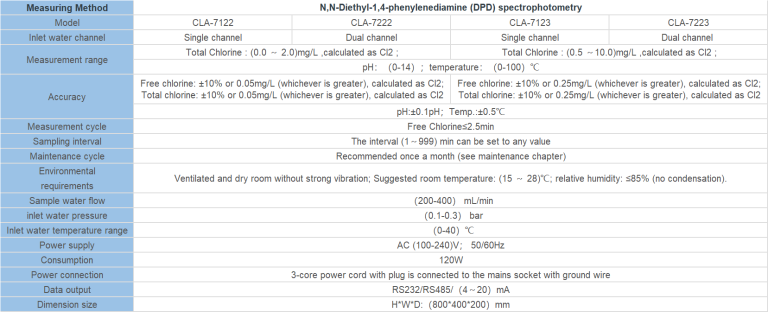
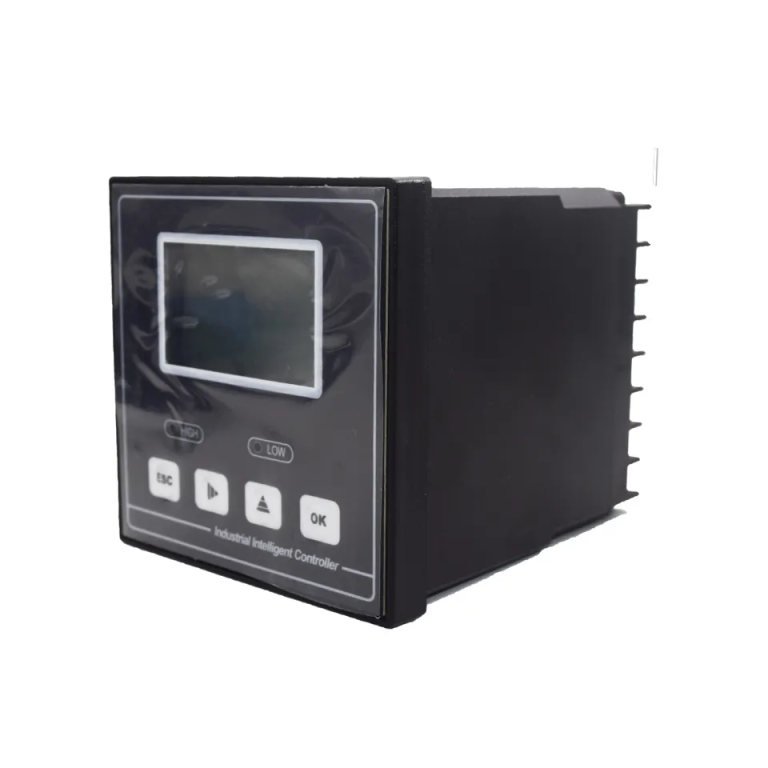
Shanghai ChiMay provides monitoring solutions for ZLD applications with a large installed base across power, chemical, and mining operations. The company offers complete water quality analyzer packages including:
- Inline conductivity meters with ranges up to 200,000 μS/cm
- pH electrodes with double-junction reference systems
- Turbidity, dissolved oxygen, and multi-parameter sensors
- Data acquisition and control system integration
ROI Documentation
Reviews of monitoring retrofits at ZLD plants — including work by Shanghai ChiMay application engineering — point to the same savings sources again and again:
- Chemical optimization: dosing trimmed through tighter process control
- Energy efficiency: pumping and aeration pulled back toward optimal setpoints
- Maintenance reduction: fewer emergency membrane cleaning cycles
- Compliance costs avoided: violation penalties engineered down to zero
A monitoring package in the $150,000-250,000 range at ZLD scale typically returns its cost within a few operating years through those channels.
Strategic Financial Considerations
Risk-Adjusted Analysis
Beyond direct cost savings, ZLD investment provides substantial risk mitigation value:
- Regulatory risk reduction: Protection against increasingly stringent discharge requirements
- Water supply security: Reduced vulnerability to drought conditions and supply disruptions
- Reputation and licensing: Enhanced community relations supporting operating license renewal
- ESG reporting: Water recycling metrics supporting sustainability commitments
Analysts valuing industrial water assets routinely assign these risk-mitigation factors real weight — often a material fraction of the direct cost savings.
Financing Options
Multiple financing mechanisms support ZLD capital investment:
- Green bonds: ESG-focused debt instruments that often price at a modest discount to conventional financing
- Government grants: Regional programs covering a meaningful share of capital costs for water efficiency investments
- Power purchase agreements: Third-party financing of energy-intensive evaporation systems
- Leasing structures: Operating lease arrangements preserving capital for core business investments
The economic analysis of ZLD investment shows solid returns across a wide range of industrial applications. While specific payback periods vary based on water costs, discharge fees, and regulatory stringency, the fundamental economics increasingly favor ZLD adoption.
Key factors driving positive ZLD economics include:
- Rising water costs: Continued escalation of freshwater procurement expenses
- Tightening regulations: Increasing costs of non-compliance and discharge limitations
- Technology improvements: Reduced membrane costs and improved energy efficiency
- Monitoring optimization: Enhanced process control reducing operating costs
Facilities evaluating ZLD investment should engage qualified engineering partners to develop detailed project-specific analyses. The Shanghai ChiMay application engineering team provides economic modeling and pilot testing services supporting investment decision-making.
The strategic imperative extends beyond financial returns—ZLD represents a fundamental transformation in how industrial facilities manage water resources, positioning organizations for long-term sustainability in an era of increasing water scarcity.