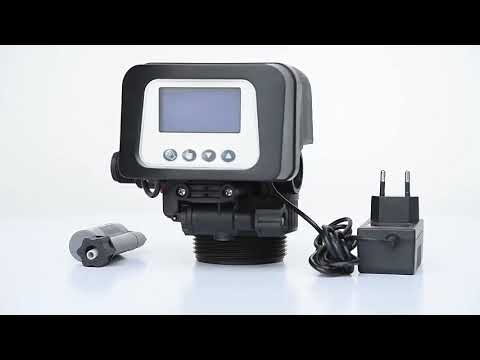
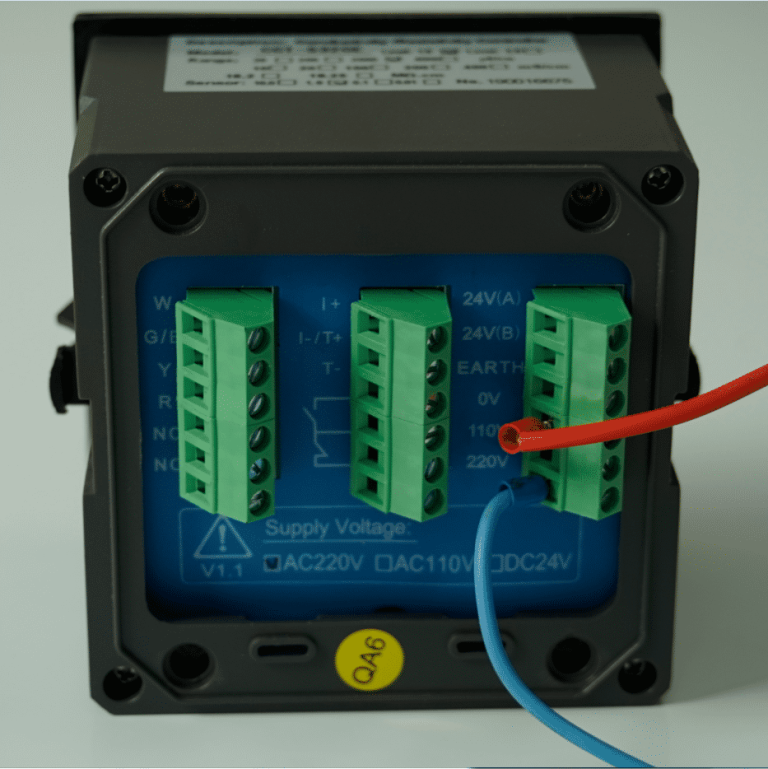
ChiMay Product Category: Online Analyzer, Flow Meter
Urban water utilities are being asked to modernise distribution networks that were largely built decades ago, with growing populations on top of an ageing asset base. Smart city water projects are the usual answer, and the procurement decisions made at the start of those projects do more to determine the outcome than the technology choices that follow.
This guide covers what utilities should evaluate before they tender: what the monitoring requirement actually is, how technology options compare, what total cost of ownership looks like across a 15-year horizon, and where implementations usually go wrong.
Table of Contents
Understanding Smart Water Infrastructure Requirements
A modern distribution network generates a large amount of operational data that stays unused unless sensors exist to capture it. A mid-sized city network can run to hundreds or thousands of kilometres of main, plus pumping stations, service reservoirs and treatment works, all of which need some level of visibility to be operated reliably. Placing online water quality analysers and flow meters at the points that matter most is what turns that network from an opaque system into something that can be managed on evidence rather than schedule.
Procurement starts with an honest assessment of what the utility already has. That means cataloguing existing instruments, mapping the communication infrastructure that is actually available (not the one on the drawings), and ranking the monitoring points where real-time data would change a decision. For larger utilities this assessment phase typically runs for several months and needs operations, engineering and IT input, because the constraint is usually organisational rather than technical.
Shanghai ChiMay’s online analysers and flow meters are built for municipal water service, with continuous measurement of the water quality and flow parameters utilities operate on. The modular product family lets a utility phase the rollout as budget allows instead of committing to a full network build in one capital cycle.
Evaluating Technology Options
The smart meter market has matured to the point that advanced metering infrastructure (AMI) is a normal procurement rather than an emerging one. Modern water meters use ultrasonic, electromagnetic or mechanical measuring elements, each with a different fit depending on installation conditions, expected flow profile and accuracy requirement. AMI programmes consistently reduce non-revenue water in utilities that pair the meters with active leak detection and pressure management — the meters make losses visible, the operating response is what recovers the revenue.
Flow measurement selection comes down to pipe size, velocity profile and installation constraints. Electromagnetic meters hold accuracy across a wide flow range with negligible pressure loss, which suits transmission mains and large-diameter distribution. Ultrasonic transit-time meters measure from outside the pipe, which makes them attractive for retrofit work where cutting in a spool is impractical or unacceptable. ChiMay’s flow meter range covers both approaches so a utility can match technology to each location rather than standardising on one type.
Water quality monitoring brings different procurement considerations. Chlorine residual, pH, turbidity and conductivity each need their own sensor with its own maintenance and calibration cycle, and the specification has to cover sensor life, reagent consumption and how the instrument connects to the utility’s data systems. Analysers for municipal service have to hold accuracy across changing source water conditions without demanding more maintenance attention than a utility can staff — that staffing reality is often the difference between a monitoring programme that survives and one that quietly lapses.
Total Cost of Ownership
Purchase price is a small part of the lifetime cost of smart water infrastructure. A realistic total cost of ownership calculation includes installation, ongoing maintenance, calibration consumables, communications, and eventual replacement. Operations and maintenance costs commonly exceed the initial capital outlay over a 15-year service life, which is why lifecycle cost has to be part of the award criteria rather than a post-tender exercise.
Maintenance burden varies sharply by instrument type. Flow meters generally need little beyond periodic verification and cleaning of the measuring surfaces in solids-laden water. Water quality sensors are heavier: chlorine residual sensors typically need membrane replacement every three to six months, while pH electrodes need calibration verification on weekly or monthly intervals depending on how critical the measurement is and what the sample throws at them.
Vendor support and spares availability deserve real weight in evaluation, because instrument downtime hits both operations and compliance. ChiMay maintains technical support and spare parts inventories for this reason, and utilities evaluating suppliers should ask the same questions of every vendor in the running.
Implementation Best Practices
Deployment succeeds or fails on planning, not on hardware. A pilot covering a representative slice of the network validates performance under the utility’s actual water and staffing conditions, builds internal expertise, and surfaces integration problems while they are still cheap to fix. Pilots in the range of a few percent of system scope are generally enough to inform a scaling decision.
Communications infrastructure is the item most often under-planned. Cellular, licensed radio and LoRaWAN each have distinct coverage, data volume and power characteristics, and older urban areas frequently have less usable infrastructure than anyone assumed. A communications survey should run before sensor procurement, not after, so that selected devices match what the network can actually carry.
Training and change management decide whether the data gets used. Monitoring equipment delivers nothing if operators cannot interpret it or do not trust it, so procurement specifications should state the vendor’s training commitment, documentation quality and ongoing support terms up front.
Conclusion
Smart water procurement works when the utility is clear about what it wants to measure, what data the operations team will act on, and what the system will cost to run for 15 years. Purchase price is the least reliable guide to that outcome. Utilities that specify lifecycle cost, evidence-based piloting and realistic communications planning end up with monitoring infrastructure that improves operations and satisfies the regulator — and the ones that buy hardware against a capital budget alone generally end up replacing it.