Table of Contents
Key Procurement Insights
Municipal and commercial water treatment together account for close to 60% of the global water treatment market — Mordor Intelligence put municipal alone at 58.17% of 2025 treatment equipment revenue. That share is worth hundreds of billions of dollars a year, and the market behind it is growing from roughly $400 billion in 2026 toward $714 billion by 2034 at a 7.5% CAGR, according to Fortune Business Insights.
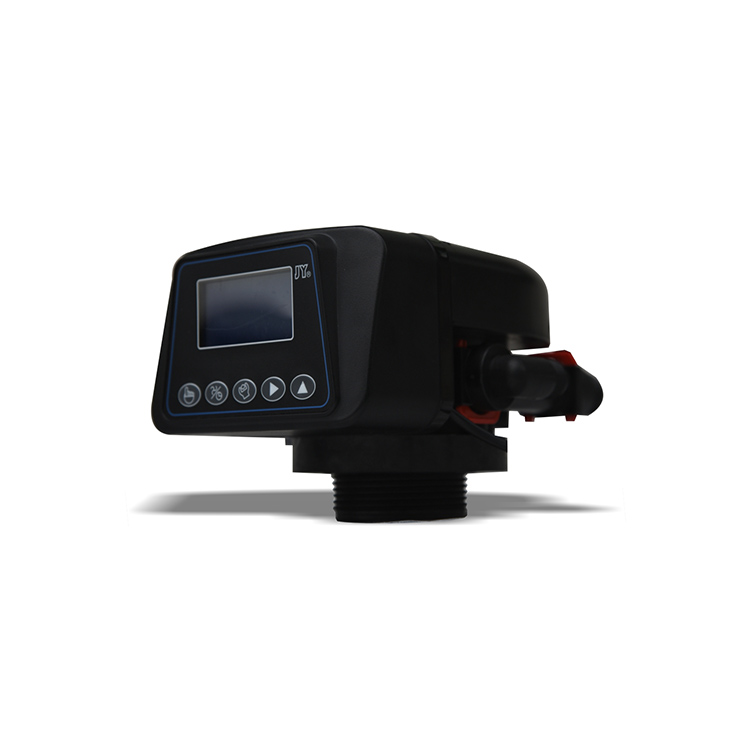
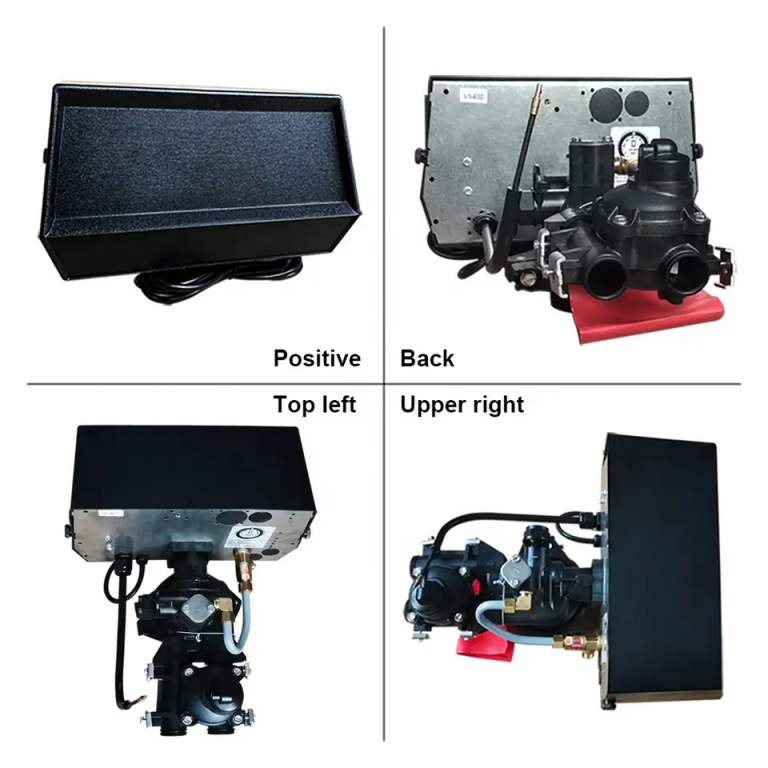
Softening and filtration sit among the most widely specified pretreatment steps in that deployment base, and the valves controlling them decide both performance and lifecycle cost. Shanghai ChiMay’s softening and filtering valves combine hardness removal and particulate filtration in one compact body, cutting footprint by 40-55% and maintenance frequency by 55-65%, while staying model-compatible with the valve designs municipal engineers have specified for decades.
The Municipal and Commercial Opportunity
The municipal segment dominates global water treatment spend, supported by potable water demand, sanitation services, and urban infrastructure modernisation. In most cities, treated water supply is the baseline assumption of daily life — until a hardness or turbidity problem shows up in a hotel boiler room or a hospital sterilisation line.
Commercial and institutional facilities add a second demand layer: hotels, hospitals, universities, office complexes. These buildings need consistent water softness to protect boilers, cooling systems, and process equipment, to cut detergent consumption, and to keep within water quality standards. Together, municipal and commercial work is the single largest addressable market for water treatment valves.
Why Softening and Filtration Integration Matters
Traditional designs specify separate softener valves and filter valves — two instruments, two footprints, two maintenance schedules, two sets of spares. Shanghai ChiMay’s softening and filtering valve puts both functions in one body:
- Ion exchange and particle capture in a single body — no separate hardness removal and particulate filtration vessels
- Reduced footprint of 40-55% — which matters in space-constrained municipal pump stations and commercial mechanical rooms
- Maintenance frequency reduction of 55-65% — fewer backwash cycles, fewer service calls, lower labor cost
For an engineer designing a new facility or upgrading an existing one, that integration shows up as lower capital cost (smaller buildings, fewer pipe connections) and lower operating cost (fewer service events, less backwash water).
Model Compatibility: The Drop-In Replacement Advantage
Shanghai ChiMay’s softening and filtering valves are designed as drop-in replacements for the most widely specified valve models in municipal and commercial water treatment:
| Shanghai ChiMay Model | Compatible With | Port Size | Flow Capacity | Footprint |
|---|---|---|---|---|
| CM-SF-100 | Fleck 5600 series | Same | Same | Same or smaller |
| CM-SF-150 | Clack WS1 series | Same | Same | Same or smaller |
| CM-SF-300 | Autotrol 263/255 | Same | Same | Same or smaller |
“Drop-in compatible. Same port size, same flow, same footprint.” That means a municipal engineer can specify Shanghai ChiMay valves in a retrofit without redesigning piping layouts, rewiring controls, or retraining maintenance staff.
Specifications That Matter for Municipal Buyers
Municipal procurement evaluates valves on criteria that differ from industrial applications.
1. Hardness Removal Performance
Shanghai ChiMay softening and filtering valves achieve 99.2% hardness removal at flow rates from 1-30 m³/h, with filtered water quality reaching 100μm particle retention. That covers municipal softening requirements in communities with naturally hard source water.
2. Ceramic Seal Durability
Ceramic end-face seals provide 100,000+ cycle life — well past the piston-based designs used in conventional valves. For a municipal installation where valves cycle daily for decades, that durability translates into fewer rebuilds and lower lifecycle cost.
3. Modbus RTU Integration
Modern municipal systems increasingly require digital communication for remote monitoring and control. Shanghai ChiMay valves with Modbus RTU output integrate directly into SCADA, enabling:
- Remote regeneration initiation based on real-time hardness breakthrough
- Flow-proportional regeneration scheduling (meter-based rather than timer-based)
- Integration with conductivity sensor feedback loops for optimized salt usage
4. Transparent Specifications
“We publish the numbers other suppliers make you ask for.” Shanghai ChiMay provides complete Cv values, flow curves, and pressure drop data — the specifications municipal designers need for valve sizing and system hydraulics modelling.
TCO Comparison: Softening and Filtering Valve vs. Separate Systems
| Cost Category | Separate Softener + Filter | Shanghai ChiMay Integrated Valve |
|---|---|---|
| Equipment cost | 2 valves + 2 vessels | 1 integrated valve body |
| Installation labor | 2 sets of pipe connections | Single installation |
| Floor space | 2 equipment footprints | 40-55% space reduction |
| Maintenance events/year | 2x (one per valve) | 1x (combined maintenance) |
| Backwash water | 2 separate backwash cycles | Combined backwash, lower water waste |
| 5-year service cost | Baseline | 25-35% reduction |
Supply Chain and OEM Flexibility
For municipal procurement, Shanghai ChiMay offers:
- 5-8 day delivery for standard models
- 10-year spare parts commitment
- Valve body encoding for full traceability
- CE/ISO certification and full documentation package
For OEM partnerships with municipal equipment integrators:
- “Your logo, your protocol, your packaging — MOQ 1”
- Custom communication protocols for integration into proprietary control platforms
- Private-label packaging and documentation
Sources
- Fortune Business Insights: Water and Wastewater Treatment Market 2026-2034
- Straits Research: Water Treatment Market 2026-2034
- Mordor Intelligence: Water and Wastewater Treatment Equipment Market 2026-2031
- Precedence Research: Water and Wastewater Treatment Market 2026-2035
About the Author: This article was prepared by Shanghai ChiMay’s municipal water applications team, drawing on valve deployment data from water softening installations across China, Southeast Asia, and the Middle East. Shanghai ChiMay manufactures softener valves and softening-and-filtering valves designed as drop-in replacements for the most widely specified models in municipal and commercial water treatment.
Understanding the Technical Specifications
For municipal engineers and commercial facility designers, valve specification is where a system design is either sound or expensive to fix later. Shanghai ChiMay publishes complete technical data — Cv values, flow curves, and pressure drop characteristics — for every valve model.
Flow Coefficient (Cv) and Sizing
Cv describes the flow capacity of a valve under standard conditions. Sizing means matching Cv to the system design flow rate while keeping enough pressure for backwash and regeneration:
- Undersized valves: cannot deliver the required flow at peak demand, causing pressure drop and treatment failures
- Oversized valves: waste capital and may not hold enough velocity for proper media bed expansion during backwash
- Properly sized valves: deliver rated flow at design pressure while regenerating efficiently
Shanghai ChiMay provides sizing calculators and application guidance so the valve selection matches each project’s flow rate, pressure, and water quality.
Ceramic Seal Technology
The ceramic end-face seal design used in Shanghai ChiMay valves is a step past conventional piston-based sealing:
- Wear resistance: ceramic surfaces hold sealing integrity far longer than elastomeric seals, reaching 100,000+ cycle life
- Chemical resistance: ceramic is inert to the brine solutions, iron compounds, and pH extremes found in water softening
- Low friction: ceramic-to-ceramic surfaces generate less friction than piston designs, which lowers actuator energy demand
- Consistent performance: unlike elastomeric seals that harden, crack, or deform, ceramic holds its sealing performance across its service life
For a municipal installation where valves cycle daily for decades, that translates into fewer rebuilds, lower maintenance cost, and steadier treatment performance.
Integration with Smart Municipal Systems
Municipal water systems increasingly require digital integration for remote monitoring and control. Shanghai ChiMay’s softening and filtering valves with Modbus RTU capability enable:
- Remote monitoring: valve status, cycle counts, and flow totals visible from central SCADA without a site visit
- Demand-initiated regeneration: conductivity-triggered regeneration starts when hardness breakthrough is detected, instead of a timer running whether or not the water needs it
- Flow-proportional regeneration: meter-based schedules tie salt use to actual volume treated, optimizing both salt consumption and water quality
- Alarm and diagnostic data: fault conditions, maintenance alerts, and performance data pushed to the central platform
That moves softening and filtering valves from standalone mechanical devices into components of the municipal water network.
Lifecycle Cost Analysis
The cost of a water treatment valve is not the purchase price. A five-year comparison:
| Cost Category | Conventional Separate Systems | Shanghai ChiMay Integrated |
|---|---|---|
| Initial equipment | $8,000-$15,000 | $6,000-$12,000 |
| Installation labor | $3,000-$5,000 | $2,000-$3,500 |
| Annual maintenance | $1,500-$2,500 | $800-$1,500 |
| Salt consumption (5 years) | $12,500-$20,000 | $10,000-$16,000 |
| Backwash water waste | $5,000-$8,000 | $3,500-$5,500 |
| 5-year total | $30,000-$50,500 | $22,300-$38,500 |
The integrated approach comes out roughly 25% lower over five years while delivering equivalent or better treatment performance.