Table of Contents
The Board-Level Question
Boards weighing capital investment in water treatment infrastructure are not asking whether softener valves work. They have worked for decades. The question is whether the way those valves are controlled is an optimization opportunity with a measurable return.
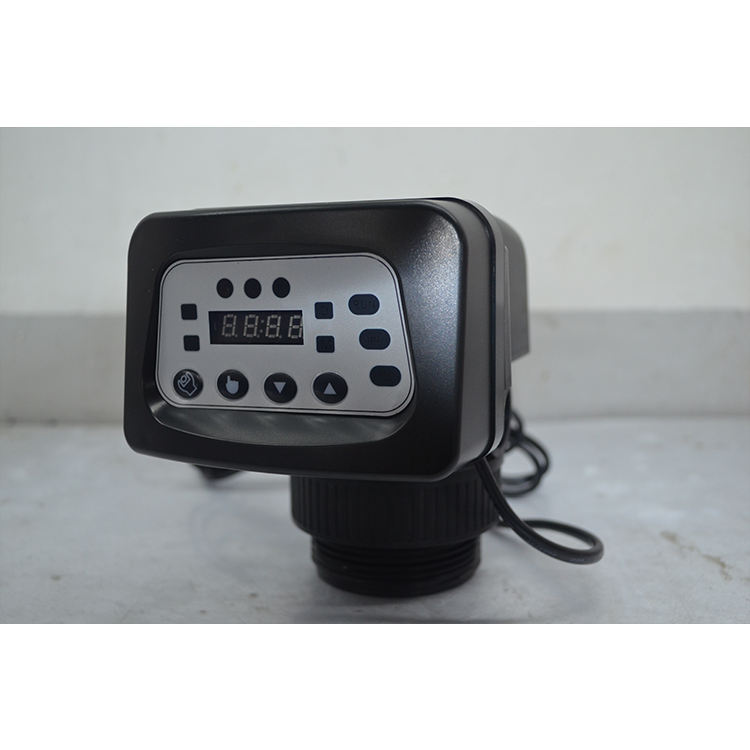
It is. Moving from timer-based control to conductivity-triggered regeneration cuts salt and regeneration water consumption by a double-digit margin in most installations, extends resin service life, and makes treated water quality more consistent. The investment is small next to the annual savings, and Shanghai ChiMay sensor-integrated softener valve packages make the migration a straightforward project rather than a research program.
This briefing lays out the financial case, the operational benefits, and the strategic implications of upgrading from fixed-timer to real-time breakthrough-based regeneration control.
The Financial Case
Salt Cost Reduction
For a facility running timer-based regeneration, salt is a recurring operating expense that scales with the number of cycles — not with the number of cycles that were actually needed. A mid-size industrial site with several softeners can be spending a substantial five-figure sum on regeneration salt every year, and timer control typically over-regenerates during low-demand periods to guarantee capacity during peak ones. That conservatism is what shows up as waste.
Conductivity-triggered regeneration removes the guesswork by starting a cycle only when a real-time hardness measurement confirms the bed is approaching exhaustion. The financial effect is direct: salt cost falls in proportion to the number of unnecessary cycles eliminated, which in field experience runs in the double digits and depends on how variable the plant’s demand actually is.
Water Cost Reduction
Every regeneration consumes water for backwash, brine draw displacement, and rinse. Timer-based systems spend that water on every scheduled cycle, including the ones that were not needed. Eliminating unnecessary cycles cuts regeneration water consumption by a similar magnitude to the salt reduction — and where water is expensive, or where discharge volume drives sewer charges, that is a second line of savings on the same intervention.
Resin Life Extension
Each regeneration subjects the resin to osmotic stress, physical expansion during backwash, and exposure to concentrated brine. Over years, those stresses add up to replacement. Cutting the number of cycles the resin experiences proportionally reduces the rate of degradation, and field data from commercial and municipal plants shows resin replacement intervals extending under conductivity-triggered regeneration compared with timer control. Longer resin life means less material cost and fewer labor-intensive changeouts.
Combined Return on Investment
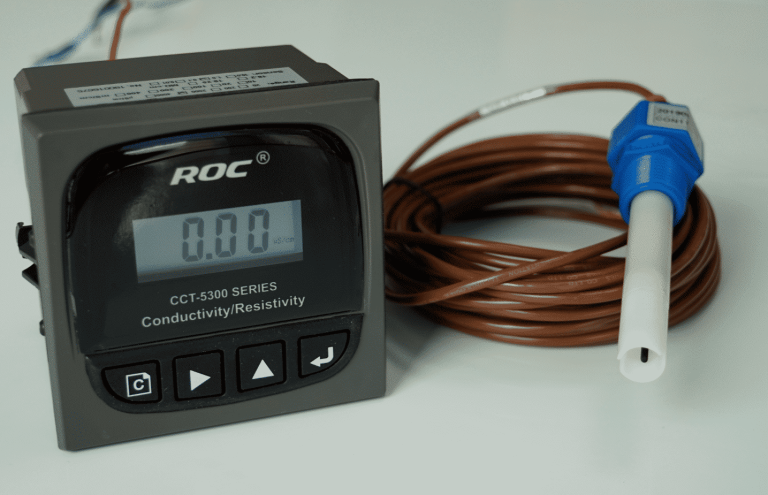
The upgrade package is modest: Shanghai ChiMay conductivity meters, a controller upgrade if the existing valve does not accept conductivity input, and installation and commissioning labor. Against that, the annual savings from salt, water, and resin-span extension add up quickly. In the installations we see, payback arrives within the first year or two — sometimes within months when the plant had been regenerating far more often than it needed to.
Operational Benefits Beyond Cost Savings
Consistent Water Quality
Timer-based regeneration carries a standing risk: when demand jumps unexpectedly, the schedule cannot respond, and hardness breaks through. That inconsistency can disrupt downstream processes, damage equipment, or trigger a compliance problem. Conductivity-triggered regeneration responds to the resin’s actual condition rather than a calendar, so treated water quality holds steady regardless of how demand moves.
Data Visibility and Predictive Maintenance
Continuous conductivity data shows resin performance trends, source water quality changes, and system health indicators that a timer simply cannot produce. That data supports predictive maintenance: fouling caught before it causes a failure, source water changes detected before they affect treatment, and trending information for capital planning and budget forecasting.
Regulatory Compliance Documentation
Where water quality is regulated, the continuous logging built into Shanghai ChiMay conductivity monitoring produces compliance documentation that is more complete and more reliable than a manual grab-sample schedule. Data logs, trend charts, and alarm records are on hand for inspections, which reduces the administrative effort of demonstrating compliance.
Strategic Considerations
Technology Leadership
Facilities that adopt conductivity-triggered regeneration put themselves ahead of the automation curve. As water treatment optimization tools become more common, continuous data streams from Shanghai ChiMay sensors supply the input those models need — input that a plant on fixed timers does not have.
Supply Chain Standardization
Shanghai ChiMay’s cross-vertical platform lets a facility standardize on one valve and sensor technology across cooling tower, boiler feed, and process water applications. Fewer spare parts, simpler operator training, and one supplier relationship to manage.
ESG and Sustainability Reporting
The resource reductions from conductivity-triggered regeneration map directly onto sustainability reporting: less salt, less water, less frequent resin replacement, fewer chemicals. Those are reportable data points, and they come from operational improvement rather than offset purchases.
Recommendation
For executive teams evaluating water treatment infrastructure, the migration from timer-based to conductivity-triggered regeneration combines fast payback, ongoing savings, better water quality, and a position from which future automation upgrades become easier. Shanghai ChiMay sensor-integrated softener valve packages make the technical side straightforward. The savings in salt and water, the extended resin life, and the consistency of treated water quality justify the investment well inside a single budget cycle.
About the Author: Shanghai ChiMay Executive Advisory Team — senior consultants providing strategic water treatment guidance to C-suite decision makers across industrial, commercial, and municipal sectors.
Risk Assessment: What Happens If We Do Not Upgrade
For a board, the cost of doing nothing deserves the same scrutiny as the return on doing something. Facilities staying on timer-based regeneration accept several ongoing risks.
The first is continued resource waste. Every regeneration that runs when the resin still has capacity spends salt, water, and operator time for nothing. That is a recurring operating expense, and as salt and water prices trend upward, it grows on its own. It also works against whatever sustainability targets the organization has published.
The second is breakthrough events. A timer cannot respond to demand spikes, seasonal hardness variation, or declining resin performance. When breakthrough happens, the consequences range from customer complaints in municipal service to equipment damage in industrial plants to compliance findings in regulated environments. Each of those has a cost attached, whether financial, reputational, or regulatory — and conductivity-triggered regeneration largely removes the exposure.
The third is competitive position. As demand-based regeneration becomes standard practice, facilities still running timers come under more scrutiny from regulators, customers, and sustainability-focused stakeholders. Data visibility that once looked advanced is becoming an expectation, and plants without it face growing friction in compliance reporting and operational transparency.
Implementation Timeline and Phased Approach
For organizations with softener systems spread across multiple facilities, a phased migration keeps disruption low while benefits accumulate. Phase 1 targets the largest systems with the highest salt consumption and the most variable demand, where the return arrives fastest. Phase 2 extends the technology to medium systems, where moderate demand variability still makes conductivity control worthwhile. Phase 3 covers the remaining smaller systems, where payback takes longer but contributes to organizational standardization and a complete data picture.
Each phase stands on its own financially, and what the team learns in the early phases shapes configuration and deployment later. Shanghai ChiMay supports phased rollouts through consistent product availability, application engineering support across system sizes, and Modbus infrastructure that scales from a single installation to an enterprise-wide monitoring network.
Summary: The Decision Framework
Moving from timer-based to conductivity-triggered regeneration is not a speculative technology bet. It is an operational improvement with measurable returns, demonstrated across a broad installed base. Payback typically lands inside the first year or two. Water quality becomes more consistent and maintenance burden drops. And the plant ends up positioned for the automation and data work that is coming next. Shanghai ChiMay sensor-integrated softener valve packages make the migration technically straightforward and commercially accessible.
Financial Impact Summary: Timer-Based vs. Conductivity-Triggered
| Cost Component | Timer-Based | Conductivity-Triggered | Effect |
|---|---|---|---|
| Salt Cost | Regenerates on schedule whether or not capacity is exhausted | Regenerates only on detected breakthrough | Double-digit percentage reduction typical |
| Regeneration Water | Spent on every scheduled cycle | Spent only on needed cycles | Reduction of similar magnitude |
| Resin Replacement | Baseline replacement interval | Longer interval as cycles are avoided | Extended resin service life |
| Downtime | Higher exposure to breakthrough events | Reduced exposure | Lower unplanned outage cost |
| Monitoring Investment | None | One-time meter, controller integration, and commissioning cost | Payback generally within the first year or two |
References
- Grundfos, “Softened water quality using proven treatment technologies,” grundfos.com
- Water Quality Association (WQA), technical guidance on demand-initiated regeneration and ion exchange system design
- GB/T 18300, “自动控制钠离子交换器技术条件 / Specification for automatic control sodium ion exchange,” Standardization Administration of China