Table of Contents
What Boards Are Being Asked to Approve — and Why the Answer Isn’t Obvious
The water quality sensor market is worth USD 6.76 billion in 2026 and heading for USD 8.88 billion by 2031 at a 5.61% CAGR (Mordor Intelligence, 2026–2031 edition). That headline hides the more consequential change. The unit being sold is shifting from an instrument to a guaranteed measurement outcome.
Suppliers are pushing machine-learning inference into the probe housing itself, then using the resulting self-diagnostic data to underwrite uptime commitments. A probe that can tell you it’s drifting before it drifts is a probe a vendor can put a service-level agreement behind.
For a board signing off capital allocation, this raises three practical questions rather than philosophical ones.
The vendor base is splitting in two. On one side, commodity instrument makers competing on unit price. On the other, suppliers selling an intelligent data platform with hardware attached. Choosing on unit price alone tends to lock a utility into an architecture that can’t participate in the newer procurement models.
Risk transfer only works if the data layer supports it. A performance contract shifts maintenance risk to the supplier — but the supplier can only accept that risk if the installed sensors produce continuous output, support remote diagnostics, and can trigger maintenance automatically. The platform selected today determines whether the organisation can sign that kind of contract in three years.
Continuous data compounds. Utilities with years of high-quality continuous records can train models, benchmark assets and argue with regulators from evidence. Utilities still sampling monthly cannot, and the gap widens each year.
What a Performance Contract Actually Looks Like
The mechanics are less exotic than the name suggests. Instead of buying ten pH sensors and carrying the calibration burden internally, a utility contracts for guaranteed pH measurement accuracy at five monitoring points. The supplier owns calibration, cleaning, replacement and data quality. The utility pays a fixed annual fee.
The buyer converts an unpredictable maintenance line item — technician hours, spares, emergency callouts — into a predictable one. The supplier can price that risk because ML-enabled probes give it early warning of the failures it is now on the hook for. That’s the whole trick: the guarantee is only affordable when the failure signal arrives before the failure.
Inside the Probe: What “Embedded ML” Buys You
It is worth being precise about what sits inside these devices, because the marketing around them is thicker than the engineering.
Self-diagnosis. The probe monitors its own measurement quality and flags drift, fouling or electrode degradation while accuracy is still inside spec. Maintenance becomes scheduled instead of reactive.
Anomaly discrimination. A local model separates normal variation — flow changes, temperature swings, dosing cycles — from genuine faults and water quality events. This is the hard part, and it’s where poorly trained models generate alarm fatigue.
Maintenance prediction. Accumulated operating data drives a forecast of when calibration, cleaning or replacement is due, so the work can be planned into an outage window rather than triggered by a failure at 2 a.m.
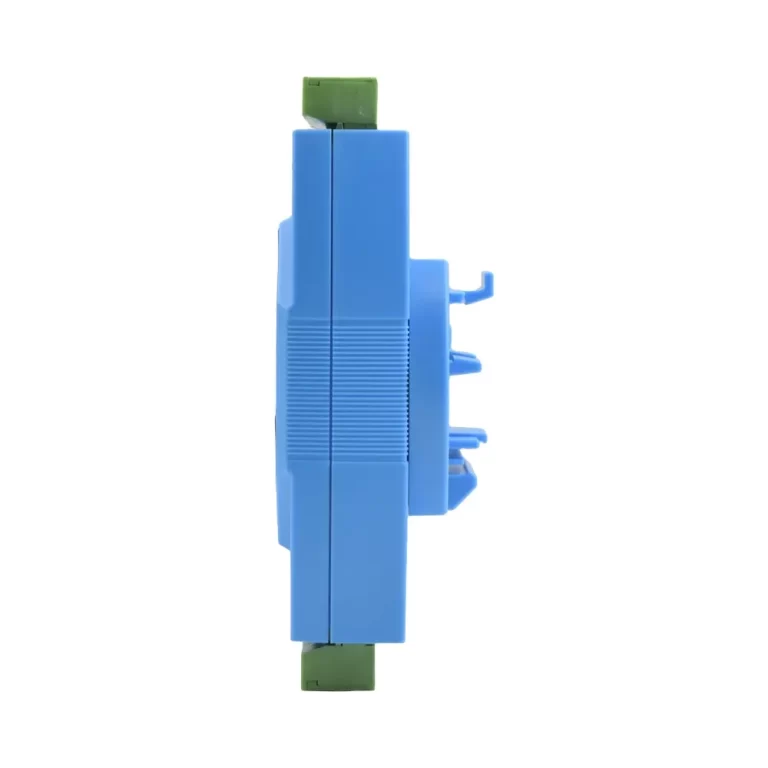
Shanghai ChiMay’s architecture is built for this pattern without pretending the probe is a data centre. Modbus RTU/TCP output delivers the resolution these models need, and the 4-in-1 probe — pH, conductivity, ORP and temperature from one body — supplies the correlated parameters that make anomaly detection meaningful. A single-parameter probe can tell you pH moved. Four co-located parameters can often tell you why.
Questions Board Members Should Put to Management
The useful questions have moved on from “which sensor is cheapest per unit”.
Will our platform feed an AI model, or only a display? Instruments that output analog only, or speak a proprietary protocol, can’t be ingested without a custom gateway. Open Modbus support keeps that option alive.
Could we sign a performance contract on today’s installed base? If the sensors can’t self-diagnose and can’t communicate digitally, the answer is no, and the upgrade is the prerequisite.
What is the five-year cost under each model? Comparing a purchase price to an annual service fee is not a comparison. Installation, calibration, spares, integration and downtime all belong in the same spreadsheet.
The Regional Picture
Asia-Pacific holds 35.22% of sensor revenue and grows at 8.32% CAGR, the fastest regional rate in Mordor’s segmentation. China’s monitoring mandates, Indian industrial expansion and Southeast Asian aquaculture all sit behind that number.
The sourcing implication is straightforward: manufacturers with production in the region have shorter, simpler logistics to the fastest-growing demand centres. That is a supply-chain fact, not a patriotic one.
Where the Evidence Is Strongest
Two reference points are worth putting in front of a board, with the caveat that both are early-stage.
The Novonesis–Novo Nordisk industrial wastewater plant at Kalundborg, Denmark — one of Scandinavia’s largest — runs a digital twin developed with DTU. It is fed by continuous pH, temperature and flow data and is used to simulate control changes, screen new raw materials for their effect on the treatment plant, and forecast the consequences of equipment outages. Novonesis staff describe one benefit plainly: the model shows what is happening inside the biological process, which instruments alone cannot observe. Note what the twin is and isn’t. It advises; it does not yet close the loop to the control system.
The second is the broader, less well-documented claim that predictive maintenance built on continuous sensor data has cut unplanned downtime in European distribution pilots. Utilities report improvements; the numbers vary too much between programmes to quote a single figure responsibly. Ask for the underlying dataset before you put a percentage in a board paper.
Recommendation
For utilities and industrial operators, the defensible position is this: buy instruments that can produce continuous, time-synchronised, digitally readable data, and refuse platforms that can’t. Whether you then buy a service contract or keep maintenance in-house is a commercial choice you can revisit. Whether your sensors can support the newer model is an architectural choice you make once.
Shanghai ChiMay’s inline and multi-parameter ranges — pH, conductivity, DO, turbidity, ammonia — are built around open Modbus output and digital documentation, which keeps both options on the table.
Buy the sensor, own the outcome.
References
- Mordor Intelligence, “Water and Wastewater Sensors — Market Share Analysis, Industry Trends & Statistics, Growth Forecasts (2026–2031),” July 2026. https://www.mordorintelligence.com/industry-reports/water-and-wastewater-sensors-market
- DTU, “Digital twin helps us use wastewater more efficiently,” 14 September 2026. https://www.dtu.dk/english/news/all-news/digital-twin-helps-us-use-wastewater-more-efficiently
Author: Shanghai ChiMay Strategic Advisory Team. Prepared for board-level review and drawing on publicly available market research.