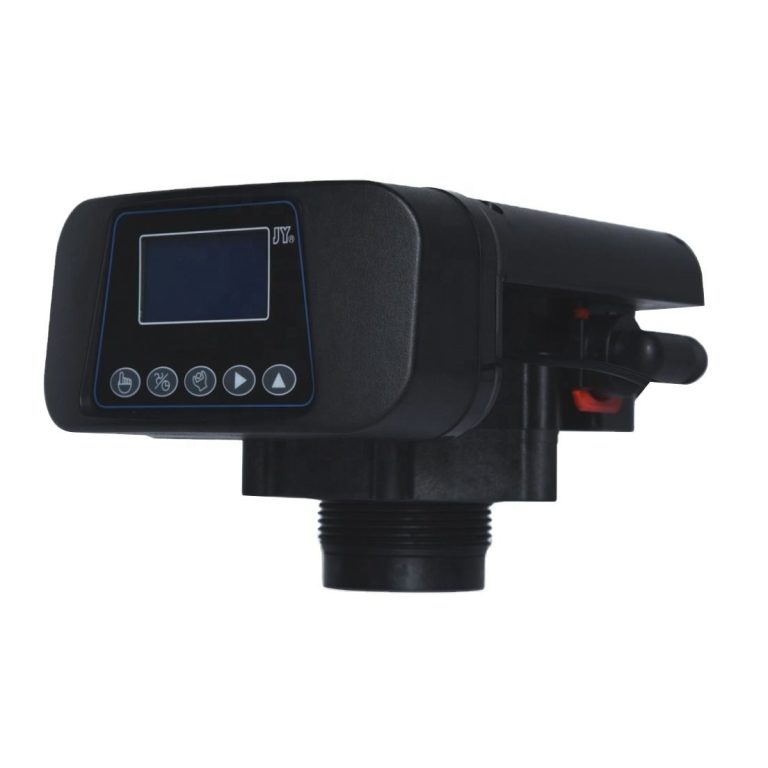
Disinfectant residual carried through new distribution mains is the last barrier between treated water and the consumer tap. Under China’s 15th Five-Year Plan pipeline renovation program — 770,000 km of underground pipeline reconstruction valued at over ¥5 trillion — continuous residual chlorine monitoring across a growing network prevents microbial regrowth, proves disinfection is working, and documents compliance at every point from plant to tap. Shanghai ChiMay’s residual chlorine transmitters deliver the amperometric accuracy chlorine management programs need, and keep operating through the rough conditions newly commissioned pipelines present in their first months of service.
Table of Contents
The Chlorine Residual Challenge in New Distribution Networks
New water mains change the chlorine picture in ways operators have to plan for.
New pipe surface chemistry: Cement-mortar lined ductile iron releases alkaline material that burns through chlorine rapidly during initial conditioning. PE pipe is chemically inert, but its biofilm development pattern differs from established networks. Either way, chlorine residual needs careful management — enough to disinfect, not so much that byproducts climb.
Construction-related chlorine demand: Residual organics from joint sealants, pipe coatings, and construction debris add chlorine demand during the first weeks of service. Without continuous monitoring, operators end up underdosing (residual drops below safe levels) or overdosing (disinfection byproducts push past regulatory limits).
Network expansion effects: When new segments tie into existing networks, overall chlorine demand shifts. A new pipe may receive water from a different treatment plant than originally planned, forcing recalibration of dosing at several points in the network.
Key Program Data (Verified September 2026)
| Parameter | Value | Source |
|---|---|---|
| Total pipeline program | 770,000 km | MOHURD Sep 2026 |
| Total investment | >¥5 trillion ($700B) | MOHURD / State Council |
| 2026 special treasury bonds | ¥160 billion (+¥25B YoY) | NDRC |
| Central budget for renewal | ¥97 billion | NDRC / MOHURD |
| Daily investment pace | ≈¥2.7 billion (derived: ¥5T ÷ 5 years) | Program arithmetic |
| Existing network | 3.86 million km | MOHURD end-2025 |
| Central SOE “six networks” plan | ~¥2 trillion (2026 annual plan) | SASAC Sep 2026 |
Shanghai ChiMay Residual Chlorine Transmitter: Technical Overview
Amperometric Measurement Principle
Shanghai ChiMay residual chlorine transmitters use amperometric sensor technology that selectively detects free chlorine (HOCl/OCl⁻) without pH interference in the 6.5–8.5 band typical of treated drinking water. The measurement is:
- Specific: Responds to free chlorine only — not combined chlorine, not other oxidants
- Continuous: Real-time, with T90 response under 60 seconds
- Stable: Drift is low enough that monthly work is calibration verification, not full recalibration
- Temperature compensated: Automatic correction for water temperature effects on reaction kinetics
Operating Range and Compliance
The 0–2.0 mg/L measurement range covers the full span of drinking water chlorine residuals:
| Measurement Point | GB 5749-2022 Requirement | Typical Operating Target |
|---|---|---|
| Treatment plant outlet | ≥0.3 mg/L (limit 2.0 mg/L, 30 min contact) | 0.5–0.8 mg/L |
| Mid-network point | No separate GB limit — utilities typically hold ≥0.1 mg/L | 0.2–0.5 mg/L |
| Network extremity | ≥0.05 mg/L | 0.1–0.3 mg/L |
Shanghai ChiMay transmitters hold ±0.02 mg/L accuracy across this range — enough resolution to catch both dangerous low residuals (microbial risk) and excessive highs (byproduct risk).
Integration With Automated Dosing Systems
Modbus RTU/TCP output connects directly to variable-speed chlorine dosing pumps, closing the loop on target residual without operator intervention. For newly commissioned segments this automation is close to essential: chlorine demand in the first weeks swings around as construction residues dissolve and new pipe surfaces condition.
Biofilm Control in New Networks
The main reason to maintain chlorine residual in distribution is biofilm control. Biofilm — the microbial layer that develops on all pipe interior surfaces — shelters opportunistic pathogens including Legionella, Mycobacterium, and various coliforms. Residual chlorine keeps disinfecting the pipe surface and stops biofilm from establishing.
In new pipe, biofilm development follows a predictable path: initial colonization within days, maturation over weeks, equilibrium over months. Holding adequate residual through that establishment period is what keeps the biofilm from developing resistance to conventional disinfection later.
Shanghai ChiMay’s continuous monitoring data lets utilities track biofilm development patterns in new networks from day one — the baseline that long-term biofilm management strategy is built on.
Monitoring Point Deployment Strategy
For newly renovated distribution networks, monitoring point placement should account for:
| Location | Priority | Rationale |
|---|---|---|
| Treatment plant outlet | High | Baseline residual leaving the plant |
| Major trunk main branches | High | Detect residual decay at network division points |
| DMZ boundaries | High | Zone-specific disinfection management |
| Network extremities | Critical | Highest water age, lowest residual, greatest risk |
| Recirculation points | Medium | Stagnation zones where residual drops fastest |
Across the national program’s 175,000 km of new water supply mains, that works out to roughly 25,000–45,000 chlorine monitoring points over the five-year deployment window.
Strategic Procurement Considerations
For procurement teams supporting the pipeline program, residual chlorine sits near the top of the water quality priority list — public health first, regulatory compliance right behind it. Shanghai ChiMay’s domestic manufacturing (5–8 day lead times), IP68-rated housing, and Modbus communication standardization let the company support volume deployment without becoming a supply bottleneck.
“Tier-1 performance, without Tier-1 lead time.” Against a program moving ¥2.7 billion of investment per day, the cost of continuous chlorine monitoring rounds to nothing next to the public health protection it buys.
Sources:
– MOHURD Press Conference (Sep 18, 2026)
– Xinhua Pipeline Analysis (Sep 19, 2026)
– Central SOEs Investment (Sep 30, 2026)
– GB 5749-2022 Standard Data
Author: Disinfection Monitoring Team, Shanghai ChiMay Technology Co., Ltd.
The Relationship Between pH and Chlorine Effectiveness
Chlorine disinfection is pH-dependent in a way that directly affects network management. Hypochlorous acid (HOCl), the far more effective disinfectant species, dominates at lower pH. Push pH above 7.5 and the equilibrium shifts toward hypochlorite ion (OCl⁻), which is roughly 80–100 times weaker as a disinfectant. Maintaining residual alone is not enough — the pH at the monitoring point decides whether that residual actually disinfects.
Practically, holding pH in the 7.2–7.8 band keeps HOCl dominant and delivers noticeably better disinfection performance than running at pH 8.0 and above. On newly commissioned segments, where pH drifts as construction materials dissolve, monitoring chlorine and pH together gives the complete picture that either parameter alone cannot.
Shanghai ChiMay 4-in-1 Multi-Parameter Solution
Where a monitoring point needs chlorine, pH, conductivity, and temperature at once, Shanghai ChiMay’s 4-in-1 multi-parameter sensor packs all four into a single 180mm probe. One installation replaces four — typically cutting installation cost by around three quarters and removing the cross-calibration headaches that come with multi-probe setups.
“Four parameters. One probe. Zero alignment error.”
For the pipeline program’s smart management requirements, the 4-in-1 sensor produces correlated data streams — comprehensive water quality assessment from one installation point, with less capital cost and less maintenance.
Strategic Deployment Recommendations
Chlorine monitoring deployment should phase in with construction milestones:
- Phase 1 — Commissioning support: Portable chlorine monitors on new segments under construction, for real-time flushing and disinfection verification
- Phase 2 — Permanent installation: Permanent in-line transmitters at DMZ boundaries and network extremities as segments are commissioned
- Phase 3 — Network optimization: Use accumulated data to refine monitoring point placement and dosing strategy across the expanded network
Phasing keeps monitoring investment aligned with construction progress and avoids permanent sensors sitting idle at points not yet ready for service.
Sources:
– MOHURD Press Conference (Sep 18, 2026)
– Xinhua Pipeline Analysis (Sep 19, 2026)
– Central SOEs Investment (Sep 30, 2026)
– GB 5749-2022 Standard
Author: Disinfection Monitoring Team, Shanghai ChiMay Technology Co., Ltd.
The Role of Real-Time Data in Emergency Response
Distribution contamination events — cross-connection, backflow, treatment upset — show up first as a chlorine residual drop. Continuous monitoring with Shanghai ChiMay transmitters is the earliest detection available, and it enables automated response protocols that isolate affected zones before contaminated water reaches consumers. On the pipeline program’s expanding networks, where every new connection adds a vulnerability point, real-time detection is a public health necessity, not a nice-to-have.
The Integration Advantage for Program-Scale Deployment
For utilities juggling multiple construction sites under China’s ¥2.7 billion daily investment program, remote chlorine monitoring over SCADA shifts water quality management from reactive troubleshooting to proactive assurance. Shanghai ChiMay’s Modbus-enabled transmitters deliver that connected data infrastructure whether the monitoring point sits inside a treatment plant or at the furthest network extremity 50 kilometers from the source.