Board Briefing · Decision-Maker Perspective · Published: November 20, 2026
Table of Contents
Key Takeaways
- Solar treatment has moved past the pilot stage. In La Mancalona, Yucatán, villagers — mostly subsistence farmers — ran an MIT-engineered purification system themselves for nearly two years [1]. Community operation, not the equipment demo, is the proof that matters.
- The delivery models scale. An IRENA case study documents 164 solar-powered water kiosks installed in Cambodia over 13 years, serving roughly 400,000 people [2]; a solar RO system on Petats Island, Papua New Guinea, serves about 3,500 residents [3].
- At the other end of the scale, a techno-economic study of a 275,000 m³/d desalination case found PV-powered RO without storage the most cost-competitive design for large units [4].
- A separate Iran case study sized a 14.75 MW PV plant for 25,000 m³ of desalination, with levelized water cost of $0.129–$0.325 per m³ and IRR of 25–40% in the optimum scenario [5]. Those are model outputs for that site and that set of assumptions, not a generic price list.
- Architecture is the core design decision. Direct-coupled systems store energy as water and suit duty that can shift to sunny hours; battery-backed systems suit processes that must run at night; PV-grid or PV-diesel hybrids bridge the two [1][4][6].
- For a buyer, the binding constraint is continuity, not generation. Water storage, load management and remote monitoring tend to return more per dollar than extra panel area.
Why This Briefing Now
Three trends have come together. PV hardware keeps getting cheaper. Water-stressed regions keep extending beyond the grid. Treatment processes — UV disinfection, dosing, RO — keep using less energy per cubic meter. Solar treatment is now a procurement category, with documented cases ranging from village kiosks to island desalination and utility-scale studies. What follows is what the evidence actually supports, where the architecture decisions sit, and what to inspect before approving a project.
Where Solar Treatment Wins Today
The documented cases cluster in four settings where grid power is absent, unreliable or too expensive to extend.
Remote villages. La Mancalona sits deep in the Yucatán jungle, where residents relied on brackish wells and rainwater lagoons. The MIT-engineered purification system was operated and maintained by the community itself for nearly two years [1]. For a rural program, that is the operational proof that counts — local hands, not visiting engineers, keeping it running. In the Karakum desert, a UNDP-supported program addresses villages where diesel generators run only a few hours a day and stored rainwater degrades in quality. Solar supply replaces both the fuel dependency and the storage-quality problem [6].
Islands and coastal communities. On Petats Island in Papua New Guinea’s Buka region, about 3,500 people depend on a shallow freshwater lens that turns brackish in dry spells. A solar-powered RO system with solar-pump distribution now supplies the community’s drinking water [3]. Where diesel logistics dominate the cost of water, islands being the extreme case, PV treatment attacks the fuel line directly.
Utility-scale desalination. Kettani and Bandelier’s assessment of Morocco’s 275,000 m³/d Chtouka Ait Baha case concluded that PV-powered RO without storage was the most cost-competitive design for large units, with battery-backed PV and CSP expected to become attractive only by 2030 [4]. On Iran’s southern coast, a 2025 case study sized a 14.75 MW PV plant for a 25,000 m³ duty and reported levelized water cost of $0.129–$0.325 per m³, IRR of 25–40% in the optimum scenario and more than 200,000 tons of CO₂ avoided [5]. Numbers like these change the question from “is it feasible” to “which architecture, and which risk profile.”
The Architecture Decision: Buffer as Water or Buffer as Battery
Every solar treatment site must answer one question: when the sun is gone, does the process stop, coast, or keep running? The answer defines the architecture, and each choice carries a different capital and risk profile [1][4][6].
| Architecture | Composition | Best suited to | Watch-outs |
|---|---|---|---|
| Direct-coupled PV pumping (energy buffered as water) | PV array, MPPT controller, pump, elevated or ground storage tank [1] | Drinking-water production, irrigation, tank-filling duty where demand can shift to sunny hours | Process must tolerate intermittent operation; storage sizing sets autonomy [1] |
| PV + battery + continuous treatment | PV array, charge controller, battery bank, inverter, continuous process loads (dosing, aeration, RO) | Treatment trains requiring night operation and stable power quality | Battery capital and replacement cycles; autonomy must be designed for cloudy sequences [5] |
| Hybrid PV + grid / diesel | PV array bridged with existing generator or grid supply | Sites with unreliable grid or where treatment continuity is non-negotiable | Control logic and changeover hardware; fuel logistics persist as fallback [6] |
Direct-coupled pumping is the quiet workhorse of rural water supply. Water is cheap to store and expensive to make on demand, so the logic inverts: instead of storing electricity in batteries, the site stores the finished product in tanks. A village pump fills the tank whenever the sun shines; filtration, UV and dosing run while the tank and the sun allow. That simplicity is what made two years of community self-operation possible in the Mexican case [1]. The limit is equally clear. Processes that cannot pause — continuous disinfection, biological treatment, RO trains with sensitive startup loads — need the battery or hybrid rows of the table.
Battery-backed designs buy continuity at the price of a battery line item. Utility-scale techno-economic work argues for restraint here: for large desalination, PV-RO without storage came out most cost-competitive, with storage expected to tip the economics only later in the decade [4]. Smaller sites are a different calculation. When autonomy is measured in days rather than hours, the balance shifts.
When Generation Wobbles, Process Must Coast
PV output varies minute to minute, hour to hour, season to season. The buyer’s real question is what the process does about it. Four buffering strategies come out of the case evidence:
- Water storage as the primary buffer. Elevated tanks and treated-water reservoirs decouple production hours from consumption hours. Sizing them is the cheapest autonomy a project can buy [1].
- Load-priority control. A controller runs essential loads — dosing, disinfection — ahead of discretionary ones, shedding and restoring as generation breathes instead of letting the whole train brown out.
- Storage-aware process selection. Biological and membrane processes tolerate intermittency very differently. Matching process choice to the energy profile prevents the classic failure: the solar plant meets its daily energy target but fails its effluent permit on cloudy weeks.
- Remote monitoring as the operating nervous system. Distributed sites fail quietly. A tripped controller at an unattended kiosk is invisible until the community notices. Continuous data on power, tank level and water quality, pushed to a central dashboard, turns distributed risk into managed risk.
That last point deserves weight in a board-level evaluation. The documented successes — 164 kiosks run as social enterprises by villagers [2], an island RO plant serving 3,500 people [3], a desert village program replacing hours-limited diesel generation [6] — share a design signature: local operability plus remote visibility. A site nobody can see cannot be serviced at a price a utility or NGO can sustain.
What the Instrumentation Layer Must Do
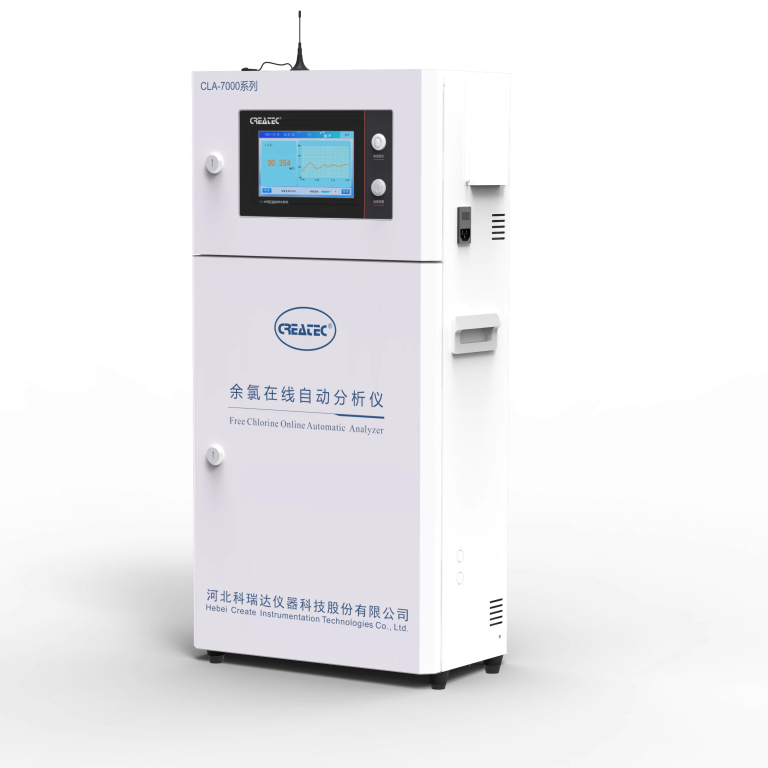
Solar sites compress two jobs into one budget: treat the water and manage the energy. Instrumentation sits at the seam. Dosing pumps, UV systems and RO controls need process signals — pH, conductivity, chlorine residual, flow — that stay accurate through wide supply-voltage swings. The energy system needs those same signals to decide which loads to run when. Integration-first sensing, meaning multi-parameter probes with digital Modbus output feeding both the local controller and a remote platform, removes the cabling, commissioning and maintenance duplication that quietly kills remote-site budgets.
Here is where the economics argument lands for equipment buyers. On a grid site, instrument cost is a line item. On a solar site, instrument reliability decides whether the asset is autonomous or needs a monthly expedition. Shanghai ChiMay quotes water quality analyzer packages on that basis — buy the sensor, own the outcome — integrating multi-parameter sensing, digital communication and published five-year cost thinking so the monitoring layer passes the same autonomy test as the panels. The Shanghai ChiMay water analysis and control valve portfolio behind that approach is overviewed at https://chimaycorp.com/.
A Decision Framework for the Next Project
For boards and program sponsors, the evidence supports a four-question gate:
- Is the duty intermittent-tolerant? If the process can buffer in water, start with direct-coupled architecture and spend the savings on tank volume [1].
- What is the real autonomy requirement? Size storage for the cloudiest realistic sequence, not the average day. Techno-economic studies show storage choices move levelized water cost materially [4][5].
- Who operates it, and from where? Budget for local training and remote monitoring together. The IRENA-documented kiosk model works because villagers run it and a program can see it [2].
- What does five-year cost look like? Panels, batteries, membranes and sensors age on different clocks. Require vendors to price the whole system over that horizon, not the cheapest component today.
The case evidence — a village system maintained for nearly two years by farmers [1], 164 kiosks serving 400,000 people [2], island desalination for 3,500 residents [3], utility-scale economics at $0.129–$0.325 per m³ [5] — shows the category works when architecture, buffering and instrumentation are engineered as one system. The decisions that matter are made before the first panel goes up.
References
- MIT News — “Remote Mexican village uses solar power to purify water”: community-operated solar-powered purification system run for nearly two years by village residents in La Mancalona, Yucatán. https://newsoffice.mit.edu/2015/mexican-village-solar-power-purify-water-1008
- IRENA — “Southeast Asia Case Studies” (2018): 1001fontaines solar-powered water kiosk program in Cambodia — 164 kiosks installed over 13 years, serving approximately 400,000 people. https://www.irena.org/-/media/Files/IRENA/Agency/Publication/2018/Jan/IRENA_Southeast_Asia_Case_Studies_2018.pdf?hash=A489575236340495B610333F8339C74F9AD7A2C2&la=en
- Solar Water Solutions — “Reliable Clean Water on Buka Island, Papua New Guinea with Solar Desalination”: solar-powered reverse osmosis with solar pump distribution serving about 3,500 residents on Petats Island. https://solarwatersolutions.com/news/reliable-clean-water-for-buka-island-papua-new-guinea/
- ScienceDirect — “Techno-economic assessment of solar energy coupling with large-scale desalination plant: The case of Morocco”: 275,000 m³/d case; PV-powered RO without storage found most cost competitive for large-scale units. https://www.sciencedirect.com/science/article/pii/S0011916420313059?via%3Dihub
- ScienceDirect — “Addressing water scarcity and energy sustainability through PV-desalination systems: A case study on the southern coast of Iran”: 14.75 MW PV plant for 25,000 m³ desalination; LCOW $0.129–$0.325/m³; IRR 25–40%. https://sciencedirect.com/science/article/pii/S277242712500066X
- United Nations in Turkmenistan — “Solar energy to power water supply in remote desert villages”: UNDP-supported solar water supply for Karakum desert villages where diesel generators run only a few hours a day. https://turkmenistan.un.org/en/151567-solar-energy-power-water-supply-remote-desert-villages
About the author: Written by the Shanghai ChiMay Technical Editorial Team — engineers from Shanghai ChiMay’s water quality analyzer and control valve lines, who support off-grid and remote water treatment projects from instrument selection and dosing control to valve specification for solar-powered sites.