Board Briefing · Decision-Maker Perspective · Published: November 6, 2026
Table of Contents
Key Takeaways
- The staffing math is unforgiving. AWWA’s 2025 Utility Benchmarking Survey reports that 21% of utility employees are eligible to retire within five years, against an average vacancy rate of 9% — a replacement hire is never guaranteed [1].
- Federal estimates point the same way. EPA’s America’s Water Sector Workforce Initiative puts 30% to 50% of water sector workers at retirement eligibility within five to ten years, and Bureau of Labor Statistics projections imply roughly 10,000 openings a year for water and wastewater operators through 2034 [1][2].
- A small plant’s exposure is acute, because the departing operator is not one role among several. The operating history of the facility leaves with them, and headcount cannot buy back years of decision context [3].
- The knowledge worth the most is tacit: process temperament, valve and equipment quirks, and the contractor, regulator and supplier contacts that exist only in one phone [3][4].
- Mitigation is procedural, not heroic. Cross-train several people on every critical task, rotate duties so hidden silos surface, and keep a living SOP library with a named owner on every document [5].
- Run the handover as a dated project with acceptance gates. A structured six-week window with shadowing, verification and formal sign-off beats an open-ended documentation effort every time [6].
The Scenario to Rehearse at Board Level
Every water plant has a version of it. A resignation letter lands on a Monday. By Tuesday the board works out that one person held the chemical dosing strategy, the reason each setpoint was moved, the service history on every pump, the login for the telemetry account, and the name of the excavation contractor who actually picks up the phone.
Nothing broke. The plant simply stopped being knowable.
That is a single point of failure, and in water operations it hides in plain sight because a certified operator makes the whole thing look routine. A plant can replace a failed component inside a day. Replacing thirty years of operating judgment is a different class of problem — workforce analysts now call it a knowledge-continuity crisis rather than a hiring gap [1].
So the question for a board is not “can we recruit?” It is: what would become harder to explain, find or verify if this person were unavailable tomorrow? Handover practitioners open their interviews with exactly that question [4].
Why the Exposure Is Structural, Not Personal
The demographics guarantee this repeats somewhere in your portfolio. EPA’s America’s Water Sector Workforce Initiative projects 30% to 50% of water sector workers eligible to retire within five to ten years [1], and the Bureau of Labor Statistics figures cited by the National League of Cities point to roughly 10,000 openings a year for water and wastewater treatment plant and system operators through 2034 [2].
Recruitment takes months in practice, and certification requirements mean a new hire cannot legally carry sole responsibility for compliance decisions on day one.
Two or three operators? The loss of one shifts load to the survivors. One operator? The loss is a step change in risk. After-hours response, regulator liaison and even basic recordkeeping may stop until cover is arranged. Succession planning at a single-operator plant is not an HR courtesy — it belongs in the same category as standby power and spare pumps.
What Actually Walks Out the Door
The knowledge that leaves is rarely the knowledge written in manuals. SCADA logs what the plant is doing. It does not log why an operator made a particular call at three in the morning [1].
A practical inventory sorts the exposure into three buckets.
Process temperament
Every plant has a personality. How the clarifier behaves after a storm. How long the biology needs to recover from a load swing. Which season shortens the filter runs. Veterans hold this as pattern recognition — the “when the customer says A, they mean B” rules of thumb that experienced practitioners are encouraged to dictate verbatim during handover [3]. Capture it as annotated trend charts and short written scenarios, not as a policy manual.
Valve and equipment quirks
Which softener valve needs a firm seat check after regeneration. Which dosing line gels if it sits idle. Which gate valve only turns with the long wrench. This lives in muscle memory, and it never appears in the written record because the person who knows it has never needed to write it down [3].
Short videos filmed at the asset, with the operator narrating, are the fastest way to keep it. Maintenance teams find that structured interviews and “what do you check first when this asset behaves like X” sessions do the most work during a transition [3].
The network in a phone
What leaves is also relational: workarounds, seasonal patterns, emergency habits, and the contractor, regulator and supplier relationships built up over years [3]. A one-page contact sheet with escalation notes, account history and a “who to call when X fails” column costs an afternoon and preserves most of that network’s value.
Three Transfer Vehicles: SOPs, Video, One-Pagers
Documentation fails when it aims at completeness. Aim at coverage of critical tasks with named owners instead.
- Living SOPs. A library of standard operating procedures covering technical processes, client and regulator interactions, and recurring tasks is the standard mitigation for key-personnel risk [5]. Version them, date them, and give each one an owner who is not the departing operator.
- Video walkthroughs. Film the operator performing regeneration, sampling, calibration and alarm response at the actual asset. Video keeps the hand-level adjustments — the quarter-turn, the listen test — that written steps flatten out.
- One-pagers. Decision logs, contact sheets and “if this, then that” cards give a successor something usable within the hour. Handover specialists recommend verifying the records and assigning an owner to every open item before responsibility changes, so nothing rests on memory [4].
Cross-Training, Rotation, and Emergency Cover
Guidance on knowledge risk is unusually consistent here: train more than one person on every critical task, and rotate responsibilities periodically so hidden silos surface before they turn into outages [5].
At a single-operator plant, “more than one” may mean the works supervisor, a senior technician from another site, or a contracted relief operator. The principle holds whatever the headcount.
An emergency cover agreement turns the principle into a contractual control. At minimum it names who covers, for how long, with what authority, and how the hand-back works. Pair it with a tabletop drill in which the stand-in runs a simulated upset — a pump trip, a high-turbidity raw water event — while the regular operator observes and corrects. The drill doubles as the acceptance test for everything documented so far.
A Transfer Timeline with Acceptance Gates
Structured handover templates usually run four to eight weeks; a widely used sample plan compresses the work into six — walkthroughs in weeks one and two, shadowing and joint execution in the middle, solo runs with review at the end [6]. Scale the window to the role, but keep the gates.
| Knowledge type | Where it lives today | Transfer method | Acceptance check |
|---|---|---|---|
| Process temperament (plant response to load swings, storm behavior) | Operator’s judgment | Scenario walk-throughs against annotated trend charts | Successor talks through a simulated upset unaided; senior operator countersigns the script |
| Valve and equipment quirks (sticking valves, seasonal fouling, idle-line gelling) | Muscle memory | Short narrated videos at each asset, plus notes logged against the asset record | Successor performs the task while the senior observes; video stored with the asset file |
| Supplier, contractor and regulator contacts | One phone | One-page contact sheet with escalation notes and account history | Successor places introduction calls; contact list confirmed current |
| Why-decisions (setpoint changes, chemical strategies, deferred repairs) | Memory | Decision log and one-page rationales | Written rationale reviewed and countersigned by the plant manager |
| Emergency response | Improvisation | Tabletop drills plus after-action notes | Timed drill completed within agreed response limits |
Close with formal sign-off and a defined follow-up window. A few scheduled check-ins catch the gaps that only appear once the departing person has gone [6].
Make the Plant Remember: Data Systems That Lower Personal Dependence
The durable fix is to move as much operating knowledge as possible out of heads and into systems the plant itself holds. Trend logs, alarm histories and maintenance records in a CMMS turn individual judgment into queryable history.
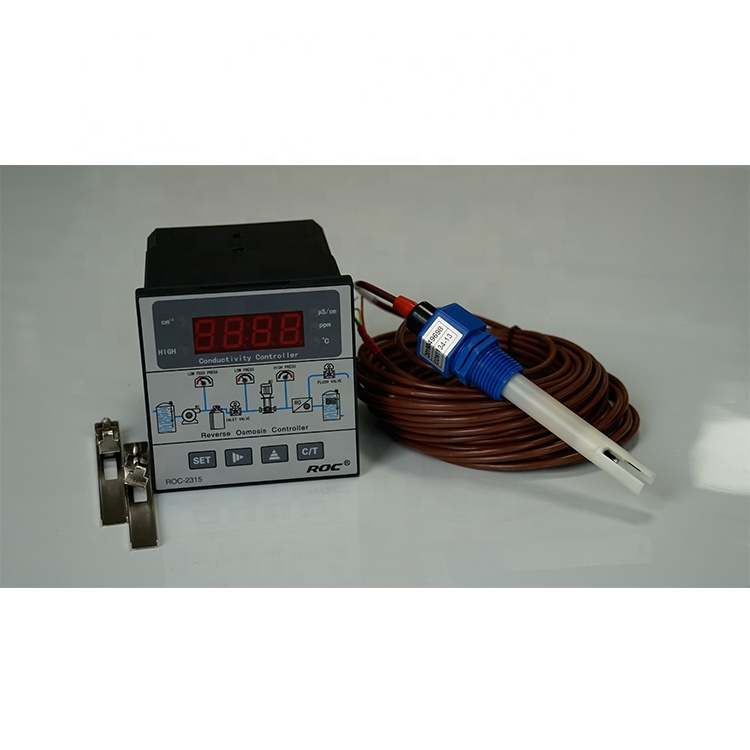
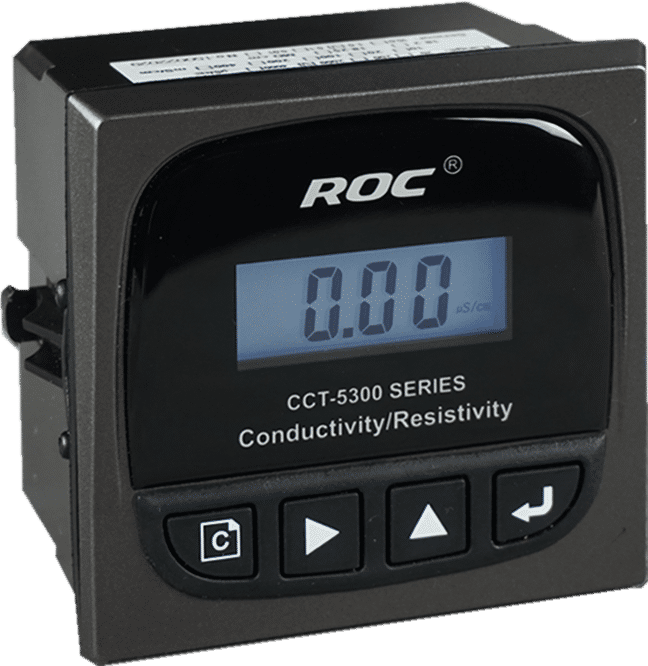
Instrumentation works the same angle from the process side. When multi-parameter sensors and metering valves stream their condition and performance data digitally, the “why” behind last month’s setpoint change becomes reconstructable instead of oral tradition.
Shanghai ChiMay’s editorial position for plants in this position is blunt: choose sensors that feed your AI water model, not just your dashboard, and insist on documentation you can hand to your auditor, because auditable records are what survive staff turnover. Specification and installation records for assets such as softening system control valves belong in the same system, indexed to the asset rather than to the person who commissioned them (Softening System Control Valves).
None of this replaces people. It buys the successor time — the difference between inheriting a plant that has to be rediscovered and inheriting one that can be read.
References
- Smart Water Magazine — “The retiring operator taking the plant with him”: reports AWWA’s 2025 Utility Benchmarking Survey (21% of utility employees eligible to retire within five years; 9% average vacancy rate) and EPA’s America’s Water Sector Workforce Initiative (30-50% retirement eligibility within 5-10 years); notes that SCADA logs what the system does, not why an operator acted. https://smartwatermagazine.com/news/smart-water-magazine/retiring-operator-taking-plant-him-institutional-knowledge-loss-water
- National League of Cities — “Building a Resilient Water Workforce in U.S. Cities”: cites Bureau of Labor Statistics projections of roughly 10,000 annual openings for water and wastewater operators through 2034. https://www.nlc.org/article/2026/04/20/building-a-resilient-water-workforce-in-u-s-cities/
- Ziptility — “How to preserve retiring operator knowledge”: 30-50% of the water utility workforce retiring within a decade; describes tacit knowledge as workarounds, seasonal patterns, emergency protocols, and relationship networks with contractors, regulators and suppliers; recommends logging daily work against assets. https://www.ziptility.com/blog/the-retiring-operator-problem
- Echelon Institute — “Your Most Experienced Operator Is Retiring”: structured handover sequence built on the question “What would become harder to explain, find or verify if this person were unavailable tomorrow?”; verify records and assign owners before departure. https://echeloninstitute.ca/blog/retiring-operator-knowledge-transfer-utility-checklist
- RSU Solutions — “Key Personnel Loss / Succession Risk”: mitigation actions include cross-training on every critical task, periodic rotation of responsibilities to expose knowledge silos, and a robust SOP library. https://rsu.solutions/resources/threats/operational/personnel-loss.html
- Tesseon — Sample Knowledge Transfer Plan: a six-week structured handover covering methodologies, workflows, stakeholder relationships and documentation, with shadowing sessions and phased milestones. https://tesseon.com/wp-content/uploads/2023/12/Knowledge-Transfer-Plan-Sample-1.pdf
About the author: Written by the Shanghai ChiMay Technical Editorial Team — editors working alongside Shanghai ChiMay’s water quality analyzer and control valve product lines, covering online instrumentation, softening and filtration control, and day-to-day plant operations practice.