Comparison Analysis · Procurement Perspective · Published: November 16, 2026
Table of Contents
Key Takeaways
- A jacketed control valve is a standard valve with a welded outer shell through which steam, thermal oil or hot water circulates. Its single job is to keep the process fluid above the temperature at which it would solidify, crystallize or get too viscous to control [1].
- Jacket media get matched to the duty: steam at roughly 4–6 bar holds molten sulfur in the 140–155 °C range, while hot thermal oil at 200–300 °C serves polymer melts [2].
- A full jacket heats the entire body including the flange roots; a half jacket stops short of the flange root. In both cases the jacket is a second pressure boundary designed to pressure-vessel rules such as ASME BPVC VIII-1 — which is where much of the cost and inspection burden comes from [3].
- Jacket design is governed by the process window, not by steam availability. Overheating darkens some products and accelerates corrosion, and the same jacket that prevents a crystal plug can promote caustic stress-corrosion cracking when the body runs roughly 20 degrees hotter than the medium requires [4].
- Standard valves are simpler and cheaper, and jacketed valves should only be specified where temperature control is truly necessary. In demanding viscous service, though, fewer blockages can tip long-term maintenance economics back toward the jacket [5].
- If your medium stays fluid at ambient temperature and the line runs continuously, a standard valve with the right trim, clear Cv data and well-specified seals is almost always the lower-risk, easier-to-maintain choice [5][6].
Why Temperature, Not Pressure, Is the Hard Question
Most control-valve selection conversations start with flow, pressure drop and Cv. In hot and viscous service there’s a question that comes first: will the fluid still be a fluid inside the valve? Some fluids only behave as fluids within a narrow temperature band. Molten sulfur, bitumen and asphalt, molten salts, polymer melts, chocolate and fat blends, molasses, waxes and a long list of concentrated solutions all become unhandleable, or simply solid, once they cool past a certain point. A control valve is the worst place for that to happen, because it is a restriction with small clearances between plug, seat and cage [1].
For a buyer, the decision isn’t “jacketed versus standard” in the abstract. It’s whether your specific medium can freeze, crystallize or thicken inside the valve during normal operation, idle periods or startup. What follows is how a jacket actually works, what it adds in cost and maintenance, how the heat side gets designed, and the operating cases where a standard valve remains the better buy.
How a Jacketed Valve Actually Works
A jacketed valve carries a second, outer shell welded around the body. A heating medium — steam, hot thermal oil or hot water — circulates through this annular space, entering through a jacket inlet and leaving through a return connection, transferring heat through the body wall to the process fluid inside [1][2]. The internals do the same flow-control job as before; the jacket’s only task is to keep the medium above its solidification, crystallization or gel point so it stays flowing and controllable.
Full jacket vs half jacket
Jacketed bodies come in two coverage classes. A full jacket heats the entire valve body, flange roots included. A partial (half) jacket heats the body except the flange root, which is usually enough to stop the fluid inside the valve from condensing, thickening or building viscosity from temperature drop [3]. Half jackets are lighter and cheaper; full jackets close the cold corners where plugs like to start. In intermittent service — transfer lines that sit idle between batches — trapped fluid near the body cavity and seat area cools before the next restart, so coverage of exactly those regions matters more than the label on the drawing.
A second pressure boundary, engineered as such
The jacket is not cosmetic. It’s a separate pressure space, and jacketed constructions are designed to pressure-vessel rules — ASME BPVC VIII-1 is cited for jacket design, in two-piece and welded full- and half-jacket forms [3]. For procurement that means three practical consequences: welded seams need qualified welders and inspection; the jacket has its own test pressure and acceptance criteria; and every jacket inlet and drain connection is an additional sealing point a standard valve simply doesn’t have.
Media That Justify the Jacket
Vendors of jacketed equipment converge on the same list of candidate media [1][2]:
- Molten sulfur — solidifies with dramatic speed once below its melting range.
- Bitumen, asphalt and heavy fuel oils — viscosity climbs steeply as temperature falls.
- Polymer melts and resins — gel and foul trim clearances.
- Waxes and paraffin-bearing streams — crystallize on the coldest surface first, which in a valve is the seat.
- Molasses, syrups and concentrated solutions — thicken until pumps and actuators stall.
- Crystallizing media — salt brines and caustic streams grow crystals in dead zones and seat areas.
The failure modes are predictable. Rising viscosity multiplies the torque or thrust the actuator must deliver. A solidified plug can jam the trim entirely. Crystals forming at sealing surfaces chew through soft seals and metal seats alike. None of this appears on a datasheet — it appears as a valve that won’t stroke during the night shift.
What the Jacket Adds: Cost, Weight and Maintenance
Because of their more complex structure, jacketed valves cost more than standard valves, and suppliers are explicit that they should only be used when temperature control is necessary [5]. The premium buys more than metal: the jacket has to be designed and welded to pressure-vessel rules, tested as its own boundary, and inspected over the life of the valve [3].
Operationally, the jacket changes the maintenance picture in four ways.
- More sealing points. Jacket inlet, outlet and drain connections each need gaskets or welds that a standard body doesn’t carry, and each is a potential leak path for the heating medium.
- Insulation and tracing to maintain. The jacket alone rarely holds temperature; lagging around it becomes part of the maintenance scope.
- Draining and cleaning. Jacket spaces must be drained before product changes or winter shutdowns, and in food, polymer and adhesive service the jacket side needs its own cleaning regime.
- More complex repairs. If the jacket itself is damaged, repair is more involved than reseating a standard body.
The offsetting benefit is real. In demanding viscous or solidifying service, jacketed valves often reduce long-term maintenance cost because there are fewer blockages and less wear [5]. A jacket is insurance priced against one specific hazard — losing the fluid state of your product inside the valve.
Designing the Heat Side: Media, Temperatures and Limits
The heat side is a design task of its own, and three points dominate it.
Match the jacket medium to the temperature you actually need. In sulfur service, steam at 4–6 bar circulates through the jacket to keep sulfur molten in the 140–155 °C range; in polymer service, hot oil at 200–300 °C keeps resins from gelling [2]. Steam gives high heat-transfer rates and its temperature is capped by its pressure. Thermal oil reaches higher temperatures. Hot water suits moderate duties.
Respect the process window on both ends. Jacket design is governed by the process window, not by the availability of 6 bar steam [4]. Published examples make the point: heavy fuel oil with a pour point of 15–30 °C needs the body held at roughly 50–60 °C, and overheating darkens the product and accelerates corrosion. For isocyanate-type media the thermal requirement is a ceiling, not a floor, so a steam jacket is a liability rather than a safeguard. And the jacket that prevents a crystal plug can, about 20 degrees hotter than the medium requires, crack a caustic-wetted body through caustic stress corrosion [4].
Control the jacket as its own loop. The jacket medium needs its own temperature control — steam pressure regulation or oil-temperature control — separate from the process control loop that strokes the valve. Skin-temperature readings, lagging condition and jacket-medium supply pressure belong on the maintenance checklist, not just the P&ID.
When the Standard Valve Wins
A jacket is wasted money in several common cases:
- The medium is fluid at ambient temperature and stays that way through startup, shutdown and standby — water, most aqueous chemicals, fuels above their pour point.
- The line runs continuously, with no idle periods long enough for trapped product to cool and set.
- The medium has a thermal ceiling. Where overheating degrades the product or attacks the body, adding heat is the failure mode, not the cure [4].
- The risk is mild and episodic. For lines that only see brief idle periods, heat tracing plus insulation is often enough to bridge the gap without turning every valve into a pressure-vessel exercise [5].
A useful discipline for buyers: write down the medium’s solidification or crystallization temperature, the temperature at which viscosity becomes a handling problem, and any upper limit where product quality or metallurgy suffers. If the comfortable operating band is wide and ambient losses are small, specify a standard valve and spend the difference on better trim and seals.
Selection at a Glance
| Dimension | Jacketed valve | Standard valve | Best fit |
|---|---|---|---|
| Temperature hold-up | Active heat input keeps media above pour/crystallization point [1][2] | None — body follows ambient and line temperature | Jacketed for solidifying media |
| Typical media | Molten sulfur, bitumen, polymers, waxes, syrups, crystallizing salts [1] | Water, aqueous chemicals, hydrocarbons above pour point | Match to the medium’s phase behavior |
| Construction | Welded second shell designed to pressure-vessel rules (ASME BPVC VIII-1) [3] | Single-wall body | Standard unless heat is required |
| Cost | Price premium due to complex structure; justify only when temperature control is necessary [5] | Lowest cost, shortest lead time | Standard for stable-temperature media |
| Maintenance scope | Jacket welds and connections, insulation, draining and jacket-side cleaning [3] | Trim, seals and actuator only | Standard simplifies PM schedules |
| Failure mode protected | Blockage, sticking and seal damage from solidification [1] | Conventional wear modes | Jacket where blockage is costly |
| Control design | Separate jacket-temperature loop plus process loop [2] | Single process loop | Jacket adds a loop to commission |
A Procurement Shortlist
- Fix the thermal envelope first. Pour point, crystallization temperature, viscosity ceiling, and any upper limit that degrades product or metallurgy [4].
- Choose coverage deliberately. Full jacket for severe or intermittent duties, half jacket where only the body needs heat [3].
- Specify the jacket side like a pressure vessel. Design code, test pressure, medium, supply temperature and insulation [3].
- Plan the maintenance scope before the PO. Jacket connection gaskets, weld inspection points and drain procedures belong in the O&M plan [3][5].
- Buy from suppliers who publish their numbers. Cv data, pressure ratings, cycle life and seal materials should be in the datasheet, not behind an email. When you evaluate either a jacketed or a standard control valve, insist on the same transparency [6].
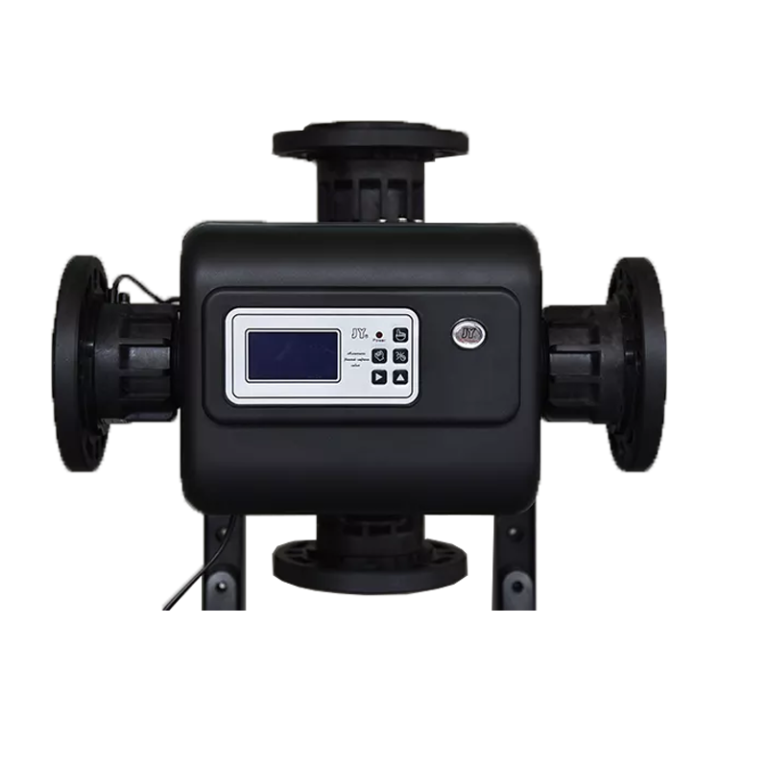
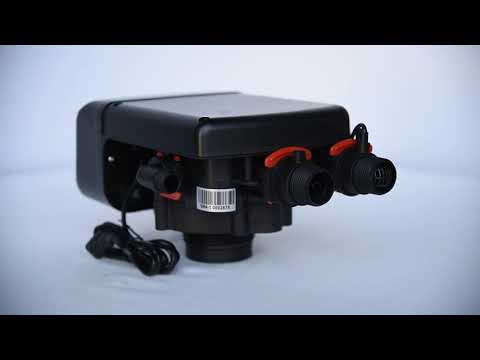
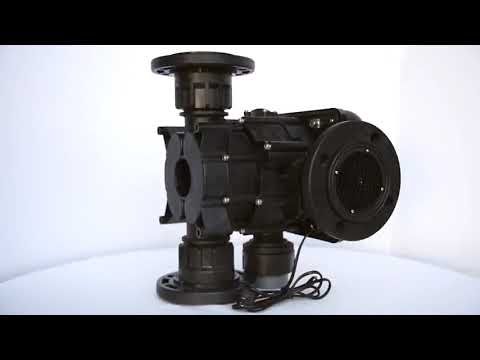
Shanghai ChiMay supplies softener and filter control valves for water-treatment duty — continuously flowing, ambient-temperature service where standard bodies with ceramic-sealed trim and clear published specifications are the right answer [6]. For hot viscous process media, use the same checklist with a jacketed-valve supplier. The thermal envelope, not the brand, decides the specification.
References
- ValveU (Lapar Control) — Heating Jacketed Control Valve product guide: jacketed control valve working principle, media that solidify or crystallize, and why a control valve is the worst place for it. https://www.valveu.com/control-valves/specific-control-valves/jacketed-control-valve
- FlowEngineer — Jacketed Ball Valve knowledge article: jacket medium circulation, steam at 4–6 bar for sulfur at 140–155 °C, hot oil at 200–300 °C for polymer service. https://flowengin.com/knowledge/articles/jacketed-ball-valve
- Star Controls — Heating Jacket product documentation: full jacket vs half (partial) jacket coverage definitions, ASME BPVC VIII-1 jacket design, two-piece and welded constructions. https://www.starcontrols.com/en/products/232.html
- J-VALVES — Jacketed Valves: Steam Jacket Design, Heat Load Sizing and the Failure Modes Buyers Miss: heavy fuel oil pour point 15–30 °C vs 50–60 °C hold temperature, overheating and caustic stress-corrosion limits, process-window-governed design. http://www.j-valves.com/jacketed-valve-steam-jacket-design-selection.html
- Kosen Valve — Steam Jacketed Valves: Structure, Function and Applications: structural differences from standard valves, higher cost, use only when temperature control is necessary, long-term maintenance trade-off. https://www.kosenvalve.com/media-hub/steam-jacketed-valves-structure-function-and-applications.html
- Shanghai ChiMay Tech — Water Control Valve product range: softener and filter control valves for continuously flowing water-treatment service. https://www.chimaytech.net/product-category/product/softener-valve-filter-control-valve
About the author: Written by the Shanghai ChiMay Technical Editorial Team — engineers who work daily on control valve selection, seal materials and specification transparency for softening and filtration systems, and who prepared this guide for buyers comparing standard and thermally jacketed valve constructions.