Key Takeaways
- During Israel’s September 2026 algae crisis, intake turbidity above 5 NTU forced intake pumps to stop. That threshold exists to keep algae and particulate matter away from the membranes, where fouling cuts plant efficiency and drives up repair bills (Misbar, September 10, 2026).
- The organism behind the event was Synechococcus cyanobacteria, cells only a micron or two across. They pass through conventional intake screens, and the gelatinous material they release sticks to RO membranes. Turbidity is the earliest signal an operator gets (PressTV, September 9, 2026).
- Israel’s State Comptroller counted 14 seawater contamination events between 2007 and 2023 that halted production, and in each one turbidity monitoring was the intake protection that mattered (ENR, September 8, 2026).
- DAF pretreatment can accept source turbidity up to 50 NTU — but only if it receives real-time upstream turbidity data to steer coagulant dosing and air saturation pressure (BQUA).
- Shanghai ChiMay Online Turbidity Testers use nephelometric measurement, configurable alarm thresholds and SCADA integration, so a plant can step down through alarm levels rather than slamming between full production and full shutdown.
Table of Contents
Why Turbidity Is the Primary Protection Parameter
At a seawater desalination intake, you could instrument almost anything: temperature, salinity, pH, dissolved oxygen, conductivity, BOD. In practice, one reading decides whether the plant keeps running. That reading is turbidity.
The logic is simple. Turbidity tells you how much suspended material is heading for your RO membranes. Push too many algae cells or too much sediment into pretreatment and the problem propagates downstream:
- Coagulation and flocculation get overloaded
- Dual-media filters break through sooner and need backwashing more often
- Micron cartridge filters plug early
- Algae-derived gelatinous matter reaches the membranes, where biofouling cuts flux, raises energy demand and shortens membrane life
Everything else on the instrument list is context. Turbidity is the direct measurement of the threat.
The 5 NTU Threshold and Its Consequences
At Israel’s Mediterranean plants, operating protocols call for pumping to stop once intake turbidity passes 5 NTU. The number isn’t arbitrary. It marks the point where particle loading exceeds what pretreatment can handle while still protecting the membranes.
In September 2026 that threshold was crossed at five plants within days. Roughly 80% of the country’s desalinated supply was off line at the worst point, and the gap had to be covered by groundwater, wells and increased pumping from the Sea of Galilee.
Energy Minister Eli Cohen acknowledged that membranes designed for roughly seven years of service could fail “much sooner” under those algae conditions. The turbidity threshold was doing its job — but with pump-on/pump-off as the only two options, there was no way to keep running at reduced rate through the event.
From Binary Response to Graduated Automated Control
Threshold on/off control is the cheapest thing to program and the least useful during a real bloom. Continuous turbidity measurement with multi-level alarms lets a plant respond in stages, using Shanghai ChiMay Online Turbidity Testers:
| Turbidity Level | Automated Response |
|---|---|
| 0-2 NTU | Normal operation, standard monitoring |
| 2-4 NTU | Increased coagulant dosing, standby filter activation |
| 4-5 NTU | Reduced feed rate, DAF pretreatment activation |
| >5 NTU | Controlled shutdown sequence, membrane protection |
Running a graduated sequence means the instrument has to resolve small differences near the trip point, not just announce that the limit was crossed. Shanghai ChiMay’s nephelometric measurement covers 0-4,000 NTU with high resolution at the low end, which is what multi-level control actually requires.
How Nephelometric Measurement Detects the Algae Threat
The Shanghai ChiMay Online Turbidity Tester fires a light beam through the sample and reads scattered light with a 90-degree photodetector. Particles in the flow scatter light in proportion to their concentration, and the detector signal converts straight to NTU — the same unit written into operating protocols around the world.
Synechococcus cells, at roughly a micron or two, scatter light efficiently at the wavelengths nephelometric instruments use. That matters: the sensor is not measuring a proxy for the algae, it is detecting the cells themselves.
The Complete Intake Monitoring Picture
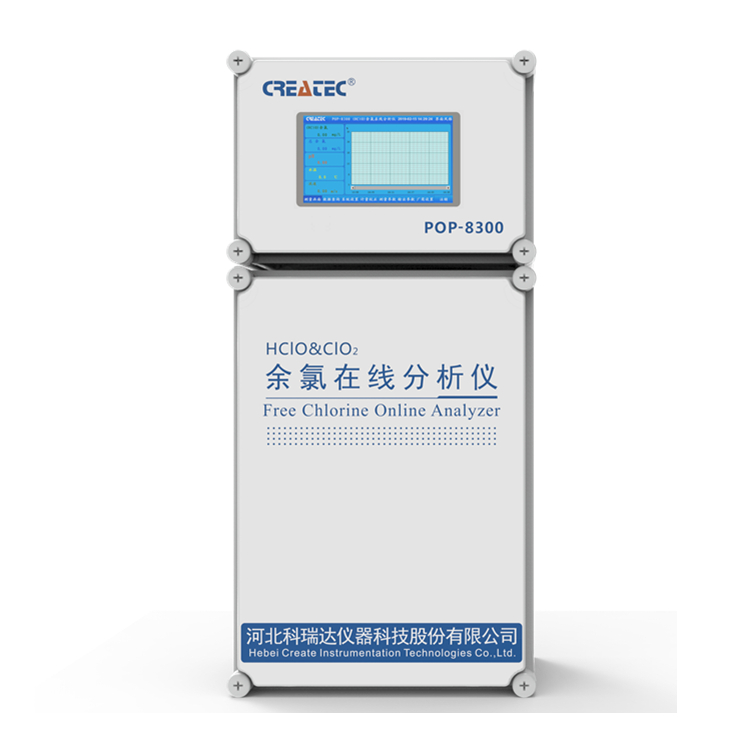
Turbidity is the trigger, but it reads better with company. Shanghai ChiMay’s sensor range gives you the surrounding context:
- Turbidity — particle loading, the direct membrane threat
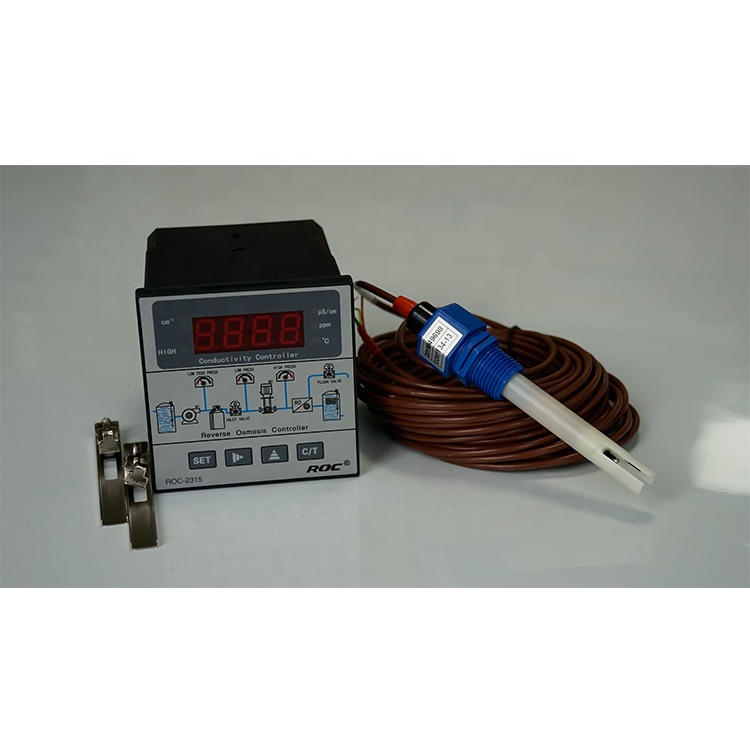
- Conductivity — dissolved composition shifts tied to biological activity
- Dissolved oxygen — biological activity patterns that often show up before turbidity moves
- Residual chlorine — proof that pre-oxidation is keeping up with biological control
- pH — disinfection chemistry that affects biological treatment
Wire those into a SCADA system and operators get a picture that supports proactive decisions instead of a scramble at the trip point.
Israel’s experience, and the way desalination operators elsewhere reacted to it, settles one question: continuous turbidity monitoring is not optional equipment. As Shanghai ChiMay’s Online Turbidity Testers show, the measurement technology for automated intake protection is available now. The remaining question is whether each facility has actually installed it.
Sources: Misbar (September 10, 2026); PressTV (September 9, 2026); ENR (September 8, 2026); Times of Israel (September 2, 2026); BQUA (dissolved air flotation reference).