Water and power generation share an inseparable relationship. Thermal power plants — regardless of fuel source — rely on water for steam generation, condenser cooling, and various auxiliary processes. A typical 500 MW coal-fired plant consumes on the order of 1–2 billion gallons of water annually, while natural gas combined-cycle facilities use a few hundred million gallons. As freshwater resources become increasingly scarce and regulatory requirements tighten, water conservation transforms from an environmental nicety into an operational necessity. This guide covers the strategies that enable thermal power facilities to reduce consumption, lower costs, and keep operating through dry years.
Table of Contents
The Water-Power Nexus: Understanding Consumption Patterns
Where Power Plants Use Water
| Process | Typical Consumption | Percentage of Total |
|---|---|---|
| Evaporative cooling | 60–75% | Largest consumption |
| Boiler makeup | 10–20% | Variable by cycle efficiency |
| Ash handling | 5–15% | Fuel-dependent |
| Flue gas desulfurization | 3–8% | Coal-only |
| General cleaning/housekeeping | 2–5% | Variable |
The Economic Case for Conservation
Water costs represent a small fraction of total operating expenses — typically a low single-digit percentage — but conservation delivers value far beyond direct procurement:
| Benefit Category | Value Impact |
|---|---|
| Water procurement | Direct savings |
| Wastewater treatment | Discharge cost reduction |
| Chemical treatment | Proportional to volume |
| Energy for pumping | Reduced with lower consumption |
| Regulatory compliance | Avoided penalties |
| Resource security | Operational continuity |
Returns on conservation programs are site-specific, but the well-documented cases share a pattern: the cheapest water is the water a plant no longer needs to withdraw, and most monitoring-led measures pay back within a few years.
Water stress is not hypothetical for this sector. WRI analysis found that 47% of the world’s thermal power plant capacity sits in highly water-stressed areas (https://www.wri.org/data/47-worlds-thermal-power-capacity-highly-water-stressed-areas).
Cooling System Optimization
Cooling Tower Water Management
Cooling towers are the largest consumption component, offering substantial savings through optimization:
Increasing Cycles of Concentration
Makeup demand falls as cycles rise because blowdown scales roughly as evaporation divided by (cycles − 1). Moving from three to five cycles, for example, cuts makeup demand by a double-digit percentage; the higher the starting point, the smaller each further increment yields. Realistic ceilings are set by water chemistry, treatment capability, and corrosion/fouling risk — which is why the enabling investments matter:
- Enhanced monitoring (conductivity, corrosion rate)
- Improved treatment program
- Possible side-stream filtration
- Regular data analysis and adjustment
Implementation is mostly instrumentation and chemistry program spend rather than capital construction.
Wet-Dry Hybrid Cooling
Hybrid cooling systems combine evaporative and air-cooled heat exchangers:
| Cooling Mode | Water Use | Heat Rejection Performance | Capital Cost |
|---|---|---|---|
| Wet cooling | 100% (baseline) | Baseline | Baseline |
| Hybrid | Roughly half of wet-only | Slightly below wet | Higher |
| Air-cooled condenser | Zero process water | Net efficiency/output penalty of a few percent | Multiples of the wet heat-rejection island |
The exact cost premium is project-specific, but the ordering is not: dry systems buy water independence at the price of capital and efficiency. Best applications: water-scarce regions, facilities with limited discharge permits, new construction in stressed watersheds.
Condenser Optimization
Improving condenser performance reduces heat rejection requirements:
- Tube cleaning programs: Maintain a high cleanliness factor
- Optimal backpressure: Minimize turbine exhaust resistance
- Temperature differential monitoring: Detect performance degradation
- Water velocity optimization: Balance fouling against erosion
Condenser fouling shows up first as rising backpressure for the same cooling water flow; plants that track the approach temperature online catch it before the turbine output loss becomes the detection method.
Water Reuse and Recycling
Condensate Recovery
Condensate from steam systems represents high-purity water requiring minimal treatment:
| Condensate Source | Temperature | Purity | Recovery Potential |
|---|---|---|---|
| Process condensate | 80–100°C | Excellent | 95%+ recovery |
| Turbine drains | 50–80°C | Good | 90%+ recovery |
| Boiler blowdown flash | 100–120°C | Moderate | 60–80% recovery |
Implementation considerations:
- Stainless steel piping for high-temperature condensate
- Filtration for oil contamination prevention
- Automatic conductivity diversion for contaminated streams
- Storage tanks for flow balancing
Wastewater Reuse Streams
Power plant wastewater contains treatable components:
| Stream | Volume (% of intake) | Treatment Required | Reuse Potential |
|---|---|---|---|
| RO reject | 15–30% | Concentration reduction | Cooling tower makeup |
| Ion exchange regenerate | 5–10% | Neutralization, filtration | Limited |
| Coal pile runoff | 3–8% | pH adjustment, sedimentation | Limited |
| Floor/equipment drains | 2–5% | Oil separation, pH | Cooling system |
| Thermal effluents | — | Temperature management | Direct discharge |
Zero Liquid Discharge Systems
For facilities facing discharge restrictions, ZLD systems eliminate liquid waste entirely:
ZLD Components:
- Pretreatment: Filtration, softening, pH adjustment
- Concentration: RO, brine concentrators, crystallizers
- Solidification: Salt crystallization, sludge dewatering
Economic viability: ZLD is a capital- and energy-intensive option — total installed cost runs from the millions of dollars for small units to tens of millions for large stations, with operating costs to match. It rarely achieves direct financial payback; the value is discharge permit compliance, operational continuity, and water supply independence.
Process Water Minimization
Boiler Water Management
Efficient boiler operation reduces both water and energy consumption:
Blowdown Reduction Strategies:
- Continuous conductivity monitoring with automated control
- Feedwater pretreatment optimization
- Proper cycle chemistry maintenance
- Minimization of upstream contamination
Halving the blowdown rate pays back on three lines at once: lower make-up and wastewater volumes, less heat rejected with the blowdown, and lower chemical dosing to the same boiler water specification.
Flue Gas Desulfurization (FGD) Optimization
FGD systems for coal-fired plants consume significant water:
Water-Saving Approaches:
- Semi-dry scrubbers: on the order of 90% less water than wet FGD
- Moisture recovery: Capture water from flue gas
- Leachate recirculation: Reuse slurry water
- Thickener optimization: Reduce water content in waste
Ash Handling Conversion
Dry ash handling eliminates water use for sluicing:
| System Type | Water Use | Capital Cost | Operating Cost |
|---|---|---|---|
| Wet sluicing | 100% (baseline) | Low | High (water + treatment) |
| Dry collection | 5–15% of wet | Medium | Low |
| Closed-loop recycle | 10–20% of wet | Medium-High | Medium |
Monitoring and Management Systems
Water Balance Optimization
Comprehensive water metering enables optimization:
Key Measurement Points:
- Makeup water: Total intake flow
- Cooling tower blowdown: Discharge volume
- Boiler blowdown: Process-specific measurement
- Wastewater discharge: Final effluent monitoring
- Recycle streams: Recovery verification
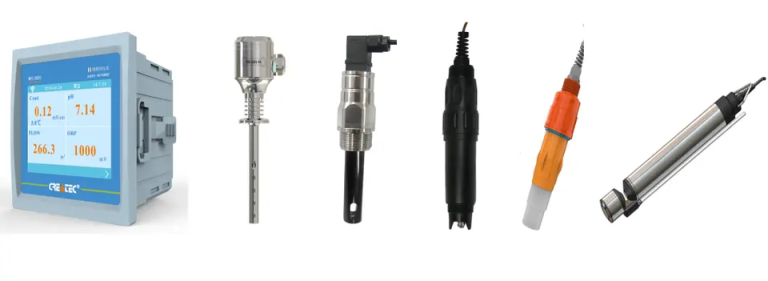
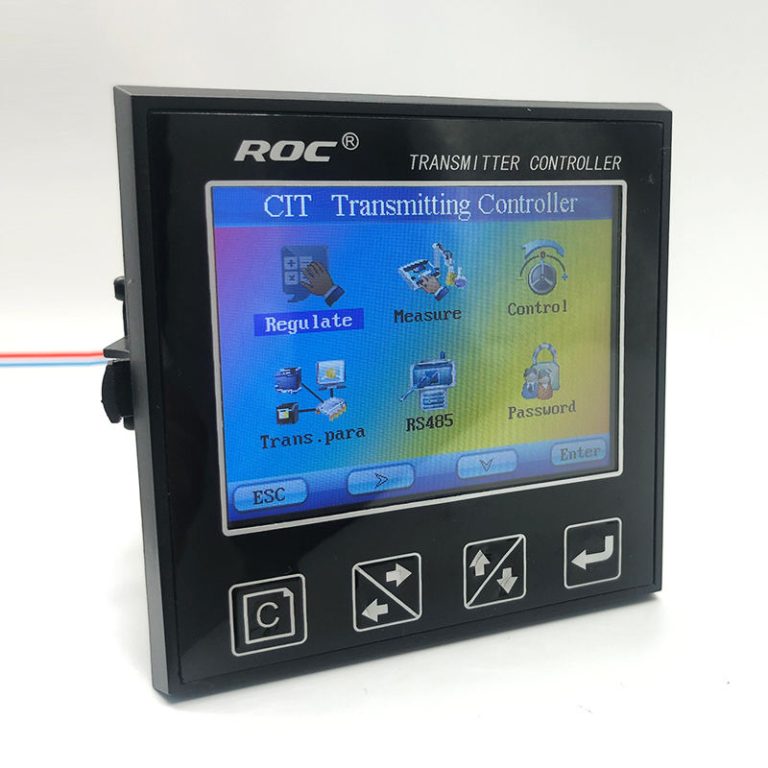
Shanghai ChiMay provides flow metering solutions — including electromagnetic flow meters and ultrasonic sensors — enabling accurate water balance tracking throughout facility operations.
Real-Time Monitoring Integration
Connecting water monitoring to plant systems enables:
- Automated alerts for consumption anomalies
- Trend analysis for optimization opportunities
- Leak detection through imbalance identification
- Regulatory reporting with minimal manual effort
Benchmarking and Goal Setting
Effective conservation requires measurable objectives. The table below is an illustrative target set for a wet-cooled coal station — baselines vary by plant:
| Metric | Baseline | Target | Improvement |
|---|---|---|---|
| Water intensity (gal/MWh) | 500 | 350 | 30% reduction |
| Cooling tower cycles | 4 | 7 | 75% increase |
| Condensate recovery | 85% | 98% | 15% improvement |
| Wastewater reuse | 20% | 60 | 200% increase |
Regulatory Compliance
Discharge Permit Considerations
Water conservation supports compliance with:
- NPDES permits: Discharge limitations on flow and constituents
- Section 316(b) of the Clean Water Act: cooling water intake structures must minimize impingement and entrainment (https://www.epa.gov/316b)
- State water rights: Withdrawal allocation limits
- Local ordinances: Stormwater and sewer use charges
- Sustainability commitments: Corporate environmental goals
Emerging Regulations
Regulatory trends favor water conservation:
- Effluent Limitations Guidelines for the Steam Electric Power Generating category (40 CFR Part 423): EPA’s rulemakings push flue gas desulfurization wastewater toward zero liquid discharge for large plants and tighten bottom ash transport water limits (https://www.epa.gov/eg/steam-electric-power-generating-effluent-guidelines)
- Discharge limitations: Stricter concentration and flow limits
- Water trading markets: Economic incentives for conservation
Closing Note
Water conservation in thermal power generation spans the entire facility, from cooling tower cycles to ash handling. Shanghai ChiMay supports conservation objectives through comprehensive monitoring solutions — including conductivity sensors, flow meters, and water quality analyzers — that provide the visibility and control effective water management depends on. Plants that treat water efficiency as an operating discipline, measured in gallons per MWh and defended by continuous monitoring, are the ones that keep generating through droughts, tight permits, and rising water prices.
Sources: WRI — 47% of World’s Thermal Power Capacity in Highly Water-Stressed Areas (https://www.wri.org/data/47-worlds-thermal-power-capacity-highly-water-stressed-areas); EPA CWA 316(b) (https://www.epa.gov/316b); EPA Steam Electric Effluent Guidelines (https://www.epa.gov/eg/steam-electric-power-generating-effluent-guidelines).