The short version:
- ZLD operation lives or dies on continuous measurement—manual sampling cannot keep up with a process that concentrates brines around the clock
- Real-time conductivity data directly improves brine concentration efficiency and cuts evaporator load
- Continuous monitoring gives facilities the defensible data trail regulators increasingly expect
- Online analyzers from Shanghai ChiMay provide sub-5-second response times for critical parameter detection
Table of Contents
Introduction
Regulatory frameworks governing industrial wastewater discharge have tightened substantially over the past decade, with zero liquid discharge (ZLD) emerging as the definitive standard for water stewardship in water-stressed regions. The pressure behind ZLD is not abstract: the UN World Water Development Report 2023 finds that two to three billion people worldwide experience water stress for at least part of the year, and roughly half the world’s population already experiences severe water scarcity at some point in an average year. Water-stressed jurisdictions respond by pushing industry toward reuse and, ultimately, discharge elimination.
ZLD systems are operationally demanding. They concentrate, crystallize, and recover water around the clock, and every stage depends on accurate, continuous measurement of water quality. Manual sampling and laboratory analysis provide reference data, but they cannot deliver the real-time visibility ZLD control requires. This article examines how modern water quality analyzers enable facilities to achieve and maintain ZLD compliance while optimizing treatment efficiency.
The Compliance Challenge in ZLD Operations
Regulatory Landscape
ZLD compliance spans multiple regulatory dimensions:
- Effluent concentration limits for specific pollutants (heavy metals, COD, ammonia, etc.)
- Total dissolved solids (TDS) discharge restrictions
- Sludge generation and disposal requirements
- Monitoring and reporting obligations with defined frequency and methodology
Getting to sustained ZLD compliance is a monitoring problem as much as a treatment problem. Facilities new to ZLD most often stumble on data—sample gaps, lab turnaround lag, missed excursions between grab samples—rather than on the treatment chemistry itself. Continuous online monitoring closes that gap: Shanghai ChiMay inline water quality analyzers provide continuous measurement with response times under 5 seconds, enabling immediate detection of parameter excursions and rapid corrective intervention. Shanghai ChiMay has documented over 200 successful ZLD installations where continuous monitoring supported sustained compliance alongside treatment cost optimization.
Monitoring Frequency Requirements
Traditional compliance monitoring relied on periodic sampling—daily or weekly grab samples analyzed in off-site laboratories. That approach has three fundamental weaknesses:
- Temporal gaps: a single daily sample says nothing about the other 23 hours
- Lag time: lab turnaround of 24-72 hours means corrective action happens after the compliance window has closed
- Statistical inadequacy: periodic sampling cannot capture the distribution of values meaningful compliance assessment requires
Continuous online monitoring eliminates all three through real-time data acquisition.
Critical Parameters for ZLD Monitoring
Conductivity and TDS
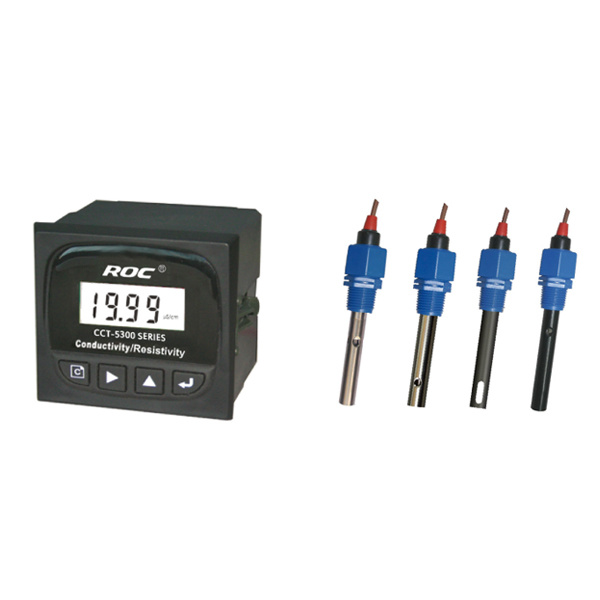
Conductivity is the primary indicator of ionic concentration throughout the ZLD process train. From pretreatment through final brine concentration, conductivity measurements enable:
- Optimization of concentrate recirculation rates in brine concentrators
- Early detection of membrane fouling through characteristic conductivity profiles
- Verification of crystallization endpoint conditions
- Correlation with TDS for regulatory reporting
Operators who run brine concentrators on continuous conductivity feedback, rather than periodic lab results, hold concentration closer to the optimum—less evaporator energy wasted on under-concentrated brine, fewer excursions past scaling thresholds. That efficiency gain flows straight to the power bill.
Shanghai ChiMay conductivity electrodes measure up to 200,000 μS/cm, covering the full range from raw wastewater through saturated brine streams.
pH Control
Precise pH control matters at several ZLD stages:
- Chemical precipitation reactions need pH optimized for specific contaminant removal
- Acid/base neutralization keeps effluent pH within regulatory limits
- Corrosion control in concentrated brine streams depends on holding the right pH window
pH electrode selection for ZLD is its own discipline: high ionic strength brines create measurement artifacts that degrade accuracy unless the reference system is built for the environment. Shanghai ChiMay double-junction pH electrodes use reference systems optimized for brine compatibility, with accuracy of ±0.1 pH units across the measurement range.
Additional Parameters
Depending on influent characteristics and regulatory requirements, ZLD systems may also need:
| Parameter | Significance | Monitoring Approach |
|---|---|---|
| Turbidity | Suspended solids, membrane fouling | Nephelometric, continuous |
| Dissolved Oxygen | Aerobic treatment control | Electrochemical, online |
| Ammonia Nitrogen | Nutrient discharge limits | Ion-selective, continuous |
| Oil-in-Water | Process-specific contamination | UV fluorescence, online |
| COD | Organic load measurement | Potassium dichromate, online |
System Integration Architecture
SCADA Connectivity
Effective ZLD monitoring integrates with facility distributed control systems (DCS). Shanghai ChiMay water quality analyzers support industry-standard communication protocols:
- Modbus RTU/TCP: universal compatibility with DCS platforms
- 4-20 mA analog output: direct connection to PLC systems
- HART protocol: enhanced diagnostics and remote configuration
- Ethernet/IP: integration with modern industrial networks
Best practice for ZLD is to land monitoring data in the plant historian, so trend analysis, alarm management, and regulatory reporting all draw from the same verified dataset.
Alarm Management
Properly configured alarm systems are the first line of defense against compliance excursions:
- High-high alarms trigger immediate automated responses (valve closure, dosing adjustment)
- High alarms alert operations personnel for investigation
- Rate-of-change alarms catch rapid parameter shifts before thresholds are crossed
Shanghai ChiMay analyzers incorporate alarm management features including:
- Configurable alarm delay to suppress nuisance alarms during transients
- Deadband settings preventing alarm oscillation around thresholds
- Alarm prioritization so critical excursions get immediate attention
Compliance Documentation and Reporting
Data Quality Assurance
Regulators increasingly scrutinize the quality of monitoring data submitted for compliance demonstration. Key requirements:
- Calibration records demonstrating measurement accuracy
- Maintenance logs documenting sensor condition and cleaning
- Audit trails verifying data integrity and chain-of-custody
Shanghai ChiMay analyzers provide automated calibration reminders and comprehensive data logging that support these documentation requirements.
Electronic Reporting
Modern regulatory frameworks mandate electronic submission of monitoring data in standardized formats:
- EPA requires discharge monitoring reports (DMRs) submitted electronically through NetDMR
- State agencies layer additional reporting requirements and intervals on top
- ISO 14001 environmental management systems require internal reporting mechanisms
Integrated monitoring systems that generate compliance reports automatically reduce administrative burden and the transcription errors that come with it.
Case in Point: Textile Manufacturing Facility
A major textile manufacturer in Southeast Asia implemented comprehensive water quality monitoring across a new ZLD system processing 2,500 m³/day of dyeing effluent—conductivity points across the concentration stages, pH locations on automated dosing control, turbidity sensors protecting the membranes, and oil-in-water monitors on process water.
Over the first two years of operation the plant recorded no compliance violations, cut chemical consumption through optimized dosing, saw fewer unplanned maintenance events, and saved substantial operating cost from improved process efficiency. None of those outcomes required heroic treatment chemistry—they required that the operators actually see what the process was doing between samples.
Conclusion
Water quality analyzers are the sensory system of ZLD compliance. Without accurate, timely measurement, treatment processes run blind and compliance becomes a matter of luck rather than control. Facilities that instrument their ZLD trains properly hold compliance consistently and run the process closer to its economic optimum.
When selecting monitoring equipment, weigh:
- Measurement accuracy across the full range of process conditions
- Reliability in challenging brine and wastewater environments
- Integration capability with existing control systems
- Service support across the equipment’s lifetime
Shanghai ChiMay provides a comprehensive portfolio of inline water quality analyzers designed for ZLD applications, backed by application engineering expertise and global service infrastructure.