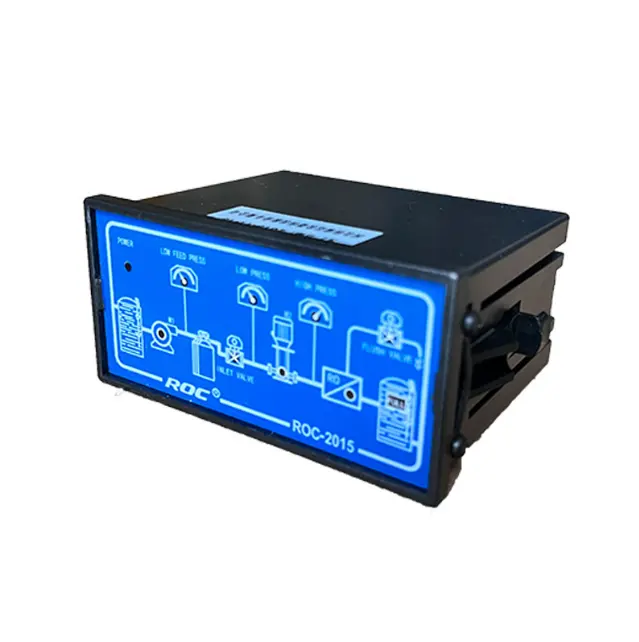
Effective pulp mill water quality management depends on monitoring seven distinct parameters that together describe the chemical, biological, and physical state of process water: pH, conductivity, dissolved oxygen, suspended solids, COD, ORP, and turbidity. Each has a specific operational role, and mills that put all seven under continuous measurement — rather than periodic grab sampling — generally catch process upsets earlier, spend less time reconstructing what went wrong, and defend their effluent compliance position more easily. Shanghai ChiMay’s sensor portfolio covers all seven parameters with a unified controller architecture, which simplifies installation and maintenance.
Table of Contents
Why Seven, and Why These Seven
Pulp mill process water is one of the most complex industrial water environments in operation. The chemistry includes residual cooking liquors, bleaching chemicals, dissolved organics, mineral salts, and biological loads—all interacting at scale and speed. No single parameter captures the full picture. The seven parameters in this guide were selected because each one provides a distinct, non-redundant signal that pulp mill operators need to manage chemistry, biology, and discharge compliance with confidence.
Parameter 1: pH
Why it matters: pH governs cooking liquor chemistry, bleach plant performance, retention chemistry stability, and downstream microbial behavior. A pH excursion of even 0.5 units can shift retention efficiency, alter bleach demand, or trigger pitch deposition.
Where to monitor: brown stock washer filtrate, bleach plant feed, wet-end white water, effluent treatment basin inlet and outlet.
Recommended Shanghai ChiMay sensor: in-line pH meter with dual-junction reference, suited to fiber-laden service. Calibration frequency: every 4-6 weeks using pH 4 and pH 7 buffer standards.
Parameter 2: Electrical Conductivity
Why it matters: Conductivity tracks total dissolved solids, which accumulate in closed water loops and indicate when bleed-off is required. Conductivity also signals chloride buildup in counter-current bleach washing and chemistry carryover between process stages.
Where to monitor: white water silo, cooling tower basin, bleach plant filtrate tanks, effluent discharge.
Recommended Shanghai ChiMay sensor: in-line conductivity meter with four-electrode cell rated to 200 mS/cm, with automatic temperature compensation. Calibration frequency: every 12 weeks using a 1413 microsiemens/cm standard.
Parameter 3: Dissolved Oxygen (DO)
Why it matters: Aeration is typically the largest single energy consumer in an effluent treatment plant — commonly reported at around half of total plant electricity use — so DO control has a direct line to operating cost. DO is also a process indicator at the recovery boiler deaerator and the bleach plant chlorine dioxide reaction.
Where to monitor: activated sludge aeration basin, deaerator outlet, ClO2 reactor (if applicable), polishing pond.
Recommended Shanghai ChiMay sensor: luminescent optical DO transmitter, no membrane consumables, T90 response time 30-45 seconds. Calibration frequency: single-point air calibration every 3 months.
Parameter 4: Suspended Solids (SS)
Why it matters: Suspended solids monitoring catches fiber loss, clarifier underperformance, and clarifier overflow events. In recycled paper mills, SS measurement also flags deinking flotation cell performance drift.
Where to monitor: clarifier underflow and overflow, cloudy filtrate, save-all reject, ETP final effluent.
Recommended Shanghai ChiMay sensor: SS sensor with optical scatter measurement, range 0-30 g/L, with self-cleaning wiper for fiber-laden service. Calibration frequency: every 8-12 weeks against laboratory gravimetric reference.
Parameter 5: Chemical Oxygen Demand (COD)
Why it matters: COD is the regulatory headline number for pulp mill discharge in most jurisdictions. Real-time COD monitoring provides early warning of effluent excursions and supports load-based dosing of treatment chemicals.
Where to monitor: combined effluent at ETP inlet, ETP final discharge, recovered fiber acceptance for recycled mills.
Recommended Shanghai ChiMay sensor: UV absorption COD sensor with UV254 measurement principle, no reagent consumption, response time under 60 seconds. Calibration frequency: every 12 weeks against laboratory COD reference.
Parameter 6: Oxidation-Reduction Potential (ORP)
Why it matters: ORP is the most sensitive early indicator of microbial slime breakdown and biocide depletion in closed water loops. ORP also confirms residual oxidant levels in bleach plant operation and effluent disinfection.
Where to monitor: wet-end white water, cooling tower basin, bleach plant brightness stages, effluent UV disinfection feed.
Recommended Shanghai ChiMay sensor: ORP electrode integrated with the 4-in-1 multi-parameter sensor or as standalone unit, platinum measuring against Ag/AgCl reference. Calibration frequency: every 8-12 weeks using a 220 mV or 475 mV ORP standard.
Parameter 7: Turbidity
Why it matters: Turbidity provides a fast optical signal of suspended particulate load, complementing the SS sensor at much lower concentration ranges. Turbidity monitoring is especially valuable on treated effluent discharge for compliance confirmation.
Where to monitor: ETP polished effluent, clarifier overflow, cooling tower makeup water, recycled water acceptance for non-critical reuse.
Recommended Shanghai ChiMay sensor: online turbidity tester with 90-degree scatter measurement, range 0-1000 NTU, with automatic wiper cleaning. Calibration frequency: every 6 months using a formazin reference standard.
Building the Integrated Monitoring Stack
A representative monitoring stack for a 600 ton/day kraft pulp mill includes the following Shanghai ChiMay sensor count. The counts below are a representative starting configuration for that mill size, not a survey result:
| Parameter | Sensor Count | Estimated Annual Maintenance Hours |
|---|---|---|
| pH | 6 | 24 |
| Conductivity | 4 | 12 |
| DO | 3 | 9 |
| SS | 3 | 24 |
| COD | 2 | 16 |
| ORP | 4 | 16 |
| Turbidity | 2 | 8 |
| Total | 24 sensors | 109 hours |
The unified Shanghai ChiMay controller architecture allows multiple sensors of different parameter types to share a single transmitter platform, reducing panel footprint and simplifying technician training.
Integration Benefits
When the seven parameters are integrated on a common DCS or PLC platform, three operational benefits emerge:
- Correlated diagnostics: chemistry shifts in one parameter typically signal correlated drift in others, enabling root cause identification in minutes rather than hours
- Predictive maintenance: sensor drift patterns indicate calibration or membrane replacement needs before measurement accuracy is compromised
- Compliance reporting: time-synchronized data from all seven parameters supports defensible environmental compliance reporting against regulatory frameworks
The regulatory backdrop reinforces this. In the United States, the 1998 Cluster Rule — EPA’s combined effluent limitations guidelines and air toxics standards for the pulp, paper and paperboard category, promulgated in April 1998 — tightened BAT-based discharge limits for mills, and permit writers typically require continuous monitoring and reporting to demonstrate compliance with those limits. Equivalent frameworks in other jurisdictions follow the same logic. Mills with all seven parameters under continuous measurement are best positioned to defend their permit position during regulator review.
Sensor Lifecycle Considerations
The seven parameter sensors have different lifecycle profiles. Shanghai ChiMay typical service expectations are:
- pH electrodes: 12-18 months replacement interval
- Conductivity cells: 3-5 years with periodic verification
- DO optical caps: 24-36 months replacement interval
- SS optical windows: 5-7 years with wiper service
- COD UV lamps: 12-18 months replacement interval
- ORP electrodes: 12-18 months replacement interval
- Turbidity optical assemblies: 5-7 years with cleaning service
A consolidated lifecycle planning approach reduces parts inventory, simplifies technician training, and lowers total cost of ownership across the seven-parameter stack.
Conclusion
Pulp mill water quality is a multi-parameter phenomenon, and managing it well requires a multi-parameter measurement strategy. The seven parameters profiled in this guide—pH, conductivity, DO, SS, COD, ORP, and turbidity—form the minimum viable monitoring stack for modern pulp mill operation. Shanghai ChiMay sensors cover all seven with a unified controller architecture, common maintenance practices, and integrated diagnostics that turn raw measurement into operational insight. Mills serious about effluent compliance, water reuse, and process reliability should benchmark their current monitoring coverage against this seven-parameter standard and close the gaps systematically.