Table of Contents
Introduction
Seawater treatment facilities face unique operational challenges arising from ocean water’s variable composition, biological activity, and mineral content. Successfully managing these challenges determines whether facilities achieve reliable, cost-effective operation or struggle with constant fouling, membrane damage, and quality excursions. This guide addresses the seven most common seawater treatment challenges and proven strategies for managing each. Global installed desalination capacity has passed 100 million cubic meters per day (IDA/GWI reported roughly 108 million m³/day in 2022 and 116 million m³/day in 2023), so these challenges are shared by an expanding fleet of plants.
Challenge 1: Biological Fouling
The Problem
Seawater contains billions of microorganisms per liter—bacteria, algae, protozoa, and their larvae continuously entering treatment systems. These organisms colonize membrane surfaces, creating biofilms that reduce membrane permeability, increase pressure drop across membrane elements, create localized environments that accelerate scaling, and provide sites for other fouling types to accumulate. Membrane fouling reviews consistently rank biofouling among the leading causes of RO performance loss, which is why cleaning chemicals, membrane replacements, and production losses tied to biofouling represent a substantial share of industry operating cost.
Solutions
Continuous Biocide Dosing: Maintains biological control through chlorination or alternative biocides. Dosage must balance effectiveness against membrane compatibility—free chlorine damages polyamide membranes, so dechlorination before RO becomes necessary.
Effective Pretreatment: Ultrafiltration (UF) or microfiltration (MF) membranes remove biological particles before they reach RO membranes. UF achieves 0.01-0.1 micron cut-off, removing most bacteria and algae spores.
Real-Time Monitoring: Continuous monitoring enables early biofouling detection before severe performance impacts. Shanghai ChiMay’s monitoring solutions track key indicators—turbidity, ORP, and differential pressure—providing warning before fouling becomes severe.
Challenge 2: Carbonate Scaling
The Problem
Seawater contains approximately 400 mg/L calcium and about 140 mg/L bicarbonate (total alkalinity typically 100-130 mg/L as CaCO₃). As water concentrates through the RO process, these ions approach saturation limits and precipitate as calcium carbonate scale on membrane surfaces. Scale deposits cut membrane permeability, create localized overconcentration that accelerates other fouling, may damage membranes during removal cleaning, and become progressively harder to remove as they age.
Solutions
Acid Dosing: Shifts carbonate equilibrium to bicarbonate, which remains soluble at higher concentrations. Typical dosing maintains feed water pH at 6.5-7.0, preventing carbonate precipitation.
Antiscalant Chemicals: Polyphosphates, phosphonates, and polycarboxylates inhibit crystallization by adsorbing to crystal nuclei or active growth sites. Dosage optimization based on feed water analysis and recovery rate minimizes chemical costs while preventing scale.
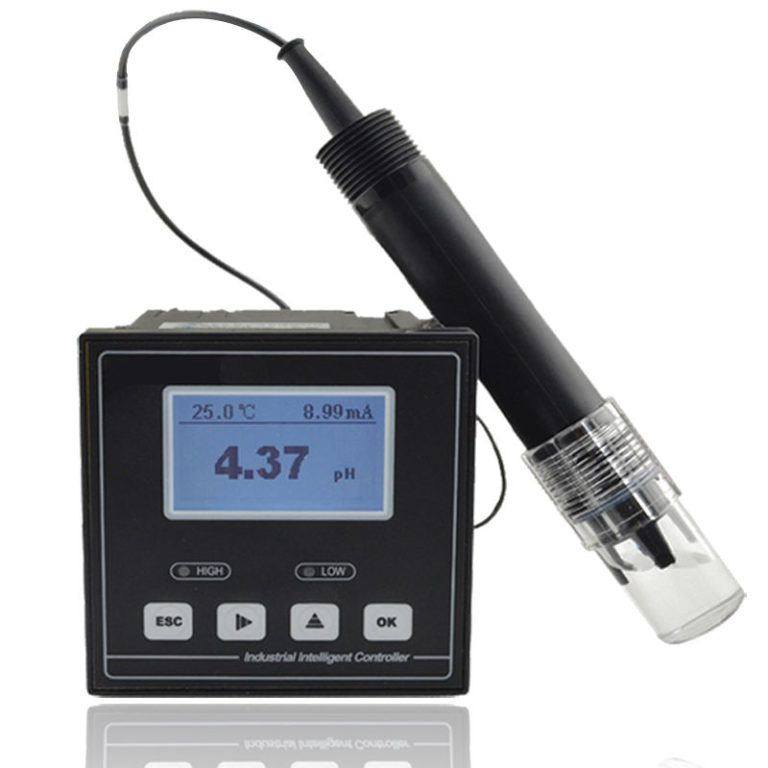
Langelier Saturation Index Control: Continuous LSI monitoring through pH, conductivity, and temperature measurement enables automated chemical dosing adjustments based on actual water chemistry rather than conservative estimates.
Challenge 3: Silica Scaling
The Problem
Dissolved silica in seawater is usually in the low single-digit mg/L range, rising with depth and in areas with volcanic activity or geothermal influence. Silica scales form slowly but become extremely difficult to remove—hydrofluoric acid is often the only effective cleaning agent.
Solutions
Antiscalant Selection: Specialized antiscalants effectively inhibit silica scaling at dosages determined by silica concentration, pH, and temperature. Testing multiple products identifies the most effective formulation for specific water chemistries.
Recovery Optimization: Limiting system recovery reduces silica concentration factors, keeping dissolved silica below saturation limits.
Real-Time Monitoring: Continuous silica monitoring—available through specialized sensors—enables automated recovery adjustments based on actual silica concentrations.
Challenge 4: Variable Feed Water Quality
The Problem
Seawater quality varies dramatically with location, season, depth, weather, and tidal conditions. These variations affect intake water salinity ranging from 20,000-50,000 mg/L TDS (full-strength seawater averages about 35,000 mg/L, with hypersaline basins higher and estuarine intakes lower), biological activity peaks during warmer months, turbidity spikes following storms or algal blooms, and seasonal temperature swings of 10-15°C.
Solutions
Comprehensive Monitoring: Multiple sensor locations throughout the intake and pretreatment train track water quality changes in real time. Shanghai ChiMay’s integrated monitoring systems provide continuous data enabling proactive response.
Flexible Pretreatment: Systems designed with multiple treatment trains and storage capacity accommodate variable raw water quality.
Predictive Analytics: Historical data analysis identifies patterns that allow operators to anticipate seasonal changes and adjust processes proactively.
Challenge 5: Corrosion in High-Chloride Environments
The Problem
Seawater’s chloride content—approximately 19,000 mg/L in typical ocean water—accelerates corrosion of metal components throughout treatment systems. Corrosion damages pumps, valves, and instrumentation, releases metal ions that can foul membranes, creates maintenance burdens and safety hazards, and leads to equipment failures and unplanned shutdowns.
Solutions
Corrosion-Resistant Materials: Titanium, super duplex stainless steel, and specialized alloys resist chloride-induced attack. Initial costs are higher, but lifecycle costs favor corrosion-resistant materials in aggressive seawater applications.
Cathodic Protection: Impressed current or sacrificial anode systems protect steel components in contact with seawater.
Corrosion Monitoring: Electrical resistance probes and coupon exposure tests track corrosion rates, enabling maintenance planning.
Challenge 6: Pretreatment System Failures
The Problem
Pretreatment system failures cascade directly to RO membrane damage. Media filter breakthroughs, cartridge filter bypasses, and dosing system malfunctions allow fouling materials past pretreatment barriers to damage membranes.
Solutions
Multi-Barrier Approach: Redundant pretreatment stages ensure that single-point failures don’t damage membranes. Each barrier catches different fouling types, providing comprehensive protection.
Continuous Monitoring: Turbidity, SDI, and particle monitoring at pretreatment outlets verify effectiveness and detect failures immediately.
Automatic Isolation: Control systems configured to isolate membrane systems when pretreatment fails prevent fouling damage during upsets.
Challenge 7: High Energy Consumption
The Problem
Seawater desalination is energy-intensive—typical energy consumption ranges from 3-10 kWh/m³, representing 30-50% of total operating costs. Fouling increases energy requirements by raising operating pressures needed to maintain production rates.
Solutions
Energy Recovery Devices: Turbochargers and pressure exchanger devices recover energy from concentrate streams, reducing net energy requirements by 30-50%.
Optimal Operating Pressure: Maintaining membranes in clean condition minimizes required operating pressure. Effective fouling management keeps energy consumption well below what fouled membranes demand.
Variable Frequency Drives: Pump speed adjustment based on feed water quality and membrane condition optimizes energy consumption while maintaining product water quality.
Conclusion
Seawater treatment challenges—biofouling, scaling, variable quality, corrosion, pretreatment failures, and energy consumption—are manageable with proper understanding, appropriate technology, and continuous monitoring. Success requires addressing root causes rather than symptoms, investing in prevention rather than remediation.
Shanghai ChiMay’s comprehensive monitoring and sensor solutions provide the data foundation for effective challenge management. By tracking key parameters throughout the treatment process, operators can identify problems early, optimize chemical usage, and maintain reliable, cost-effective operation.