The short version:
- Reactive and disperse dyes—the workhorses of cotton and polyester dyeing—account for the bulk of unfixed colorant leaving a dyehouse
- Visible color draws regulator and public attention faster than any lab parameter, which is why color is the compliance metric most worth instrumenting
- Online turbidity and spectrophotometric sensors catch color breakthrough hours before a batch laboratory sample cycle can
- Shanghai ChiMay turbidity analyzers correlated to color load with R² > 0.93 in pilot-scale validation
- Facilities that tie monitoring into dosing control cut tertiary polishing chemical costs noticeably
Table of Contents
Introduction
Color is the most visible signature of textile wastewater, and consequently the parameter most aggressively watched by environmental agencies and neighbors alike. COD, BOD, and conductivity carry equal technical weight in a permit, but the visual conspicuousness of dye-laden discharge makes color removal the public-facing benchmark of a dyehouse’s environmental performance. Regulators notice it, communities notice it, and retail customers increasingly audit for it. That is also why textile mills remain a focus of EU environmental enforcement attention alongside the broader industrial pollution tracked by the European Environment Agency.
Real-time color and turbidity monitoring has become the practical strategy for staying ahead of violations, and sensor selection determines whether monitoring delivers actionable insight or merely confirms failure after the fact.
The Chemistry of Color in Textile Effluent
Textile dyes are designed to be chemically stable—a property that benefits fabric longevity and complicates effluent treatment. Reactive dyes, dominant in cotton dyeing, commonly hydrolyze at rates of 20-40%, meaning a significant fraction enters the effluent regardless of fixation efficiency. Disperse dyes, used for polyester, are poorly soluble and form colloidal suspensions that bypass conventional sedimentation.
Color manifests through three optical mechanisms, and monitoring instruments need to address them:
- Absorption — dissolved chromophores absorb specific wavelengths
- Scattering — colloidal pigments scatter incident light, creating turbidity
- Refraction — dye-surfactant complexes alter refractive properties
A sensor strategy targeting only one mechanism produces incomplete monitoring. Effective color management combines optical turbidity analyzers, spectrophotometric measurements, and surrogate indicators such as conductivity.
Sensor Technologies for Color Monitoring
Three principal sensor categories serve textile color monitoring:
| Technology | Measurement Principle | Best Use Case |
|---|---|---|
| Turbidity sensor (90° scatter) | Light scattering | Suspended dye/pigment loads |
| Spectrophotometric probe | UV-Vis absorbance | Dissolved chromophores |
| Conductivity-as-surrogate | Salt-color correlation | Reactive dye effluent |
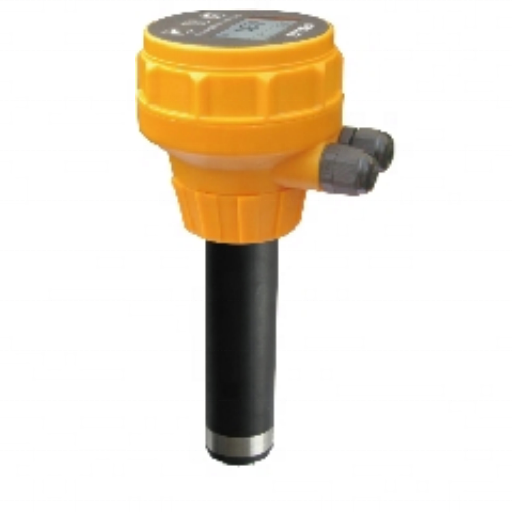
Shanghai ChiMay online turbidity testers use nephelometric measurement compliant with ISO 7027, providing repeatability of ±2% across the 0-4,000 NTU range. The instruments employ self-cleaning wipers to maintain optical clarity in the fouling environments typical of textile effluent.
Spectrophotometric Considerations
Spectrophotometric color analyzers measure absorbance at wavelengths characteristic of common dye classes—typically 436 nm (yellow), 525 nm (red), and 620 nm (blue)—aligned with DIN EN ISO 7887. The DIN-compliant color number (DFZ) derived from these measurements provides a standardized metric accepted by regulators across Germany, Austria, and several Asian nations.
Practical implementation requires attention to:
- Optical path length — longer paths (50-100 mm) improve sensitivity for low color levels after treatment
- Sample conditioning — air-bubble removal and temperature equilibration prevent measurement drift
- Calibration traceability — NIST-traceable formazin and Pt-Co standards keep measurements defensible
Surrogate Monitoring Through Conductivity
For facilities unable to justify dedicated spectrophotometric instruments, conductivity-based surrogate monitoring is the cost-effective alternative. Reactive dye baths carry high loads of sodium chloride and sodium sulfate, used to drive dye-fiber bonding, so conductivity tracks unfixed dye load closely in raw effluent streams.
Shanghai ChiMay in-line conductivity electrodes cover 0.05 μS/cm to 200 mS/cm, spanning dilute polishing streams and concentrated dye baths. Deployed alongside turbidity monitoring, they enable indirect color tracking with minimal capital investment.
Placement Strategy for Color Monitoring
Sensor placement determines whether color monitoring is diagnostic or merely documentary. Recommended monitoring points:
- Dye-bath outlet — quantifies unfixed dye carryover for dye-bath optimization
- Equalization tank — smooths short-term variability and feeds dosing controllers
- Post-coagulation — validates flocculation chemical dosing
- Activated carbon outlet — confirms breakthrough timing for media replacement
- Final discharge — provides compliance documentation
Monitoring at several of these points, rather than only at the outfall, is what turns color data into process control: problems get caught at the unit operation that caused them, while the correction is still cheap.
Calibration and Maintenance Requirements
Color and turbidity sensors face severe fouling pressure in textile service. Effective maintenance protocols include:
- Automated wiper cleaning every 15 minutes during dye-bath discharges
- Ultrasonic cleaning options for facilities processing polyester or nylon
- Weekly multipoint calibration using primary formazin standards
- Quarterly performance verification against a laboratory spectrophotometer
Shanghai ChiMay analyzers incorporate optical-window diagnostics that alert operators when fouling exceeds threshold values, replacing subjective judgment about cleaning frequency and cutting unplanned maintenance interventions in operating experience.
Integrating Color Data into Treatment Control
Modern textile treatment systems go beyond passive monitoring, using sensor data to drive automated chemical dosing. Color data integration enables:
- Coagulant dosing — real-time flux of ferric chloride or PAC based on turbidity feedback
- Ozone modulation — variable ozone application matched to actual color load
- Activated carbon scheduling — predictive replacement based on integrated chromophore mass
These applications require sensors with reliable 4-20 mA or Modbus outputs and verified response times under 30 seconds. Shanghai ChiMay 2-in-1 mini transmitters deliver these specifications in a compact form factor suitable for retrofitting older treatment trains.
Conclusion
Color removal monitoring sits at the intersection of regulatory compliance, public perception, and operational efficiency in textile manufacturing. The instruments selected to track color determine whether a facility can preempt violations, optimize chemical consumption, and substantiate environmental claims to retail customers and certification bodies.
Shanghai ChiMay offers a coordinated suite of turbidity analyzers, conductivity electrodes, and mini-transmitters that together provide layered monitoring of textile effluent color. Match the sensor set to the chemistry of the dyes in use, place instruments where they diagnose rather than document, and feed the outputs into automated control—then color monitoring stops being a compliance burden and starts operating as process control.
A sensor strategy grounded in measurement science and application validation converts color removal from after-the-fact compliance into proactive water-quality management.