Industry Application · Decision-Maker Perspective · Published: October 14, 2026
Table of Contents
Key Takeaways
- In a sequencing batch reactor (SBR), equalization, biological treatment and clarification all happen in one tank on a timed clock. Every phase boundary is a valve command, so valve reliability becomes process reliability.
- A standard SBR cycle runs 4–8 hours, typically split into fill (0.5–2 h), react (1.5–4 h), settle (0.5–1.5 h), decant (0.25–1 h) and idle (0.25–1 h) [2].
- At six cycles per day, a single basin issues roughly two dozen open-close commands per day across its influent, aeration and decant valves — on the order of 9,000 valve operations per year, before sludge wasting is counted.
- The process only became practical once programmable logic controllers, level sensors and automatically operated valves were widely available in the late 1970s. Automated valves still switch basins between aerate, settle and decant modes today [4].
- Pneumatic actuator piston assemblies typically need seal-kit service every 250,000–500,000 cycles, while quality electric actuators carry motor service-life ratings of about 15 years [6]. Both figures belong in your spares calculation.
- The decanter valve is the least forgiving duty in the basin: early decanters with drilled ports clogged with solids and then discharged them into the effluent at the start of each decant [5].
Why an SBR Is, Functionally, a Valve Sequencing Problem
The defining feature of a sequencing batch reactor is temporal separation. Per the US EPA’s technology fact sheet, SBR operation follows the fill-and-draw principle through five basic steps — idle, fill, react, settle and draw — all in a single basin [1]. Equalization, aeration, clarification and even sludge storage rotate through the same concrete. Against a continuous-flow train, that consolidation roughly halves the required tankage and eliminates return-sludge pumping entirely [4].
Automation is what makes the concept work at all. Fill-and-draw treatment sat on paper for decades; it became practical only when programmable logic controllers, level sensors and automatically operated valves reached the market in the late 1970s. The controller runs the cycle timing, level sensors confirm each stage transition, and automated valves switch the basin between aerate, settle and decant [4]. Strip out the valve package and an SBR is just a very expensive holding pond. That reframes procurement: in an SBR plant you are not buying tanks with some valves attached. You are buying a valve-and-actuator scheduling system with some concrete attached.
The timing of the cycle sets the duty. A typical SBR cycle lasts 4 to 8 hours [2]. Within it, fill commonly runs 0.5–2 hours, react 1.5–4, settle 0.5–1.5, decant 0.25–1 and idle 0.25–1 [2]. React is the flexible phase: its share can vary from near zero to more than half the total cycle, and while aeration can be as short as 15 minutes when only carbonaceous removal is needed, periods of 4 hours or more are normally required for long-term process stability and nitrification [3]. Every one of those timing decisions ends up as open, close or throttle commands issued to valves — thousands of times per year.
The Valve Map: What Actually Cycles
Each phase leans on a different subset of the valve package. Influent valves admit the batch; blower isolation and air-grid valves deliver aeration through react; nothing moves during settle, which is deliberately quiescent; the decanter actuator or withdrawal valve removes the clarified supernatant; and the waste-sludge valve bleeds excess biomass during idle or react. The table below summarizes the duty.
| SBR phase | Valves in play | Action frequency | What the valve must do |
|---|---|---|---|
| Fill | Actuated influent valve(s) | 1 open + 1 close per cycle | Time- or level-triggered; bubble-tight shutoff; staged or modulating flow into the basin |
| React / aerate | Blower isolation and air-grid control valves | Staged or modulated throughout the phase | Precise throttling without hunting; tolerant of warm, humid process air |
| Settle | None (quiescent period) | Zero | Ideal window for feedback checks and planned maintenance |
| Decant | Decanter actuator / effluent withdrawal valve | 1 open + 1 close per cycle, slow | Gentle opening to avoid solids pull-through; drip-tight closure for the rest of the cycle |
| Idle / sludge wasting | Waste-activated-sludge valve | Typically once per day or less | Short, repeatable strokes; positive isolation for downstream handling |
Now do the arithmetic that procurement usually skips. Taking the short end of the published cycle range — 4 to 8 hours [2] — a basin running six cycles per day commands its influent valve twelve times and its decant valve twelve times, and modulates aeration in between. That is roughly two dozen discrete open-close strokes per day, on the order of 9,000 operations per year for the basin’s switching valves alone, before a single sludge-wasting stroke is counted. Most SBR installations run several basins in staggered sequence, so the plant-wide count multiplies accordingly. A valve that would be flawless at ten strokes a year is being asked here to do in one week what many process valves do in a year.
Actuators: Matching the Machine to the Duty Count
The action count drives the actuator decision. Pneumatic rack-and-pinion actuators remain the default for fast on-off duties: simple, tolerant of dirty environments, available in spring-return versions that move to a defined safe position on loss of air. Their maintenance rhythm is the number to plan around — pneumatic piston assemblies commonly require seal-kit replacement every 250,000 to 500,000 cycles to hold pressure integrity [6]. At SBR stroke counts that interval is measured in years, not decades, and a seal-kit inventory is cheap insurance.
Electric actuators trade speed for control and diagnostics. A quality electric actuator motor is rated for roughly 15 years of service in moderate conditions [6], and the slower, torque-limited motion of an electric drive is actually an advantage on decanter service, where a fast stroke would disturb the settled sludge blanket. Many plants end up with a mixed architecture: pneumatic on influent and air valves where speed and fail-safe matter, electric on decanters where slowness and position resolution matter. What matters most is that the actuator is specified against the cycle count, not against the line size alone.
The Decanter Valve: Slow, Quiet, and Unforgiving
Decanting is where SBR valve duty gets specialized. Early decanters were simply pipes with drilled holes along the bottom and sides; during fill, react and settle those holes plugged with solids, which were then discharged into the effluent at the beginning of the next decant [5]. The industry’s answer was the solids-excluding decanter, and the mechanisms that keep the effluent path sealed until decant begins are essentially valve problems: fixed decanters that stay air-filled until the withdraw phase, decanters mechanically closed by a hydraulic or electric motor, spring-loaded solids-excluding valves opened by hydraulic differential, and removable decanter pipes [5].
The specifying consequences are concrete. A decanter valve must open slowly and predictably — typically limited to modest weir loadings, so the clear supernatant is withdrawn without pulling the settled sludge interface upward. It must close drip-tight and hold for the majority of the cycle. And it must report its position to the controller, so the PLC knows whether decant is actually happening or merely scheduled. Low speed, high stakes — it deserves the same engineering attention a control-valve seat gets elsewhere in the plant.
Failure Modes: When One Valve Stops the Train
In a continuous-flow plant, a stuck valve degrades one unit process. In an SBR, the same fault can stall the whole batch clock. The failure modes worth thinking through:
- Decanter fails open or leaks. Settling is compromised in real time; solids carry into the effluent decant, and the basin may need a re-settle cycle that delays the entire staggered sequence.
- Influent valve fails to close. The basin keeps filling through react, settle and decant, quietly destroying the volume balance the cycle was designed around.
- Aeration valve sticks. Dissolved oxygen drifts out of range; under-aeration risks nitrification loss, over-aeration wastes blower energy and can shear the floc.
- Waste-sludge valve blocks. Solids retention time drifts, and the plant discovers the problem days later in the effluent data.
Mitigation is architectural, not heroic. Every critical valve should feed position feedback to the PLC, so an unacknowledged command becomes an alarm rather than a surprise at decant. Staggered basins provide operational redundancy, and the settle and idle windows — the phases when the basin’s valves are silent — are the natural slots for exercising standby valves and confirming stroke times. Seal kits and spare actuators should be stocked against the duty count calculated above, sized around the published service intervals [6].
Specifying for the Cycle: A Shortlist for Decision-Makers
- Rate for cycles, not just pressure. Ask for cycle-life ratings and seal design, not only size and flange class.
- Define fail-safe positions per valve. A decanter that fails closed is a nuisance; an influent valve that fails open is a flood. Decide each one deliberately.
- Demand position feedback on every cycle-critical valve. The batch clock is only as honest as its confirmation signals.
- Plan spares around the seal kit. Match the inventory to the published 250,000–500,000-cycle service interval [6] and your calculated stroke count.
- Buy published data. Cycle ratings, torque curves and flow coefficients should be in the datasheet, not behind a sales call — we publish the numbers other suppliers make you ask for.
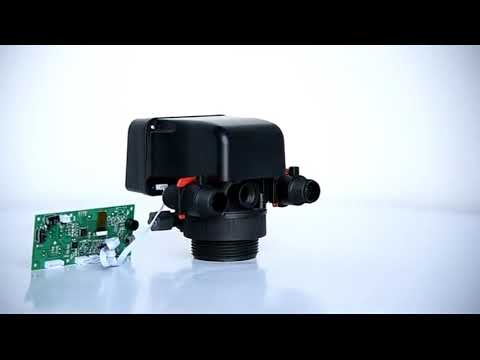
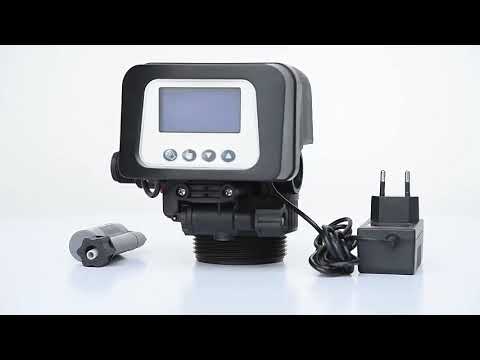
Shanghai ChiMay builds integrated softening and filtration control valves and automated valve platforms for industrial water treatment, and the same lesson keeps repeating across high-cycle duties: long-cycle mechanical design, transparent specifications and honest maintenance intervals are what keep automated trains running. If your SBR retrofit or new biological train is being scheduled around a valve package, make the valve vendor defend those three things in writing.
References
- US EPA — Wastewater Technology Fact Sheet: Sequencing Batch Reactors. Defines the five-step fill-and-draw cycle (idle, fill, react, settle, draw) and industrial design considerations. https://www.epa.gov/system/files/documents/2022-10/sequencing-batch-reactors-factsheet.pdf
- Team One Biotech — SBR cycle-time guidance. Typical total cycle 4–8 h with phase allocations: fill 0.5–2 h, react 1.5–4 h, settle 0.5–1.5 h, decant 0.25–1 h, idle 0.25–1 h. https://www.teamonebiotech.com/2025/03
- Encyclopedia of Life Support Systems (EOLSS) — Sequencing Batch Reactors: Principles, Design/Operation and Case Studies. React-phase share of the cycle and aeration duration required for long-term stability and nitrification. https://www.eolss.net/Sample-Chapters/C07/E6-144-11.pdf
- Build & Construct — Types of Activated Sludge Processes. SBR practicality tied to PLCs, level sensors and automatically operated valves (late 1970s); tankage roughly halved versus continuous systems. https://build-construct.com/water-resources/types-of-activated-sludge-processes-plug-flow-complete-mix-and-sequencing-batch-reactors
- Michael H. Gerardi — Troubleshooting the Sequencing Batch Reactor. History and types of solids-excluding decanters, including motor-closed and spring-loaded designs. http://ndl.ethernet.edu.et/bitstream/123456789/37833/1/Michael%20H%20Gerardi_2010.pdf
- OG Valves — Pneumatic vs Electric Actuators: A Technical Comparison. Pneumatic piston seal-kit replacement every 250,000–500,000 cycles; electric motor service life about 15 years. https://www.ogvalves.com/pneumatic-vs-electric-actuators-a-technical-comparison-for-industrial-valve-systems/
About the author: Written by the Shanghai ChiMay Technical Editorial Team — engineers focused on control valve design, actuation and lifecycle support for industrial water treatment applications.