China’s 15th Five-Year Plan (2026–2030) commits approximately ¥5 trillion ($700 billion) to construct and renovate 770,000 kilometers of urban underground pipelines — the largest water infrastructure program any single nation has undertaken. For utilities commissioning new or replaced water mains, continuous in-line conductivity monitoring has become the practical method for verifying delivered water meets Total Dissolved Solids (TDS) requirements before service connection. Shanghai ChiMay’s in-line conductivity meters provide real-time ionic data across a network where grab sampling cannot keep up, producing compliance evidence from the first day each segment enters operation. This procurement guide covers the technical specifications, cost justification, and supply chain considerations utility engineering and procurement teams should weigh as the pipeline program moves through its first full year of construction.
Table of Contents
The Scale: 770,000 Kilometers Across Five Years
MOHURD detailed the pipeline program in its September 18, 2026 press conference. The breakdown by pipeline type shows where water quality monitoring demand concentrates:
| Pipeline Category | Length (km) | Share | Primary Monitoring Parameters |
|---|---|---|---|
| Gas distribution | ~200,000 | 26% | Safety sensors |
| Storm drainage | ~175,000 | 23% | Effluent quality, flow rate |
| Drinking water mains | ~175,000 | 23% | TDS, pH, residual chlorine |
| Sewage collection | ~100,000 | 13% | COD, suspended solids, pH |
| District heating | ~120,000 | 15% | Corrosion chemistry, conductivity |
| Total | ~770,000 | 100% | Multi-parameter inline monitoring |
The drinking water and sewage segments alone — 275,000 km — translate directly into demand for conductivity, pH, turbidity, and chlorine instruments. As of end-2025, China’s total urban underground pipeline network stood at 3.86 million kilometers with 7,872 kilometers of underground comprehensive pipe galleries. This program adds or replaces roughly 20 percent of the entire urban network in five years.
Funding runs through dual channels: ¥160 billion in 2026 ultra-long special treasury bonds (¥25 billion above the prior year) plus ¥97 billion in central budget investment for urban renewal. Qualifying projects can receive central funding covering up to 70 percent of approved total investment — which is why deployment incentives point toward speed.
Why Conductivity Monitoring Is Non-Negotiable for New Pipeline Commissioning
The Commissioning Challenge
When new ductile iron, polyethylene, or steel water mains are installed, commissioning must verify water quality meets GB 5749-2022 standards before the segment connects to the live distribution network. Three stages: flush at high velocity to remove construction debris, disinfect with chlorinated water to sterilize interior surfaces, verify water quality parameters at the outlet before service connection.
Conductivity monitoring during flushing gives immediate feedback on when construction residues — joint compounds, coating materials, sediment entrained during installation — have cleared. Rising readings mean dissolved ionic material is still coming out; declining readings confirm flushing is doing its job.
The Limitation of Grab Sampling
Traditional grab sampling builds in 24–72 hours between collection and results. Operators cannot confirm stabilization or decide whether more flushing is needed until the lab calls back. For a program installing hundreds of kilometers of new pipe annually, that delay compounds into real scheduling waste — crews idle waiting on lab results instead of moving to the next commissioning stage.
The Continuous Monitoring Advantage
In-line conductivity monitoring removes the delay entirely. Operators watch real-time conductivity trends on SCADA displays and know exactly when flushing has achieved clean conditions and the pipe is ready to connect. One sensor generating data every minute replaces hundreds of individual grab samples — each with its own labor, transport, consumables, and lab fees attached.
Technical Specifications for Pipeline Deployment
Measurement Configuration Options
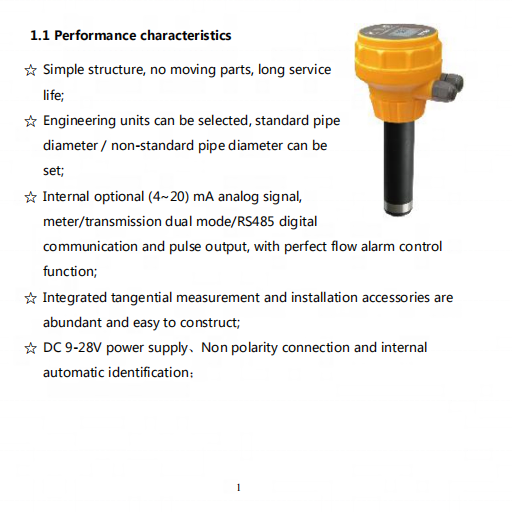
Shanghai ChiMay in-line conductivity meters come in two-electrode and four-electrode configurations:
- Two-electrode: Suited to clean water applications below 2,000 µS/cm. Lower cost point, simpler installation. Ideal for treated water distribution monitoring.
- Four-electrode: Eliminates polarization errors in higher-conductivity water. Essential for source water monitoring and commissioning phases, where residual ionic content can temporarily exceed normal operating ranges.
For pipeline commissioning specifically, the four-electrode configuration provides wider measurement margin during initial flushing, when conductivity spikes as construction residues dissolve.
Temperature Compensation and Environmental Resilience
All conductivity measurements are temperature-dependent — a fact that becomes critical when monitoring points span regions with vastly different ground temperatures. Shanghai ChiMay instruments carry platinum RTD temperature sensors with automatic temperature compensation (ATC) across the full 0–80°C range, so accuracy holds regardless of seasonal variation or burial depth.
The IP68-rated sensor housing withstands continuous submersion in valve chambers and metering pits, while ceramic-endface sealing resists abrasion from suspended particles during initial flushing.
Digital Communication for SCADA Integration
All Shanghai ChiMay conductivity meters support Modbus RTU (RS-485) and Modbus TCP/IP, connecting directly to utility SCADA with no signal conversion hardware. That connectivity serves the pipeline program’s smart management emphasis, where real-time data from distributed monitoring points feeds centralized platforms for utility-wide visibility.
The Total Cost of Ownership Case
For procurement teams comparing options, the five-year TCO comparison tends to decide the case. Illustrative figures for a 50 km deployment:
| Cost Category | Grab Sampling (5-yr, 50 km) | In-Line Monitoring (5-yr, 50 km) |
|---|---|---|
| Equipment | ¥15,000 | ¥180,000 |
| Sampling labor | ¥425,000 | ¥0 |
| Laboratory analysis | ¥600,000 | ¥0 |
| Transport logistics | ¥225,000 | ¥0 |
| Installation | ¥5,000 | ¥25,000 |
| Calibration/maintenance | ¥10,000 | ¥35,000 |
| 5-Year Total | ¥1,280,000 | ¥240,000 |
| Data quality | Weekly snapshots | Continuous real-time |
| Operational value after commissioning | None | Permanent monitoring |
Your local labor and lab rates will move these numbers, but the pattern holds across most of the deployments we see: in-line monitoring costs a fraction over five years and produces fundamentally better data. After commissioning, permanently installed sensors keep earning — monitoring distribution water quality, detecting contamination events, supporting compliance documentation — where grab sampling equipment sits idle.
Compliance Documentation Under GB 5749-2022
China’s drinking water standard GB 5749-2022 sets specific limits that conductivity monitoring supports directly: pH between 6.5 and 8.5, TDS at 1,000 mg/L, and residual chlorine requirements at plant outlet and distribution endpoints (≥0.3 mg/L at the outlet, ≥0.05 mg/L at network extremities, limit 2 mg/L). Shanghai ChiMay instruments generate continuous timestamped records with calibration traceability that satisfy both internal quality assurance and external regulatory audits. Each delivery includes CE marking, ISO 9001 manufacturing certification, calibration certificates traceable to national metrology standards, and full test reports.
Supply Chain Readiness for Volume Procurement
Central SOEs have committed approximately ¥2 trillion across six major infrastructure networks in their 2026 annual plan. Sichuan province alone has coordinated ¥106.28 billion across 2,111 urban renewal projects, pipeline renovation among them. Shanghai ChiMay maintains domestic manufacturing with standard lead times of 5–8 working days for conventional configurations. For program-scale procurement, blanket order arrangements with staged delivery keep sensor supply aligned with construction milestones rather than becoming the bottleneck.
“Tier-1 performance, without Tier-1 lead time.” For utility procurement teams working inside the timelines that ¥2.7 billion of daily investment creates, supply chain reliability matters as much as measurement accuracy.
Strategic Recommendations
- Standardize on four-electrode meters with Modbus output for maximum flexibility
- Specify IP68 protection for all buried and valve chamber installations
- Require calibration certificates traceable to national metrology standards
- Establish standing supply agreements for priority access during peak construction
- Plan for permanent installation — commissioning sensors keep delivering value for operational monitoring
Real-World Deployment Patterns
A typical Chinese city managing 200 km of new water main in a single construction season lands on a logical monitoring point pattern:
- Treatment plant outlet: Continuous conductivity monitoring as primary quality gate (1–2 points)
- Trunk main junctions: Monitoring at each major branch point to isolate quality issues to specific segments (5–10 points)
- District metering zones: Monitoring at DMZ boundaries for zone-specific quality assessment (10–20 points)
- Network extremities: Monitoring at the furthest delivery points, where water age is highest and quality most vulnerable (3–5 points)
That works out to roughly 20–35 monitoring points per 200 km of new construction. Across the national program’s 175,000 km of water supply mains alone, total monitoring point demand runs into the tens of thousands of sensors over five years.
Cross-Reference with Other Pipeline Monitoring Parameters
Conductivity does not operate in isolation. Effective pipeline commissioning monitoring correlates several parameters:
| Parameter | What It Reveals | Shanghai ChiMay Product |
|---|---|---|
| Conductivity/TDS | Overall ionic content, construction residue clearance | In-line Conductivity Meter |
| pH | Corrosion potential, disinfection efficiency | In-line pH Meter/Electrode |
| Turbidity | Particulate loading, pipe wall disturbance | Online Turbidity Tester |
| Residual chlorine | Disinfection verification, biological stability | Residual Chlorine Transmitter |
| Temperature | Measurement compensation, seasonal trends | Built-in to all sensors |
Shanghai ChiMay’s 4-in-1 multi-parameter sensor combines pH, conductivity, ORP, and temperature in a single 180mm probe — cutting installation points by around 75 percent while eliminating the cross-sensor alignment errors that affect multi-probe installations.
“Four parameters. One probe. Zero alignment error.”
Where installation speed matters on a commissioning schedule, the 4-in-1 configuration has obvious pull: one insertion point, one cable run, one data channel, four critical parameters.
Sources:
– MOHURD Press Conference on 15th Five-Year Plan (Sep 18, 2026)
– Xinhua Pipeline Renovation Analysis (Sep 19, 2026)
– Central SOEs 6 Networks Investment (Sep 30, 2026)
– GB 5749-2022 Compliance Data
Author: Water Quality Instrumentation Applications Team, Shanghai ChiMay Technology Co., Ltd.