China is running the world’s largest urban infrastructure renovation program — 770,000 km of underground pipeline reconstruction valued at over ¥5 trillion across the 15th Five-Year Plan — and industrial boiler feed water systems tied to urban mains are caught in the middle of it. Shanghai ChiMay’s softener valves, including the softening-and-filtering combination valve, protect heat exchangers and boiler systems through the network transitions affecting millions of industrial connections across Chinese cities. This buyer’s guide covers the specific problems pipeline construction creates for boiler feed systems and how Shanghai ChiMay valve technology handles them — through the transition and after it.
Table of Contents
The Pipeline Renovation Context for Industrial Water Users
MOHURD’s September 2026 press conference put hard numbers on the program: roughly 175,000 km of water supply mains and 175,000 km of drainage networks constructed or replaced over five years. For industrial facilities connected to those networks, the construction period means water quality variability — sediment disturbance, pressure swings, temporary supply interruptions — all of which take shots at boiler feed water treatment systems.
Key Program Data (Verified)
| Parameter | Value | Source |
|---|---|---|
| Total pipeline length | 770,000 km | MOHURD Sep 2026 |
| Total investment | >¥5 trillion | MOHURD / State Council |
| 2026 treasury bonds | ¥160 billion (+¥25B YoY) | NDRC |
| Central budget investment | ¥97 billion | NDRC / MOHURD |
| Daily investment pace | ≈¥2.7 billion (derived: ¥5T ÷ 5 years) | Program arithmetic |
| Current total network | 3.86 million km | MOHURD end-2025 |
| Pipe galleries built | 7,872 km | MOHURD |
| Central SOE investment | ~¥2 trillion (2026 plan, 6 networks) | SASAC Sep 2026 |
| Sichuan coordinated funds | ¥106.28 billion / 2,111 urban renewal projects | Sichuan gov |
| Water supply mains | ~175,000 km | MOHURD breakdown |
| Drainage networks | ~175,000 km | MOHURD breakdown |
| Sewage networks | ~100,000 km | MOHURD breakdown |
| Heating networks | ~120,000 km | MOHURD breakdown |
| Gas networks | ~200,000 km | MOHURD breakdown |
Why Softener Valve Performance Matters During Network Transitions
Hardness Breakthrough Risk During Construction Disturbance
Pipeline renovation disturbs existing pipe walls and releases accumulated calcium and magnesium deposits into the supply. These hardness spikes can overrun softener resin capacity between scheduled regeneration cycles, and untreated water goes straight to downstream boiler systems. The consequences are expensive: scale on heat exchanger surfaces cuts thermal efficiency — the industry rule of thumb is up to about 10 percent per millimeter of scale thickness — and even thin scale layers cause localized overheating that ends in tube failures.
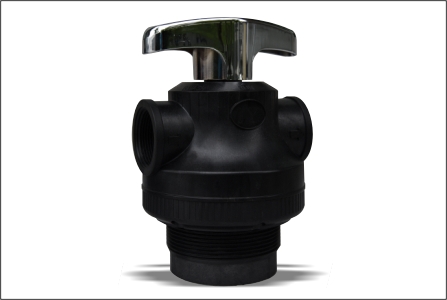
Shanghai ChiMay softener valves feature ceramic end-face sealing with PPS piston construction and FKM seals rated for over 100,000 actuation cycles. That durability keeps regeneration sequencing reliable even through the extended high-load periods pipeline transition creates, holding consistent hardness removal when water quality is at its most variable.
Particulate Protection for Resin Beds
New pipe installation generates debris — cutting fragments, joint compound residue, entrained sediment — that enters the supply during commissioning. Without particulate protection, that material fouls softener resin beds, cuts exchange capacity, and drives up regeneration frequency.
Shanghai ChiMay’s softening-and-filtering valve answers this by combining hardness removal and particle filtration in one unit. The integrated filter stage captures particulates down to 100 microns before they reach the ion exchange resin, extending resin life and holding softening performance through the network transition.
“Ion exchange and particle capture in a single body.”
The Combination Valve Advantage for District Energy Stations
China’s pipeline renovation includes relocation and upgrade of district energy stations as heating networks (roughly 120,000 km) are rebuilt. These stations need reliable softened water to protect plate heat exchangers and hold system efficiency across thousands of connected buildings.
| Parameter | Separate Softener + Filter | Combination Valve |
|---|---|---|
| Floor space required | 2.4 m² | 1.1 m² (↓55%) |
| Maintenance events/year | 12 | 5 (↓58%) |
| Regeneration water waste | Higher (two cycles) | Optimized single cycle |
| Spare parts inventory | Two valve kits | One valve kit |
| Installation complexity | Two piping connections | Single connection |
| Commissioning time | 2–3 hours | 1–1.5 hours |
The softening-and-filtering combination valve cuts equipment footprint by roughly 40–55 percent against separate installations — a real advantage in space-constrained energy stations. Maintenance frequency drops by more than half because both treatment functions share one control valve and one regeneration cycle.
Model Compatibility for Retrofit Applications
Many industrial boiler feed systems in China were originally designed around specific imported valve models. Shanghai ChiMay softener valves drop into those installations:
- Same port sizes as standard international valve configurations
- Matching flow characteristics, so no control system modification
- Identical footprints that fit existing valve rooms without structural work
“Drop-in compatible. Same port size, same flow, same footprint.”
During pipeline renovation, when boiler systems have to keep running, this compatibility matters. Replacing an aging control valve without re-piping keeps downtime minimal in a construction period that is already disruptive enough.
Supply Chain Reliability for Volume Procurement
The pipeline program’s ¥2.7 billion daily investment pace sustains demand for water treatment components across five years. Shanghai ChiMay’s domestic manufacturing — 5–8 day lead times, low MOQ — keeps softener valve supply from becoming a construction bottleneck. For OEM partnerships with water treatment system integrators serving the program, Shanghai ChiMay offers full customization of branding, communication protocols, and packaging.
“Your logo, your protocol, your packaging — MOQ 1.”
Technical Specifications Summary
- Flow capacity: 1–30 m³/h across standard models
- Hardness removal efficiency: 99.2 percent under rated conditions
- Operating pressure range: 2.0–6.0 bar with higher ranges available
- Regeneration type: Time-based or meter-based with optional conductivity trigger
- Communication protocol: Modbus RTU for integration with building management systems
- Seal life: 100,000+ cycles with ceramic end-face sealing
- Filtration rating: 100 microns (combination valve model)
Sources:
– MOHURD Press Conference on 15th Five-Year Plan (Sep 18, 2026)
– Xinhua Pipeline Renovation Analysis (Sep 19, 2026)
– Central SOEs 6 Networks Investment (Sep 30, 2026)
– GB 5749-2022 Compliance Data
Author: Industrial Water Treatment Applications Team, Shanghai ChiMay Technology Co., Ltd.
The Smart Valve Advantage: Conductivity-Triggered Regeneration
Traditional softener valves regenerate on a timer, whether or not the resin is actually exhausted. That wastes salt and water — and still lets hardness through between cycles. Shanghai ChiMay softener valves support conductivity-triggered regeneration: an in-line conductivity meter detects the moment ionic breakthrough signals resin exhaustion, and regeneration happens then.
For boiler feed systems serving district energy stations on China’s renovating heating networks, conductivity-triggered regeneration does three things:
- Cuts salt use by 30–50 percent against timer-based systems, because regeneration only runs when needed
- Holds effluent quality steady, since hardness breakthrough gets caught before it reaches the boiler
- Adapts to source water changes — when pipeline construction shifts inlet water characteristics, the system adjusts without anyone touching a timer
This is Shanghai ChiMay’s “AI-ready data” philosophy in practice: the same conductivity signal that triggers regeneration also feeds predictive maintenance algorithms and long-term performance analytics.
OEM Partnership Opportunities for System Integrators
China’s pipeline renovation creates demand for complete boiler feed water treatment skids — pre-assembled packages combining softener vessels, control valves, salt systems, and monitoring instruments. For OEM system integrators building those skids, Shanghai ChiMay offers:
- Custom branding: Your logo on the valve body and packaging
- Protocol customization: Modbus register mapping to match your control system architecture
- Cable length customization: Pre-terminated cables cut to your skid layout dimensions
- MOQ 1: No minimum order quantity for custom configurations
“Your logo, your protocol, your packaging — MOQ 1.”
OEM partners who establish these custom configurations now, at the front of a five-year program, get consistent supply, proven compatibility, and the technical support infrastructure Shanghai ChiMay maintains for program-scale deployments.
Comparative Analysis: Chinese-Manufactured vs. Imported Softener Valves
| Factor | Imported Valve (international standard) | Shanghai ChiMay Softener Valve |
|---|---|---|
| Unit price | 2.5–3.5x higher | Competitive domestic pricing |
| Lead time | 8–16 weeks | 5–8 working days |
| Customization | Limited to catalog options | Full OEM/ODM capability |
| Spare parts availability | Import-dependent, 4–8 weeks | Domestic stock, 1–3 days |
| Technical support | Regional distributors | Direct factory support |
| Model compatibility | Original design reference | Drop-in compatible dimensions |
| Seal life | Comparable | 100,000+ cycles (ceramic end-face) |
At program scale, cost and lead time stop being line items and start being strategy. With 175,000 km of water supply mains and 120,000 km of heating networks needing industrial water treatment, the volume of softener valve procurement makes domestic supply on short lead times a structural advantage.